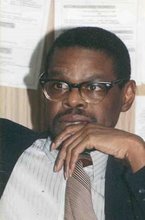
Marion Brothers

Marion Brothers

Thursday, January 8, 2009

Release Bay Area Rioters!

BART Board of Directors
P.O. Box 12688
Oakland , CA 94604-2688
(510) 464-6095
BoardofDirectors@bart.gov

c/o Kenneth A. Duron
District Secretary
San Francisco Bay Area Rapid Transit District
300 Lakeside Drive, 23rd Floor, Oakland, California 94612
510.464.6080, fax: 510.464.6011
“Kduron” Kduron@bart.gov

To Directors: Carole Ward Allen, Bob Franklin, Joel Keller, Gail Murray, John McPartland, Thomas Blalock, Lynette Sweet, James Fang, Tom Radulovich

Thursday, January 08, 2009
RE: Release Rioters Immediately

Dear Kenneth A. Duron & BART Directors:

We contacted your office on yesterday about the unprovoked shooting of 22-year old Oscar Grant in Fruitvale, Lake Merritt & 12th Street Station in Oakland. We read the response from BART Police Chief Gary Gee. His condolences to the family and the initiation of an investigation are inadequate, in light of the live camera videos of the shooting.

There is prima facie evidence, by these videos, that shows Officer Johannes Mehserle shot a defenseless man in the back while he was constrained.

[See video]

There is a compelling probable cause that the officer murdered the victim. As you know this video was offered to the police department investigators. Instead of immediately arresting the officer, BART put him in hiding.


The riots were a direct response to the department’s reaction. We are not seeking lynch mob justice before due process run its course. But due process is far off course. Sometimes people riot in order to bring the world’s attention to a major injustice.

If you can watch this video also and come away feeling that your department acted appropriately, do realize there is a strong possibility the unrest will continue, and more arrests is not the solution. The city has brought this curse upon itself.


Sincerely,
Eddie Griffin (BASG)


From: Kduron@bart.gov
Subject: Re: Unprovoked Shooting of Oscar Grant
To: eddiegriffin_basg@yahoo.com
Date: Tuesday, January 6, 2009, 4:28 PM

Mr. Griffin,

Thank you for your email. Your message will be shared with the Board of Directors as requested.

The following is a link to the District's webpage with news releases/video regarding the officer involved shooting on January 1, 2009.

http://www.bart.gov/news/articles/2009.aspx

Thank you for taking the time to advise us of your concerns.

Kenneth A. Duron
District Secretary
San Francisco Bay Area Rapid Transit District
300 Lakeside Drive, 23rd Floor, Oakland, California 94612
510.464.6080, fax: 510.464.6011, email: kduron@bart.gov
website: www.bart.gov

01.04.2009
Statement by BART Police Chief Gary Gee

to Media & Public on 1/4/09 During News Conference

On behalf of the BART Police Department and the entire BART organization, we want to express our condolences to the family of Oscar Grant.

I want to assure Mr. Grant's family and the public that we are taking this investigation very seriously. And, we are committed to complete an unbiased and thorough investigation into what happened on the morning of New Year's Day.

In addition to our investigation, we are fully cooperating with the Alameda County District Attorney's office, which is conducting a parallel and independent investigation. We are providing all of the evidence of our investigation to the District Attorney.

This case is not even four days old – we are in the early stages of the investigation and will do a thorough job. We are reviewing all of the evidence, including videos, witness statements, and physical evidence as we compile a complete and accurate account of what happened on in the early morning of January First.
As frustrating as it is, I want to stress that we cannot and will not jeopardize this case by discussing details before the investigation is complete.

While some have already begun to draw conclusions and speculate about what happened well before all the facts are in, doing so may compromise independent recollections from witnesses and does a disservice to getting at the answers we are seeking.
We continue to ask people to come forward if they have any evidence or eyewitness accounts. They can call our tip line at (877) 679-7000, extension 7040. Or, they wish to present their information directly to the Alameda County DA's office. The DA's general number is (510) 272-6222.

We ask for the public to be patient, refrain from jumping to conclusions, and allow the investigators do their jobs. As has been previously said, there is very little information that can be released at this time. I can, however, provide some basic facts.

We are investigating an incident early New Year's Day at the Fruitvale BART Station in which Mr. Grant was fatally wounded.

The involved officer is a two-year veteran of the BART Police force. That officer underwent drug and alcohol testing and is on administrative leave, which is standard procedure.

The incident began when BART police received a report that two groups of riders were involved in an altercation on a train after it left West Oakland Station around 2 a.m. BART police officers responded to the platform at Fruitvale and detained several persons. Our preliminary investigation indicates that Mr. Grant was not in handcuffs at the time of the shooting.

I cannot tell you when this investigation will be completed. But, again, I assure you that we are committed to conducting an accurate and thorough investigation.
We recognize that it is frustrating that we cannot answer many of your questions right now – but doing so could lead to speculation and compromise the integrity of the ongoing investigations.

Again, we ask for your patience and I thank you for coming.
Tuesday, January 06, 2009

BART Board of Directors
P.O. Box 12688
Oakland , CA 94604-2688
(510) 464-6095
BoardofDirectors@bart.gov

RE: Unprovoked Shooting of Oscar Grant

Directors: Carole Ward Allen, Bob Franklin, Joel Keller, Gail Murray,
John McPartland, Thomas Blalock, Lynette Sweet, James Fang, Tom Radulovich

Dear Ms. Allen & other Board Members:

The stories surrounding the shooting of Oscar Grant is so appalling, it has attracted our attention and the attention of the world community. We realize, from news reports, Police Chief Gary Gee is still investigating. But from all accounts, it appears that Mr. Grand was shot in the back while lying on the ground in handcuffs.

I am even more hurt and outraged when I read Oscar’s memorial guest book at

http://www.legacy.com/InsideBayArea/GB/GuestbookView.aspx?PersonId=122109243

How can you allow this incident to happen on your watch? You have oversight authority. And, there are many questions yet unanswered.

We have heard the cry of the blood of the innocent coming out of the bowels of the earth: “How long, O Lord?”

How long?

Signed
Eddie Griffin, BASG

Wednesday, January 7, 2009

I'm Wishing On A Star

I was only wishing that I would ever leave prison alive. But I remember the first night, out of the hole, like no other night before, wishing upon a the first star that I had seen in six years. I lay in the grass on my back in El Reno Federal Prison yard, looking up at the moon and the stars in the night sky, never to take life for granted again.

I saw heaven. I had come out of hell alive. That hell was the notorious Control Unit inside Marion Federal Prison, max-six security living death chamber. I had gone further than any other prisoner in deprivation. I was held incommunicado by the U.S. government.

For fifteen minutes in the morning and fifteen minutes in the evening, I had running water… water to drink and flush the commode. I had no clothes except my BVDs… no mattress to sleep on… and windows wide open during the coldest winter in the state of Illinois. My face was on the cover of the Sun-Times, in big bold letters: “I will not compromise my views”.

Before I was released, all the revolutionaries had renounced the use of violence to achieve political gain. Rafael Cancel Miranda took it like a bitter pill. President Jimmy Carter was ordering the release of select U.S. political prisoners.

Each day, the guard would bring me my three’s. I had stopped eating… couldn’t eat, really. I was frozen to the steel bunk hanging off the wall. But I would always manage the strength to ask the guard for a cigarette. That’s when I saw a big man cry.

Warden Fenton had me dragged to his office. I couldn’t help but laugh. He was looking at a ghost, the smart-ass inmate who delivered him, the warden, an ultimatum from the Marion Brothers.

Goosh! That pissed his goat!

But now he was releasing me, by President’s orders, transferred to another prison… somewhere in red neck country Oklahoma.

It was the first time I had smelled victory against the government. For the first time, I saw women and minority guards. We were tired of butting heads against an all-white, club welding, prison guard force. The new guards were scattered about the El Reno prison campus.

Some took time out to thank me, others I had to break in like rookies. We had gone on a prison hunger strike to demand more minority officers. Since I was the propagandist, it was designed as a media ploy.

Prisoners strikes to hire more federal prison guards.

It sounded good enough to make the hunger strike 100% successful. And, it happened on Bicentennial Celebration day, July 4, 1976, America’s 200th birthday. The Marion Brothers went on hunger strike. The prison was shut down.

The second demand was the real point of the strike: Stop using mind control experiments on politically conscious prisoners. The media bit and we went live internationally.

Fenton looked at me and smiled. “Griffin, I’m taking you out of here and transferring you to El Reno. We don’t want to see or hear from you again.”

And, then he said something queer. “And, I don’t believe that you are a criminal, either.” I gushed into tears.

I had gone from prison to solitary to a solitary within a solitary, to padded cell, and finally a strip cell, my refrigerated morgue cell. In my final hours, I could see a ship frozen at sea. My eyeballs were glazing over with a sheet of ice. And, all I could see was a ship on the frozen sea. That’s when they unlocked the doors and released me.

The first night in El Reno I look up at the moon and stars and realized that there was a God who answered prayers.

I think about that night, as I spent hours upon hours in El Reno’s music room, catching upon on music from 1970s that I had never heard. And, “Wishing Upon a Star” was one I played over and over again, wanting to go home, into the seventh year of my incarceration.

A female prison guard strode into my world and I was no spellbound, having not even seen a female for six years. My life became a battle of urges, and I became more tiger than panther.

Tuesday, January 6, 2009

A Dance for Eternity

By Eddie Griffin

It is with utter amazement that here it is 2009 and I am still in the land of the living. I often tell my children that if I want excitement and entertainment, I just close my eyes and reminisce. Hollywood cannot dream or make a movie like I have lived. Hollywood action thrillers bore me.

Here is an opening scene from my memoirs, set to the music of the times. Music makes me remember. Music brings tears to my eyes. How did I survive this real life drama, Lord? I keep asking myself, and why? For what reason am I still here, and what use am I?

I was living underground, a fugitive from justice, on the run. This night on the campus of Abilene Christian College, I danced the night away with the sweetest girl in the world, with tears streaming down my face. She wanted to go with me, to live and die, like Bonnie and Clyde.

I was going to die. I knew that. I had crossed the line, and gone too far to turn around. But she took me in, anyway, and hid me out on campus.

This night we danced to the Stylistics, “You are everything”. Tomorrow, I would be gone, somewhere into the wind, with the FBI hot on my tail.


It was on this night that first heard Gil Scott Heron’s “The Revolution Will Not Be Televised”.


An old white schoolmate came up to me and asked if I wanted a list of all the black snitches in Fort Worth, that maybe I wanted to turn the list over to the Black Panthers, thanks to the Dixie Mafia.

When I saw the list in secret, I cried. The list was on FBI stationary. When I showed it to a Black Panther leader, he jumped back like it was a hot potato. So, I got scared and ran away.

Wednesday, December 31, 2008

HAPPY NEW YEARS from Eddie Griffin

As sun sets on another year, I wish to extend my blessings to all my friends and heroes.

To my friends at the People’s Law Office in Chicago, I send my utter heartfelt thanks for coming to the rescue of a group of prisoners, known at the Marion Brothers. And, to my lifetime friend Bonnie Kerness at the American Friends Service Committee, and the bulk of those who made up the prisoner rights movement, during the period of my incarceration (1972-1984).

I was pleasantly surprised to find the People’s Law Office archives on line. I fondly remember Dennis Cunningham trying to explain why Eddie Griffin hugged the warden as he came off the witness stand in Alton, Illinois, in 1984. I remember Mike Deutsch being so confounded that he has hardly spoken to me since. Nevertheless, they were my heroes, and their website preserves a proud testimony of the Marion Brothers.

Here are a few excerpts, I would hope to use in my memoirs.

We started the [People’s Law Office] because we wanted to work in the movement for the movement & with the movement as lawyers. Ted Stein brought the idea to Dennis Cunningham when they were working together in the Chicago Legal Defense Committee, formed to help deal with the protests at the ‘68 Democratic Convention, and the cases that came out of it. A week later when the smoke cleared, they were sitting in a room downtown with 300 misdemeanor cases, wondering what to do.

I used to keep Dennis in stitches whenever he came to visit me at the prison. I was always full of legal schemes. “And, you’re going to do WHAT?” Inevitable came his laughter. Together, we would chock the prison administration’s legal team, with legal babble they had never seen. We were great students of the law. And, there was always a bounty on our heads inside the prison system.

THANK YOU, People Law Office, for preserving these memories:

Dennis met Bobby Rush and Fred Hampton, who asked for help with the many legal problems the new Illinois Chapter of the Black Panther Party was already having

There ensued a baptism of fire. Dennis had his first jury trial in late February 1969, on one day’s notice, with Fred as his client in a case about a demonstration in Maywood City Council chambers the year before. By April, a high level of conflict had developed between the Panthers, the Young Lords and the Police, and a series of major confrontations had begun. Fred went to trial again (with other counsel) and was convicted of robbery for allegedly relieving a Maywood ice cream truck driver of his inventory and passing it out to neighborhood kids. After a vicious attack upon him in the press by State’s Attorney Edward V. Hanrahan, the trial judge reneged on a promise to put Fred on probation and instead sentenced him to two to five years in the penitentiary. Truly frightened at the possibility that it would be denied, we spent over a month preparing a petition for appeal bond, with law students Flint Taylor, Seva Dubuar and Ray McClain joining the effort to free Fred and defend the Panthers.

[Editor insert]
Meanwhile in Texas, Arlington State activist Ernie McMillian is charged with instigating a food riot. The food throwing incident was translated into robbery. Ernie, was facing 20 to life in the Texas prison system. He was our SNCC leader, and a close associate of Stokely Carmichael and H. Rap Brown, whose slogan “Burn, Baby, Burn” became a national rallying cry and turned into a hit record. There were our pre-Panther days.

Hampton founded the Chicago chapter of the Black Panther Party in November 1968. He immediately established a community service program. This included the provision of free breakfasts for schoolchildren and a medical clinic that did not charge patients for treatment. Hampton also taught political education classes and instigated a community control of police project. [end]

It was a time of tremendous political activity and drama in the city, involving the BPP, the Young Lords, Young Patriots, two factions (at least) of SDS, an increasingly robust anti-war movement, and militant community organizations such as Concerned Citizens of Lincoln Park and the Latin American Defense Organization (LADO). Young Lords member Manuel Ramos was killed by a policeman in a non-political street incident in May (1969), leading to a tense, very political march by some 2000 activists from People’s Park (Armitage and Halsted) to the Chicago Avenue Police Station.

The militant “Weatherman” group emerged from the SDS convention in June, and soon asked us to serve as legal support for the National Action they announced they would stage in October. Major police raids and shooting incidents against the Panthers occurred on April 16, June 4, July 16, and July 31. By summer’s end we were all making multiple appearances in the branch courts almost every day, and beginning not to feel that green anymore.

In late August, Supreme Court Justice Walter Shaeffer released Chairman Fred on appeal bond, and he returned from Menard to the People’s Church to a tumultuous and inspiring welcome. The frenetic pace of work only intensified in the fall. Mark Kadish moved from Detroit to organize a National Lawyers Guild chapter in Chicago and to work in our office.

The Conspiracy trial began in September with a boisterous demonstration at which numerous Weathermen were arrested for felony mob action and for freeing a comrade from a police wagon. The RYM (Revolutionary Youth Movement) II faction of SDS had their National Action and the Weathermen had their “Days of Rage” in October 1969, all leading to many new cases for the office and other lawyers.

There was also another shoot-out at Panther headquarters, and six Panthers were arrested. Most of the six were subsequently set free after Skip and Dennis beat their cases at the preliminary hearing. Bobby Seale was bound and gagged and the Panthers and other supporters held daily protests at the Federal Building. On November 13, in a shoot-out on the South Side, Panther Spurgeon “Jake” Winters and two Chicago police officers were killed.

Our Weathermen clients not only required legal defense, but also challenged us as legal people, questioned our sexism, personal relationships, and struggled with us to reject our privileged status as white lawyers and to further change our lives. You were either “part of the solution or part of the problem.”

On November 12, 1970, there was a predawn shootout between the Panthers and police at a Panther house in downstate Carbondale, Illinois. At the request of Bobby Rush, we went down to investigate and to get the Panthers out on bond. Jeff and Flint were joined by Michael Deutsch, who had recently decided to stop clerking for Judge Otto Kerner in the Seventh Circuit and to join the office. We were successful in obtaining bond from the Appellate Court and gathered physical evidence at the apartment in a similar manner to the Hampton case.

On December 4,1969, at 4:30 in the morning, Edward Hanrahan and his squad of special police made their murderous pre-dawn raid on the Black Panther Party apartment located on 2337 W. Monroe Street. A hail of police gunfire from rifles, a submachine gun, shotguns and handguns left Fred Hampton and Mark Clark dead, and four other Panthers wounded. In a carefully staged press conference only hours later, Hanrahan falsely claimed that there was a fierce shootout and that Fred and other Panthers had fired numerous shots at police.

In their arrogance, the police neglected to seal the apartment from the public immediately after the raid. Panther leader Bobby Rush contacted Skip and Dennis, and they mobilized the Office to go to 2337 W. Monroe to take pictures and to gather evidence which the police left behind. The entire apartment had been torn apart, and it was quickly apparent from the bullet holes that all the bullets went into the rooms where the Panthers were sleeping. The bloody mattress and pool of blood on the floor showed that Fred was shot at point blank range in his bed, and his body dragged out into the hall.

With the help of several friends, including Mike Gray, who was making a documentary on the Panthers, which later became the “Murder of Fred Hampton,” we filmed, photographed and documented the location of each piece of evidence, then removed it to a secret location.

Jeff and Marc were at the police station hearing the firsthand accounts of the survivors: that the police came in shooting, that Fred and Mark and the survivors never had a chance to defend themselves, and that the police had said “[Bobby] Rush is next.” Rush was warned and went underground for several days, thereby avoiding being home when the police raided his apartment on December 5th.

[Break]

On September 9, 1971, Attica prisoners took over the prison, seizing guards as hostages. After the prisoners made 28 demands and entered into negotiations, the uprising was ended on September 13 with a state police assault and massacre ordered by Gov. Nelson Rockefeller. Jeff and Mzizi, a legal worker who had recently joined the Office, went to New York and were among the first legal people allowed to see the prisoners. They met many of the Attica brothers, including “Big Black” who had been tortured by the prison guards after the massacre, and Mara Siegel, a Buffalo law student who had responded to the call for legal support. Over the next months, several different lawyers, law students, and legal workers made trips to Attica, where we learned first hand of the atrocities, developed relationships with many of the brothers, and worked on several of the injunctive cases which sought relief from the hideous maltreatment of prisoners in the aftermath of the massacre.

Our work in Carbondale had also brought us in contact with prisoners at the Marion Federal Penitentiary in Marion, Illinois. In 1972, there was a work stoppage at Marion, which led to the segregation of over one hundred protesting prisoners. We filed a suit, Adams v. Carlson, which challenged this segregation. We were inspired by the strength of the prisoners, particularly Rafael Cancel Miranda, a Puerto Rican Nationalist Prisoner who at that time had been imprisoned for early 20 years for the attack on Congress in 1954. We finally won Adams on appeal, and the men were released from segregation in early 1974. During this period, two new law students, Ralph Hurvitz and Lee Tockman, joined the office and quickly became immersed in the Marion work.

[Editor Note: Rafael Cancel Miranda was my mentor]

In early June of 1977, as the 18 month Hampton trial finally ground to a close, Police Sergeant Thomas Walton led a contingent of charging police into Humboldt Park on Puerto Rican Day and shot in the back and killed two unarmed men, Julio Osorio and Rafael Cruz. This led to a two day uprising by outraged members of the West town community. While Jeff and Flint were giving their closing arguments in Hampton, Peter and Dennis, with Michael’s help, were filing a multimillion-dollar suit against Walton and the City, which became known as the Humboldt Park case. The jury deadlocked in Hampton, Judge Perry entered a directed verdict for the defendants, and assessed $100,000 in costs against the Hampton plaintiffs.

We also became deeply involved at the U.S. prison in Marion, Illinois fighting the efforts by the federal Bureau of Prisons to create special long-term isolation units. In two major class-action law suits, Adams v. Carlson and Bono v. Saxbe, we challenged the indefinite confinement of prisoners in isolation and the use of behavior modification techniques, including the use of solid steel front cells called “box cars.” In Adams, we were able to get the Court of Appeals to order the release of more than 150 prisoners confined in isolation for over 18 months, on the grounds that such indefinite isolation violated the 8th Amendment. In Bono, however after years challenging the placement of prisoners in indefinite isolation without due process or objective criteria, we were unable to force the closure of such units. Today, control units proliferate, sanctioned by the courts and accepted as a necessity by many corrections “experts.”

We soon learned that those who work on behalf of resisting prisoners may well be targets of repression themselves. During the Adams litigation we were falsely accused of smuggling gun powder into the prison and prohibited from have any contact visits with our clients. Several years later, we and the Marion Prisoners Rights Project (MPRP) were accused of fomenting a prison-wide work stoppage and smuggling out prisoners’ demands to the media. MPRP lawyers were banned from the prison and only after months of litigation were we able to get the Seventh Circuit to order that the lawyers be allowed back into the prison. Abel v Miller.

It was during this period at Marion that we met Puerto Rican political prisoner, Rafael Cancel Miranda, Republic of New Africa President Imari Obadele and Republic of New Africa citizen Akinshiiju Ola, Crusade for Justice leader, Alberto Mares, Black Liberation Army prisoners, Herman Bell, Sundiata Acoli, Gabe Torres, Native American prisoner Leonard Peltier and many others.

Our work at Marion continued for almost 20 years, litigating, advising and speaking out against the injustices there. During this period we worked first with the National Committee to Support the Marion Brothers and later with the Committee to End the Marion Lockdown (CEML), a group that is till active today, organizing and educating about prison control units and the racist nature of the criminal justice system.

[Eddie Griffin Commentary]
I am among the “many others” mentioned by the People’s Law Office, a contemporary of the political prisoners named above. Akinshiiju Ola was our team leader. I studied at the feet of Rafael Cancel Miranda, and discussed daily politics with Herman Bell, Imari Obadele, and translated the Lakota Sioux dialect of Leonard Peltier into a political platform.

The Marion Prisoners Rights Project (MPRP) was incorporated by Professor Jim Roberts and Southern Illinois University (SIU) School of Law. Eddie Griffin and Jim Roberts were members of the Board of Directors.

When the prison administration refused entry of the MPRP into the prison to see me, I was confined in a refrigerated strip cell, only allowed running water for 15-minutes in the morning and 15-minutes.

I was on the brink of freezing to death when the warden pulled me from my doom cell where I was held incommunicado. I was transferred to another prison on the promise that I would never be seen or heard from again. I knew what that meant.

When I hugged the warden in Alton, Illinois, thanking him for releasing me, I had the last word.

The warden whispered to me, on his way to the witness stand, “There is nothing else in me.”

Tuesday, December 23, 2008

The Fathom of Wealth – Part 1

In the beginning, Bernard L. Madoff created wealth out of the sky. Like magic, he commanded the securities market, “Let there be wealth.” And, out of nowhere, came wealth by the billions. But the wealth was not real. So, out of nowhere, the earth opened its mouth and consumed the fathom called wealth. And there, a pyre of dreams burn on the altar.

On Friday morning, December 11, 2008, federal agents descended onto Bernard Madoff’s Manhattan penthouse and arrested him for operating a multi-billion dollar Ponzi scheme.


About 7:30 a.m. this morning, police were called to the Madison Avenue office of Access International. It is reported that 65-year old hedge fund manager Thierry Magon de La Villehuchet had killed himself, being distraught, family members say, over losing the $1.4 billion Luxembourg-based LUXALPHA SICAV-American Selection fund in Bernard L. Madoff Investment Securities.

This is only the beginning.

Wednesday, December 17, 2008

The Fifty-Billion Dollar Ponzi Scheme

The assets of Bernard L. Madoff Investment Securities are now frozen. The Wall Street tycoon, himself, once touted as “the best of the best”, was arrested by federal agents and charged with orchestrating a $50-billion Ponzi scheme.

Mr. Madoff was arrested at his Upper East Side apartment in Manhattan last Thursday by F.B.I. agents, after his two sons — both of whom work for the company — reported that he had confessed to them that his money-management business was “basically, a giant Ponzi scheme” and “a big lie.”

Source: http://www.nytimes.com/2008/12/17/business/17madoff.html?em

What is a Ponzi scheme? In the Gangster Underworld, it was called “robbing Peter to pay Paul”.

Wiki: A Ponzi scheme is a fraudulent investment operation that involves paying abnormally high returns to investors out of the money paid in by subsequent investors, rather than from the profit from any real business. It is named after Charles Ponzi. The term "Ponzi scheme" is used primarily in the United States, while other English-speaking countries do not distinguish in colloquial speech between this scheme and other forms of pyramid scheme.

The scheme usually offers abnormally high short-term returns in order to entice new investors. The perpetuation of the high returns that a Ponzi scheme advertises (and pays) requires an ever-increasing flow of money from investors in order to keep the scheme going.

The system is destined to collapse because there are little or no underlying earnings from the money received by the promoter.

TO THE LETTER OF THE SCHEME: The Madoff Touch

When he was arrested last week, Mr. Madoff estimated that investors lost as much as $50 billion in the fraud, according to court filings. Mr. Madoff has said the scam was a Ponzi scheme, a type of fraud in which early investors are paid off with money from later victims, until no more money can be raised and the scheme collapses.

Source: http://www.nytimes.com/2008/12/17/business/17madoff.html?em

THERE IS A DAY OF RECKONING

There is one fact that rings true in all Ponzi schemes, and that is its inevitable collapse. It appears that Master Madoff keep juggling the books, robbing Peter and paying Paul, until there was no more money to pay Paul. Or, maybe it was the crush of a falling stock market and mass exodus of investors that brought Madoff face to face with his own illiquidity. It appears that greed in the excess has been the undoing of many wealthy investors who put all of their trust in the Wall Street guru

[Report from http://www.foxnews.com/story/0,2933,468824,00.html]

From individual investors to small businesses to doctor's cooperatives — and even to the town itself — Fairfield, Conn., gave its money to Bernard Madoff. And now it's left with a pile of old statements telling investors how much money they never really had… Madoff, the former chairman of Nasdaq, was arrested by federal officials last week on charges he orchestrated an elaborate Ponzi scheme, defrauding investors of up to $50 billion and leaving a trail of financial devastation in his wake.

Eddie Griffin Commentary

It was reported that in order to get into Madoff investments ventures, the investor had to open an account, with a minimum amount of a million dollars. Imagine! Fifty-billion dollars vanishes on paper, first; hence, maybe the reason behind why Madoff keep different sets of books. (Was he playing a shell game with the financial records?)

When the name of the game is complexity, then those with the most convincing financial gibberish and jargon can easily con the naive investor, by flirting with their greed instinct, right on the tip of their taste bud. Madoff caught fish from a barrel with old fashion devil bait.

The biggest Wall Street bailout is now beginning to look like the largest heist in American history, even bigger than Madoff’s $50 billion Ponzi scheme. Who can trust Wall Street now?

Monday, December 15, 2008

About the $700 Billion Emergency Economic Stabilization Funds?

The First Report of the Congressional Oversight Panel for Economic Stabilization December 10, 2008

Congressional Oversight Panel (COP) will release two public reports:

On Jan. 10, it will release a report that examines the administration of the TARP program, including the impact thereof on the economy to date.

On Jan. 20, COP will release a report providing recommendations for reforms to the financial regulatory structure. This report will provide a roadmap for a regulatory system that would revitalize Wall Street, protect consumers, and ensure future stability in our financial markets. Through these reports, the Oversight Panel will reveal the results of its investigations to the American people.

BACKGROUND

In response to the financial crisis, Congress passed the Emergency Economic Stabilization Act of 2008, authorizing the Treasury Department to commit up to $250 billion in taxpayer dollars, to be followed by another $100 billion and another $350 billion if warranted. The statute also created a Congressional Oversight Panel (COP).

The Act’s purposes are to “restore liquidity and stability to the financial system of the United States . . . in a manner that (A) protects home values, college funds, retirement accounts, and life savings; (B) preserves homeownership and promotes jobs and economic growth; (C) promotes overall returns to the taxpayers of the United States; and (D) provides public accountability.” From the passage of the Emergency Economic Stabilization Act of 2008 to the present date, Treasury has used its authority under the Act to provide 87 banks with $165 billion in exchange for preferred stock and warrants. Treasury further used its authority to provide AIG with $40 billion in exchange for preferred stock and warrants, and to provide Citigroup with a further $20 billion in preferred stock and warrants... (excerpted)

OBSERVATION

To restore stability to the financial system, the government must stop tinkering with the market. As any expert will tell you, there are no experts when it comes to the volatile mood swings in market behavior. Ultimately, market behavior is human behavior, insofar as behind every investment decision is a “decider”, fickle human beings.

What is going on, behind the scene, is a bunch of financial gurus trying to figure out something someone can understand: Human Behavior in making investment decision… Call it Paulson’s “Eeny-Meeny-Miny-Moe Dilemma” in Voodoo Trickle Down Economics.