Tuesday, July 7, 2009

Changing the Balance of Power

To: The Next Generation of Leadership
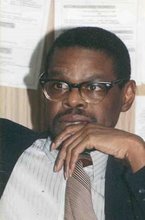
From: Eddie Griffin (BASG)

Tuesday, July 07, 2009


Consider the Balance of Powers and the imbalances. This was a lesson taught to a prison warden, because people with police authority on the front line sometimes get besides themselves.

I remember a lieutenant in particular who liked to call black prisoners the N-word. He, and the men under him, feasted on hostilities and combat. It seemed like they loved putting on the black jack boots, black riot vests, and black German bucket helmets, and go charging into an inmate's cell. They were a pretty sight for machismo image making, but a facade when confronting a balance of power crisis.

In the latter days, after many battles, I could sit in the warden’s office and chit-chat over coffee, and talk old time sakes. I always believed that one faithful man, plus God, constitutes an absolute invincible majority. Thus, the Balance of Power is never in question in the mind of a man of faith.

I remember the day I hand delivered a list of prisoners’ grievances to the warden. It was July 4, 1976. I remember the day so well because the country was celebrating its Bicentennial 200th Birthday, and Gerald Ford was President, after Nixon’s fall from grace. That day, the prison population initiated a hunger strike.

Prison administrators consider such strikes as an attempt on the part of the inmates to takeover the prison. They usually responded with brutal force. The Balance of Power always appeared to be in the hands of those in authority.

Passive resistance by hunger strike should have been met with the least force possible. Whenever there is a legitimate grievance, it is best between parties to negotiate. But prison authority abhorred the thought of negotiating with inmates.

Since I was the one who collected the inmates’ list of grievance and drafted the press release, I was made official spokesman for the other prisoners in super-max. It was the reason the warden summoned me to his office on the morning the strike kicked off.

The grievances were designed to embarrass the administration. The first demand was “for the administration to hire more minority prison guards”. The insinuated rationale was this: Black prisoners were tired of being called the N-word and being beaten by an all-white goon squad. We needed eyewitnesses and referees.

The second grievance demanded an end to using prisoners in involuntary mind control experiments. We had documented the entire history of the CIA and FBI secret program to use Chinese brainwashing techniques against incarcerated political dissidents.

On the morning of that Fourth of July, the warden received a phone call from the St. Louis Post-Dispatch, inquiring about the prison hunger strike. The element of complete surprise hit the warden. The fact that no inmate came to breakfast never struck any of the guards as strange. Thus, the warden was uninformed. Even more important, no inmate betrayed the plan.

The warden’s first reaction was to throw me in the dungeon known as the Control Unit. The prison was locked down and the guards put on high alert. Their job was to isolate and segregate all the suspected ringleaders.

Every inmate had been instructed to put up as much passive resistance as possible without catching an assault charge. The inmates burned toilet paper, bed sheets, paper, mattresses, and everything else ignitable. They clogged commodes and flooded their cells and barricaded the doors. One by one, they were dragged out and sent to segregation, where the same scenario erupted again.

The guards found themselves fighting on every front. They fogged the cellblocks with Big Bertha, the teargas machine, and went after inmates without regard to excessive force. In brutal combat terms, it was a fair fight, but it gave us grounds for more grievances. The list grew longer. And, every inmate’s grievance was rubber stamped DENIED.

Here was a flaw in the system, recognized later by the courts. Instead of rubber stamping inmates complaints as baseless, the courts instituted an Informal Resolution process, whereby inmates and staff could work out their difference. But the prison administration would have none of that. It was an insult to communicate as equals.

We appealed to regional authorities, and again rubberstamped denied, until our grievances reached the national Bureau of Prisons in Washington, D.C. This was the exhaustion level of the legal process, before going to court. Rubberstamped rejections had to have legal basis and foundation. Otherwise, an institution’s arbitrary actions could open the doors of the court.

My job in the dungeon was to keep the grievance paperwork flowing upstream. Any failed legal response on the part of the administration could make its way into court. Therefore, they kept a team of lawyers on hand just to respond to our complaints.

As the grievances kept coming, and the paperwork flowing up the inverted pyramidal hierarchy, inevitably the system would become paper jammed. Responding to each and every inmate’s complaint was time consuming from staff, with each personnel having to provide an interview and written report, justifying their action. And having to use lawyers to properly word the administration’s response was also costly. Besides, having to respond to media inquiries was demoralizing within itself.

The Balance of Power shifts to the side of the one with the psychological edge. Some prison guards began feeling guilty and started testifying against their cohorts. We lost the battle, but won the war. Within a few weeks, there were new minority and women guards throughout the federal system.

This alone, however, did not change the Balance of Power in this situation.

A lesson I learned is that a man is confronted by two enemies: The enemy within, and the enemy without. Subduing the first is instrumental in subduing the second. Self-restraint is the key to conquering the enemy within. Keeping my mouth close and saying only what I meant was a source of empowerment, because then my few chosen words would have greater worth in appreciation.

A man must say what he means and means what he says without mincing words.

Locking up a quiet, passive inmate for refusing to eat simply because he has grievances was not good PR for the prison administration. This is the image I gave to the media when interviewed scores of times during this period, including an interview with a Russian magazine. It never failed, however, that the warden had the final rebuttal.

It was a propaganda war that we were able to escalate to the national and international level. At this level, the warden was not so big and not so bad.

Instead of complaining about cold food and brutal guards, as inmates did traditionally, I drew a wider battle circle to encompass the whole issue of human rights. The warden found himself thinking at the micro-management level to an international arena. He told the media that the prison was used to control "revolutionary attitudes". The fight was bigger than his eyes could see.

In the struggle over the Balance of Power, it would be better to widen the circle to include a larger arena. It changes the agenda of the superior force by changing the enemy’s focus.

Here was a principal: Tell the CIA what you plan to do, and they will change their plans to counter you. Then, who is manipulating whom?

Recognize when the Balance of Power has shifted. Some leaders continue to fight on, fighting the same battle, the same tired way, endlessly uphill, because they do not recognize when there is a shift.

Here is an analogous anecdote.

Once my enemy within is conquered, the enemy without can do no harm. The only way my enemy can harm me is only by being allowed to.

A certain prison guard, a lieutenant, liked using the N-word and making threats to black inmates. On the contrary, I was trained and conditioned for close quarter combat, and not to be concerned about my adversary until his punch was six inches from my face. Only then would I feel justified in responding.

It is well known to those who guard jails and prisons how vulnerable they are around potentially violent inmates. Back in history, guards carried guns on the premise, but these weapons could easily be taken by inmates during an uprising. Therefore, guards today walkabout on the inside, unarmed, knowing that they could be attacked and killed at any time, by any inmate.

On the line, the Balance of Power favors the inmates.

When I was finally segregated from other inmates and eventually isolated and held incommunicado, cut off from the outside world and lawyers, the Balance of Power appeared to favor the lieutenant when he and another guard came to pay me a midnight visit.

The lieutenant strode around the hospital cell, where they had confined me on suicide watch. Hunger strikes were construed as a suicide attempt, the lieutenant explained.

It was a mistake on my part, to be manipulated into a position where I would be isolated and alone.

I remember the tall lanky cowboy boot-wearing lieutenant pacing the floor, looking around the ceiling, while another guard stood watch at the door. When I asked him what he was looking for, he was frank.

“A place where you might hang yourself,” he replied.

He was all smiles. I was all smiles also, but for a different reason. My closest enemy was not the one within, but the one within my reach. In a one-on-one, the lieutenant was no match for me. So, I let him know, in no uncertain terms.

“You’re mine, if anything happens,” I replied.

All I am required to do is defeat the enemy closet to me, to take him out because he represents the greatest immediate threat to my own life. And even in prison, I was not planning to just lie down and let these hooters kill me. If I were going to leave this world, the lieutenant was going out with me.

I nodded. “You first.”

There was something I realized about when a man is in doubt of a life-death win-lose situation, and have a reasonable fear for his life, he will usually respect his adversary if it appears that the adversary is going to fight to the death.

Therefore, the Balance of Power favors both a man with a good bluff and a man with God on his side. And if a man should bluff on his life, he should be prepared to back it up.

Monday, June 29, 2009

Man in the Mirror: The Alien

By Eddie G. Griffin

Monday, June 29, 2009


When I cut off all my hair, including my black militant beard and mustache, I was trying to show solidarity and empathy with my grandson who has just started his treatments for colon cancer. Indeed, I was so torn up inside that, in the pain of my anguish, I vowed to cut off my hair so that he and I could be baldheaded together. But when I got up out of the barber’s chair and looked in the mirror, I was shocked.

Suddenly, the man sharing at the man in the mirror was not the same man. I looked my age, all 62 years of it, and I was trying to become acclimated to the new look. This was not me a few moments ago. I hardly recognized the alien staring back at me.

Even worse, my own 84-year old mother did not recognize me, and neither did my sister. Nobody in the family recognized me. It was, all of a sudden, they had to get used to a new man- a new brother, a new uncle, and a new grandpa. They each were devastated. They were looking at the man behind the caveman that they had known all of their lives, and they did not know just how to react.

When I went to church on Sunday, everybody was trying to figure out who was this new man sitting in Brother Griffin’s usual seat, on the front row. Some thought I was a visiting preacher. The minister was even bewildered in the pulpit. So, when I got up to serve the communion, I felt compelled to reintroduce myself to those who did not recognize me.

The transformation in my appearance made me feel uncomfortable going back out into the public eye. But I had to question myself, was it worth it? Then I remembered why I did it in the first place. My grandson had cancer, and it pained me to my heart. Sure, it was worth the sacrifice of hair.

The face of the man in the mirror may be different. But the heart is still the same.

Friday, June 26, 2009

From Zen State to Deliverance

By Eddie Griffin

Friday, June 26, 2009

It is unfortunate that men in prison are not allowed to make a greater contribution to the sciences, because I witnessed some of the stunning acts of brilliance while incarcerated between the years 1972 to 1984.

You see, men in prison are given so much idle time to think, devise, and scheme. Unfortunately, most of their mastermind skills are devoted to criminal enterprises. Nevertheless, they often come up with some of the most inconceivable notions and ideas.

I learned a lesson from a prisoner at the U.S. Prison at El Reno, Oklahoma, who faked his own death and escaped from the morgue. Faking his own death required that he enter into a zombie-like Zen state, at the highest level. He actually made his heart stop beating and the prison doctor pronounced him dead.

We were in the process of mourning his death when the television news announced he had escaped. We were wondering how an inmate playing softball get hit in the head with the ball while trying to slide into home plate, all of a sudden dies.

The fact is, as he lay on the ground, pretending to be unconscious, he was thinking, plotting, and scheming, while his teammates and prison officials were trying to revive him. He was not responding because he was willing his heart not to beat and his body not to react to stimuli.

It was a great act, because he fooled the prison doctor, who happened to be a hippy-style female.

They carried him on a gurney to the infirmary and laid him on the table. The doctor was trying to detect a heartbeat. There was no pulse but, instead, a manly erection when he discovered who straddled him on the table.

“They stuck a tube down the canal of my penis, and I almost cracked,” he said. “It was the most painful thing I have ever felt in my life.” Still there was no sign of pulse or heartbeat. They pronounced him dead and later wheeled him into the city morgue. Later that night, he escaped and was recaptured about a week later at a girlfriend’s house, somewhere in Oklahoma, in the summer of 1980.

They returned him to the same prison and the same dormitory where I had met him before his escape. The above account was what he conveyed to me.

I had never thought it possible that a person could use the power of the human will to stop their heart from beating. But then I thought about the zombies of old folklore, and the supra-phenomenon known as the Zen state. It caused me to ponder how to reach this deep meditative state, where a man was totally oblivious to pain.

When I came face-to-face with a would-be assassin with a pipe in his hand, intent upon killing me, there was no apprehension at all on my part, because I had seen this movie before, Déjà vu. The pipe in the kid’s hand was real iron and as certain as death. What was uncertain to the kid was how I would react.

This element of the unknown gave me the mental edge. The element of surprise was on my side. I was going to do the unexpected. I was going to step to him, bum-rush style, take the pipe, and break his arm at the elbow. That was my intent. That was my state of mind. I had trained all my life for this moment. It was my epiphany, a déjà vu phenomenon that I saw coming before it happened.

I was mentally prepared to the letter to meet it.

Go into a crouch and give him your arm. My sensei would say during our gladiator rehearsals. He will be tempted to try to break your arm. Then, as soon as the club starts coming down, come up out of your crouch, straighten out your arm, and step into him.

During this training session, my sensei was preparing me to block a baton in the hands of a guard in case of another prison riot. Never did I think that, in real life, the baton would be in the form of a pipe, and that instead of a prison guard, it would be another inmate trying to crack my skull.

It happened at the same prison, U.S.P. El Reno, some time after the escape.

The kid with the pipe wanting to take my life was only 21-years old. He had been raped and humiliated by other inmates. A Muslim brother encouraged him to stand up for himself. “Eddie and I got your back,” so he said. In actuality, Eddie said nothing. It was just a silent assumption that I would defend a man who had the courage to stand up and defend his manhood.

So, one day the kid and his pimp paid me a visit and caught me by surprise in the prison shop where we manufactured army bunks. The pimp gave the kid an ultimatum.

I never will forget the words of the pimp. “I’ve had this kid since he was a little boy. Don’t you know that you cannot take anything out of the devil’s hand if this is what he chooses?” With that said the kid made his choice and came at me with the pipe.

No problem, I thought. I had seen this movie before.

... as soon as the club starts coming down, come up out of your crouch, straighten out your arm, and step into him. His arm will slide down the outside of your arm and you will have the inside position. Wrap your arm around the elbow joint and yank elbow upward and lock it under your arm pit. His arm is useless. At worse, he can only tap you on the back. But put enough pressure on the elbow and he will release the baton. You can break the arm at the elbow joint, my sensei instructed me.

Everything worked perfectly in practice, except on little minor detail. My sensei kept cracking me over the head with the rolled up newspaper that we pretended was the guard’s baton. The problem was that, in my haste, I exposed my head outside of my perimeter.

Always keep the adversary outside your perimeter. If you step outside of your perimeter, you can get your skull crushed.

Again and again, I failed the test, never thinking this minor flaw was a big deal. But, in real time, it was happened again.

I pretended to reach down for a trash can to fend myself and gave the kid my forearm for a target, as my sensei had instructed. And, as soon as he came down with the pipe, I stepped into him, as instructed, with my arm extended. But I stepped outside of my perimeter and took the full brute of the pipe crashing upon my head. I was shocked. I was hit, wounded, and bleeding profusely.

I did manage to hook the elbow and hang on for dear life until I shook the pipe loose. As I turned and calmly walked away, my adversaries did not pursue. From the shop to the infirmary, I left a trail of blood on the prison compound.

From the beginning of the ordeal, I had gone into a Zen state. Otherwise, I would have possibly taken the cowardly way out by running away. But knowing somewhat what was going to happen before it happened was reassuring and gave me a sense of cocky confidence. But I put too much faith in myself and my combat skills.

In the end, I called out in my heart-of-hearts, “Lord, save me.”

My power had failed me like Sampson, and here I was at the hands of the Philistines. The pipe fell on the ground and the Lord allowed me to walk away still alive. From that time on, I began reading the bible, non-stop, trying to find the Lord I had called upon so many times, the same One delivered me.

Thursday, June 25, 2009

The Organized Crime World and the 13-Year Old Hit Man

When I picked up the paper this and read the headlines, “Cartels promise riches, lure teens into life of murder”, it utterly broke my heart. Here was the story of a 13-year old who became a hit man for a Mexican drug cartel. Normally, he would be in middle school, still a baby. What possible use could he be to a cartel?

Rosalio Reta is nineteen now and in prison serving, what amounts to, a life sentence. His ink smudge tattooed face makes him look like a hoodoo man from the aboriginal outback or a tribal Indian wearing war paint. It makes him look fierce and frightening. But this is just prima facie for an underlying crippled personality, marred by the depravations of his youth.

Nobody knows how the young man feels inside, but I have noticed others like him with the tattoo of a teardrop on their face. And, in this cover story, Reta doesn’t look happy at all. He must feel like his life is gone to the devil.

The Organized Crime World is ritualistic and satanic, and purposely so. At the top of the food chain is the man so rich and cruel that his underlings think of him as the incarnation of the Devil, and they his worshipers. Once a young man has sold his soul, he cannot redeem it. It’s one way into the Organize Crime World and no way out.

Young Reta probably realizes that by now and regrets it.

I have seen the bait and hook used by Organized Crime, and I know the rules of the game. The bait is the illusion of wealth and pleasure. Young men are enticed by money, fancy cars, and women. The hook is when the master gains ownership. The only way out is death.

There is a rule in the crime world that prohibits me from trying to rescue someone from the clutches of the devil. The rule is this: I can do everything within my power and crusade all I wish to save a kid from a life of crime. But once snared, I cannot forcefully remove him against his will. This was made clear to me when I met face-to-face with a would-be assassin in hand-to-hand duel.

The rules say that it is not healthy to snitch on a kingpin who has the child in his grasp and under his power. Neither is it healthy to try and cut off the syndicate’s cash flow. This is the job of law enforcement. It is especially dangerous for civilians because they have no idea that sometimes law enforcement is infiltrated and some officials may be on the devil’s payroll. A wrong word to the wrong person can turn a do-good act into a tragedy.

I can crusade like a man crying in the wind without fear of retaliation from gangsters. In that respect, I live on the other side of the parallel universe oblivious to the Organize Crime World. But I cannot cross the line, especially knowing what I know about the other side.

Reta talks about his experiences as a teenage hit man, how he was given a new $70,000 Mercedes for a job well done. He describes the lifestyle and incentives in the drug trade, the glamour, drugs, women, and lavish allurements that only a poor kid could taste in his dreams.

How can you tell him not to want? Do not touch? I remember how stupid we sounded when we pitted our revolutionary ideologies against neighborhood drug kingpins. We had nothing to offer. They did. We decried materialism, but we were no match for the fancy clothes and good times. In the end, this was how our community went from the Black Panther age, from revolutionaries seeking political power, to a generation of pimps, players, Crips, and Bloods. We lost the propaganda war at the street level. The struggle boiled down to “Money, money, money”, and poor people would do anything for “the almighty dollar.

It amazes me how the same tricks and traps can work repeatedly on our kids. More than 10,000 Mexicans left dead in the last 18 months. Before that, it was the drug wars between the Crips and Bloods, same inducement, same pattern.

I admit that I don’t know who’s killing who. But I do know that gang violence and shootings are more about selling guns and bullets, than it is about revenge. It is a profitable trade when every hood rat on the block wants a Glock. Just pull the string and they’ll shoot somebody. The designated target is usually a rival gang or gang member. The same gun dealer sells to them both, and no doubt foment the tension between them by contract killings on both sides. This pattern fuels the sell guns and bullets, while those who pull the strings get richer and richer than those who pull the trigger.

Youngsters like Reta are only cannon fodder. But there is a part of his story that gives the reader a brief glimpse of what happens behind the scene.

[Note: This portion of the story is included in the Star-Telegram but edited out of the New York Times version of the story]

“Reta also told police that he had attended a training camp in Mexico for six months, where he learned to shoot assault rifles and engage in hand-to-hand combat. One of the instructors, he said, was an Israeli mercenary. Reta was also proud of his marksmanship.”

Here is a training camp for hit men, much like terrorist training camps of al-Qaeda. These teenagers are acclimated to their assault rifles and trained by individuals familiar with the weapon.

Where did these guns come from? Who sold them to the cartels? Gun running has always been a side business for those who profited from war and conflict, such as the time when they sold guns to Indian and fire water whiskey to give them courage to use them. The Crips and Bloods was a good underworld market for gun runners during their long bitter rivalry. As long as a war goes on, there will always be a market for illegal weapons and ammunition.

It is said of E.I. DuPont that he sold munitions and explosives to both sides in every war.

The Organized Crime World realized long ago that if a child commits murder at a certain age he would be treated as a juvenile under the law. But Poor Reta, even with his fierce satanic looking tattooed face, he looks more like Bozo the Clown than he does a gangster hit man.

How could he, as an immature child, know that after his first hit there was no way out of the game? Didn’t he know that someone was pulling his string, that he was simply doing the devil’s bidding? It was not he who chose the target, but the target was chosen for him.

Didn’t he know that dirty cops were on the payroll in Mexico, if not also in the United States, that judges and lawyers are bought and sold by the underworld syndicate?

Didn’t he know that he was expendable? Why didn’t his single mother teach him these things? Why didn’t they teach him these things in school? Why didn’t law enforcement forewarn him?

Does anyone know?

Wednesday, June 24, 2009

From Paper Panther:

The First Leg of Rediscovery

Wednesday, June 24, 2009

There was a time when men in prison turned their captivity into centers of learning and prisons into universities. It was the same period of time when they invented the phrase: All the Black Panthers are either dead, in prison, in exile, or in hiding.

In the federal prison system, we had access to libraries across the country through the inter-library loan system. College students and professors visited the prison for exchanging knowledge with intellectual inmates who spent most of their time reading, studying, and teaching. Prison administration didn’t like it, but these were rights we had won through the courts.

Inmate Victor Lindsey broke a record by receiving his bachelor’s degree from Southern Illinois University in a year and a half. This started a wave of college professors coming into the prisons, conducting classes with inmates. One college professor, Dr. Walt Robinson, head of the Black Studies program at SIU, used the opportunity to use inmates to conduct historical research.

He told us that we had something that people on the outside world did not have. We had all the time in the world. We could take advantage of that time by contributing to black historical research.

Dr. Robinson was the preeminent black historian in the country. He sat on the President’s Council on Aging. And yet, he chose us to do his bidding. It was an honor to be recognized as some worth. If left to the prison administration and the government, we would have been forever stereotyped as a bunch of low IQ criminals. We needed Dr. Robinson as much as he needed us.

Our biggest assignment was to find the “40 acres and mule” that had been promised to freed slaves. It had been a claim handed down in Negro folklore for ages, but there was no document, no history left behind.

During those prison classroom years, we never found the truth. But we discovered other things. We discovered that some historical documents were sealed. Newspaper accounts of events excluded the contributions of Negroes. Therefore, we had been excluded from history altogether, except for what was handed down orally, from generation to generation.

During the Free Speech Movement of the early 1960s, students began to demand truth from the government. Black students began to demand the truth about history. In response, Black Study programs began cropping up on every university and college campuses around the country. This was how Dr. Robinson had come to head Southern Illinois University Black Studies Department at Carbondale, just outside of the federal prison at Marion.

The government allowed inmates to take college courses at the time. One wing of the federal prison at Marion was dedicated as the Education Department. It was in these classrooms that prisoners studied academic courses and conducted classes on their own. But prison officials were not keen on inmates gaining an education and getting degrees, because many guards themselves were high school dropouts. And some inmates had no inclination for books.

Some of our fellow inmates derided the Black Panther as “Paper Panthers” because of our devotion to education. We were accused of talking revolution while hiding behind books. We would have to prove that we had the fortitude to stand up as men in the harsh and brutal environment. Therefore, we were constantly challenged physically, sometime at the point of a blade. Prisons were no universities, claimed the more brute inmate. They were gladiator schools.

Tuesday, June 23, 2009

Black Bourgeoisie?

I found it interesting that Shawn P. Williams writes in “Why” Part Two: Why I celebrate Juneteenth:

In my adult years as I began to rub elbows with the black bourgeoisies, many of them scoffed at the June 19th holiday. “Why would you celebrate slaves in Texas spending an extra 2 ½ years in bondage?” they would ask. I have to admit, it’s a pretty good question… As we’ve gotten more and more educated, we get further and further away from the wisdom born out of the struggle of our people.

I don’t know what “black bourgeoisie” means anymore. Back in the day, it meant something negative like that of a black person whose thinking was whitewashed, or someone going through an identity crisis, or someone who thought themselves to be more educated and elite than the common everyday Negro. We used to think that they acted and thought themselves to be better than the rest of us... maybe so.

Ignoring the French historiography and Marxist class categorizations that give meaning to the name of this group of people, I want to go straight to the psycho-sociological aspect of the issue... that self-contradictory, mismatch phenomenon of being sociologically black and psychologically alienated from an appreciation of black heritage.

“Why would you celebrate slaves in Texas spending an extra 2 ½ years in bondage?” they asked blogger Shawn Williams. Notwithstanding the writer's thoughts, note how the question was formulated in their minds. True to its characteristic, the so-called black bourgeoisie sees the cup half empty, instead of half full. To them, Juneteenth is not a celebration of Freedom, but rather a “black thing” to be disdained, because the very thought of slavery turns them off. After all, there are many whites who would rather not think about it, along with the guilt and shame of it. And also, how many non-Jewish Germans memorialize the holocaust? The so-called black bourgeoisie are escapists who would rather inculcate more pleasant thoughts.

It may not have ever dawned on them that Juneteenth is a celebration of Freedom, like the Fourth of July. What say, in celebrating the Passover, are Jewish people celebrating 400 years of Egyptian bondage, or the blessing of Emancipation?

The so-called black bourgeoisie sees only what it wishes to see, thinks only what it wishes to think, and choses to see no more and know no more than they already see and know. Therefore, black is an inappropriate descriptive for this bourgeoisie- thinking people. Being bourgeois is what it is... a colorless attitude of people who thinks of themselves as more highly favored than their peers and contemporaries, and thereby different, even better than they, and a little more holier than thou.

Juneteenth, with them, will probably never find merit, because they will remember only what they have been taught about it in integrated schools by teachers who were uneducated and unappreciative of black history. Hence, they will never seek to know otherwise. They even avoid contact with any knowledge that would burst the bubble of their brainwashing.

They are alienated from their common identity and estranged from their heritage... like a cow with the head of a goat.

“We, the colored soldiers, have fairly won our rights by loyalty and bravery -- shall we obtain them? If we are refused now, we shall demand them.” Sgt. Maj. William McCeslin, 29th U.S.C.T. (Source: Appomattox Court House National Historical Park)

Friday, June 19, 2009

What I Never Learned in School about Juneteenth

Today is Juneteenth, the day upon which the last Negro slaves were set free. I use the term “negro” because I am the last generation of the people called Negroes. It was the identity imprinted upon my birth certificate, but I thank God that I will die as an African-American.

Explaining the concept of a segregated school system to my 9-year old grandson is as futile as trying to explain why there is air. Utterly perplexed, he repeatedly asks: Why? Why did they have schools for blacks and schools for whites? It didn’t make sense.

His heritage is not the heritage of a Negro. He was born by mixed marriage and he has always considered himself an African-American. Jim Crow means absolutely nothing to him. There is nothing in his mind that can grasp the meaning of Race, let alone an understanding of Racism.

I doubt that his mother can properly teach him the history of Juneteenth, seeing that she is white, and the black holiday raises mixed feelings about her own ancestors and heritage. As they say in Texas, “Blood is thicker than water.” Dixie still loves Dixie, and simply because great-great-great-grandpa was a Confederate, does not mean she is going to hate him because he owned slaves.

More of us should be like child that asked: Why?

As an elementary school child, I never knew there were Colored soldiers in the Civil War. It took nearly a lifetime of work and demands for records and the unsealing of classified documents did we discover the existence of a large force of black troops who fought in the Civil War. And, during the 1950s, Texas had every reason in the world to keep this fact hidden from Negro children.

We heard the wild tales of black heroism in the Civil War handed down by the ole folks at Juneteenth picnics. It sounded like typical old Negro boasting. For it seemed to me that if we had played such a significant role in the Civil War, they would have put our ancestors into the history book.

In my essay, “Why the slaves in Texas were not set free until Juneteenth”, I sought to answer one of the questions that plagued me all my life. WHY did it take two-and-a-half years for the Proclamation to free the slaves in Texas?

On Emancipation Day, January 1, 1863, the Confederates staged a magnificent counteroffensive against the Federal forces. First, Maj. Gen. John B. Magruder retook the port city of Galveston, Texas. Second, a new Texas Division was formed under the command of Maj. Gen. John George Walker.

Walker's Division contained three brigades commanded by Brigadier Generals Henry E, McCulloch, Hawes and Horace Randal. The plan was for McCulloch to attack Milliken’s Bend, J. M. Hawes to attack Young's Point, several miles downstream from Milliken's Bend, and Randal to remain in reserve in Richmond.

Left to defend Gen. Ulysses S. Grant storehouse at Milliken's Bend were 1,250 newly recruited Colored Regiments---The First Mississippi (African Descent) and the Ninth and Eleventh Louisiana (Corps d Afrique, or African Corps) and two companies of the 10th Illinois Cavalry, under the command of U.S. Col. Hermann Lieb.

At stake in the contest: A Union victory at Vicksburg would essentially give Union Gen. Ulysses S. Grant control of the Mississippi River, and cut off the Confederacy West of the Mississippi from its capitol in Richmond, Virginia and Gen. Robert E. Lee’s Army of Northern Virginia.

Sunday morning, June 7, 1863, while nearing Milliken’s Bend, the Texas regiments encountered fire from Union troops. Col. Richard Waterhouse's 19th Texas Infantry was deployed to the right, Col. R. T. P. Allen's 17th Texas Infantry in the center, and Lt. Col. E.P. Gregg's 16th Texas Cavalry (dismounted) on the left, while Col. George Flournoy's 16th Texas Infantry was held in reserve.

Confederate Gen. H.E. McCulloch described the battle: “The line was formed under a heavy fire from the enemy, and the troops charged the breastworks, carrying it instantly, killing and wounding many of the enemy by their deadly fire, as well as the bayonet. This charge was resisted by the negro portion of the enemy's force with considerable obstinacy, while the white or true Yankee portion ran like whipped curs almost as soon as the charge was ordered.”

JUNE 7, 1863
The enemy attacked Milliken's Bend; commenced driving the negro regiments, and killed all they captured. This infuriated the negroes, who turned on the rebels and slaughtered them like sheep, and captured 200 prisoners. I also hear they captured five pieces of artillery. The Choctaw and Lexington were there--- DAVID D. PORTER, Admiral

“…the rebels drove our force toward the gun-boats, taking colored men prisoners and murdering them. This so enraged them that they rallied and charged the enemy more heroically and desperately than has been recorded during the war. It was a genuine bayonet charge, a hand-to-hand fight, that has never occurred to any extent during this prolonged conflict. Upon both sides men were killed with the butts of muskets. White and black men were lying side by side, pierced by bayonets, and in some instances transfixed to the earth. In one instance, two men—one white and the other black—were found dead, side by side, each having the other's bayonet through his body. If facts prove to be what they are now represented, this engagement of Sunday morning will be recorded as the most desperate of this war. Broken limbs, broken heads, the mangling of bodies, all prove that it was a contest between enraged men; on the one side from hatred to a race, and on the other, desire for self-preservation, revenge for past grievances, and the inhuman murder of their comrades.” Harper’s Weekly, July 4, 1863


It is understandably why the Battle of Milliken’s Bend would not be featured in Texas History books. But excluded also was the history of the U.S.Colored Troops who fought at Appomattox and were a principal force in cutting off Gen. Robert E. Lee’s retreat and forcing him to surrender to Gen. Grant on April 9, 1865.

Thinking the war was over, Sgt. Maj. William McCeslin, 29th U.S.C.T. issued this ultimatum: “We, the colored soldiers, have fairly won our rights by loyalty and bravery -- shall we obtain them? If we are refused now, we shall demand them.” (Source: Appomattox Court House National Historical Park)

Confederate President Jefferson Davis abandoned Richmond before it was captured by Union forces on April 3, 1865. He met with his Cabinet and dissolved the Confederacy while in-flight, and was subsequently captured on May 10, 1865 in Irwin County, Georgia.

Six days after Lee’s surrender, on April 15, 1865, Republican President Abraham Lincoln was assassinated. Democrat Andrew Johnson became President.

The town of Marshall, Texas was made the capital of Missouri's Confederate government-in-exile and flew the flag of Missouri in addition to the other six flags and was, therefore, nickname as the City of Seven Flags. It had become the seat of civil authority and headquarters of the Trans-Mississippi Postal Department after the fall of Vicksburg.

The fifth flag over Texas was the CSA Naval Jack, which flew from 1863-1865. When Negro students arrived at Arlington State College in 1961, this was the flag at the top of the flagpole on campus. Below it flew the fourth flag belonging to the Republic of Texas which flew from 1836 to 1845. Missing was the sixth flag of the United States of America, which flew from 1845 to 1861 and from 1865 to the present.

Technically, the confederacy of Texas was never defeated. It collapsed upon itself. (See http://www.tsl.state.tx.us/exhibits/civilwar/1863_1.html)

A black-led student protest from 1965 to 1967 would bring Ole Dixie Down on the campus of ASC and would end the school’s Confederate tradition of Old South Week. A coalition of students won the vote that placed the school under the University of Texas system. Today, Arlington State College is the University of Texas at Arlington.

If there is one reflection, I remember we went into college as Negroes, but emerged as liberated African-Americans.