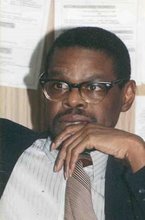
Endorsed by Eddie G. Griffin, International Child Rights advocate
On Feb. 4, 2009, adults and youth from throughout the state will be asking elected officials to
Put Kids First in their decision making for Texas.
Please send:
Student Letters to Leaders
by January 30, 2009
Include your school or program address and an optional wallet-sized photograph to:
Put Kids First
c/o Texans Care For Children
814 San Jacinto, Suite 201
Austin, Texas 78701
Students should include in their letters an introduction of who they are (name, grade, etc.), their reason for writing, and what change they think is needed for kids in Texas. You can also have students attach walletsized pictures of themselves to their letter.
Explain that the elected officials will keep the pictures to remember all the youth and children they work for.
The leaders will likely send replies to the address on the letter (e.g., your program’s address). Also, with this address, we will make sure the letters get to one or more of the correct legislators for your district.
Send envelope of letters postmarked by January 30, 2009 to:
Put Kids First, c/o Texans Care For Children, 814 San Jacinto, Suite 201, Austin, Texas 78701
Thursday, December 11, 2008


Thursday, December 4, 2008
HELLO from Death Row
Testimony of the Outlaw Eddie Griffin
TO Mike Ward & Jerry Madden:
Thursday, December 04, 2008
Hello. Let me speak to the Warden. This is Eddie Griffin calling from Death Row.
WHAT?! That doesn’t even sound right, a man using a cell phone calling from death row. But it happens in Texas, obviously more than prison officials realized.
On Wednesday morning, state prison officials unveiled a massive $65.8 million plan to curb an epidemic of smuggled cell phones and other contraband in Texas’ lockups, reports Mike Ward, Austin American-Statesmen.
Hello Mike, Please say again. They are going to spend $65.8 million dollars to patch up a crack in the Texas prison system that’s big enough to drive a Mac Truck trough. Come on!
Hello Jerry, This is Eddie Griffin, the man who first told you to turn over the rock in the Texas Youth Commission’s detention facilities. Didn’t I warn also of the problems of corruption in the adult prison system?
As a graduate of the School of Hard Knocks, with a Ph. D in Survival, I can tell you, first hand, that the taxpayers’ money would be better spent on an ounce of prevention, rather than the $65.8 million pound of cure.
By now you realize the public outrage over TDCJ’s funding request:
Brad Livingston, executive director of the Texas Department of Criminal Justice, said the funding will be sought immediately, through special approval of state leaders, instead of waiting for legislative approval next year.
Livingston would avoid the scrutiny of day.
Tell me: Are any of these the “privatized prisons”, where we have found corruption before.
A Statesman.com writer writes:
This is an internal, employee, management, etc problem, for many, many years, everybody including inmates, knew of these problems, most of the criminals all ready know how to beat the systems before they get there. demote every employee that is in any supervisory position, if they clean up this mess, give them the position back, if not then promote the ones who will be there the rest of there life, waiting for these dead heads to retire. [signed Been There]
As a former prison consultant with some knowledge on this issue, it is doubtful that this expensive plan will accomplish its intended purpose.
The introduction of contraband in prisons is primarily due to the cooperation of the guards, and no amount of hardware is going to remedy it.
I would suggest that considerably more research be done before proposing a costly knee jerk response to the Texas legislature that is doomed to fail in its primary objective: limiting the introduction of contraband into the Texas prison system. [signed Anon]
I work inside the prison. We need help! We need random drug testing, cut sick days in half, termination on the spot (not after 9 disciplinaries), quit recruiting employees at high schools, payphones will help and a few extra dollars in my check, then raise the hiring standards. Not $65million dollar metal detector, I am a tax payer too! That is the goofiest idea our leaders have ever come up with. I think we need to look at replacing our leaders, how many escapes? employee homicide? serious assaults? have we had in the last couple of years. Now we get tough because someone got a call? Austin Drama! [signed By BD]
Testimony of the Outlaw Eddie Griffin
Living in prison is not easy for prison guard or prisoner, but they must contend and suffer with each other’s presence for at least eight hours a day. The prison guard goes back home to wife and children, and the prisoner goes back to naught, but an empty cold bunk bed.
Okay, Johnny Reb, don’t make my day. I’m a lifer, got nothing lose, but my soul, and I’m already in hell. So, don’t make my day, Charlie.
That was my way of getting prison guards off my back.
Hey Charlie, come here a second. I don’t know if you know the rules around here. We, the inmates, outnumber the guards 15-to-1, so don’t get us started. You can come to work, and work a sweet cakewalk 8-hour shift, or your can put in overtime, putting out fires.
Charlie, we got a contest here. Who can take out whom the fastest! Everybody say I am the fastest. You been told!
That was my warning. We were all gladiators, in a fight to the death. Call me more blessed than a cancer survivor.
TO Mike Ward & Jerry Madden:
Thursday, December 04, 2008
Hello. Let me speak to the Warden. This is Eddie Griffin calling from Death Row.
WHAT?! That doesn’t even sound right, a man using a cell phone calling from death row. But it happens in Texas, obviously more than prison officials realized.
On Wednesday morning, state prison officials unveiled a massive $65.8 million plan to curb an epidemic of smuggled cell phones and other contraband in Texas’ lockups, reports Mike Ward, Austin American-Statesmen.
Hello Mike, Please say again. They are going to spend $65.8 million dollars to patch up a crack in the Texas prison system that’s big enough to drive a Mac Truck trough. Come on!
Hello Jerry, This is Eddie Griffin, the man who first told you to turn over the rock in the Texas Youth Commission’s detention facilities. Didn’t I warn also of the problems of corruption in the adult prison system?
As a graduate of the School of Hard Knocks, with a Ph. D in Survival, I can tell you, first hand, that the taxpayers’ money would be better spent on an ounce of prevention, rather than the $65.8 million pound of cure.
By now you realize the public outrage over TDCJ’s funding request:
Brad Livingston, executive director of the Texas Department of Criminal Justice, said the funding will be sought immediately, through special approval of state leaders, instead of waiting for legislative approval next year.
Livingston would avoid the scrutiny of day.
Tell me: Are any of these the “privatized prisons”, where we have found corruption before.
A Statesman.com writer writes:
This is an internal, employee, management, etc problem, for many, many years, everybody including inmates, knew of these problems, most of the criminals all ready know how to beat the systems before they get there. demote every employee that is in any supervisory position, if they clean up this mess, give them the position back, if not then promote the ones who will be there the rest of there life, waiting for these dead heads to retire. [signed Been There]
As a former prison consultant with some knowledge on this issue, it is doubtful that this expensive plan will accomplish its intended purpose.
The introduction of contraband in prisons is primarily due to the cooperation of the guards, and no amount of hardware is going to remedy it.
I would suggest that considerably more research be done before proposing a costly knee jerk response to the Texas legislature that is doomed to fail in its primary objective: limiting the introduction of contraband into the Texas prison system. [signed Anon]
I work inside the prison. We need help! We need random drug testing, cut sick days in half, termination on the spot (not after 9 disciplinaries), quit recruiting employees at high schools, payphones will help and a few extra dollars in my check, then raise the hiring standards. Not $65million dollar metal detector, I am a tax payer too! That is the goofiest idea our leaders have ever come up with. I think we need to look at replacing our leaders, how many escapes? employee homicide? serious assaults? have we had in the last couple of years. Now we get tough because someone got a call? Austin Drama! [signed By BD]
Testimony of the Outlaw Eddie Griffin
Living in prison is not easy for prison guard or prisoner, but they must contend and suffer with each other’s presence for at least eight hours a day. The prison guard goes back home to wife and children, and the prisoner goes back to naught, but an empty cold bunk bed.
Okay, Johnny Reb, don’t make my day. I’m a lifer, got nothing lose, but my soul, and I’m already in hell. So, don’t make my day, Charlie.
That was my way of getting prison guards off my back.
Hey Charlie, come here a second. I don’t know if you know the rules around here. We, the inmates, outnumber the guards 15-to-1, so don’t get us started. You can come to work, and work a sweet cakewalk 8-hour shift, or your can put in overtime, putting out fires.
Charlie, we got a contest here. Who can take out whom the fastest! Everybody say I am the fastest. You been told!
That was my warning. We were all gladiators, in a fight to the death. Call me more blessed than a cancer survivor.
Tuesday, December 2, 2008
If the Trumpet gives an Uncertain Sound:
Who Shall Prepare Himself for Battle?
A Lesson By Eddie Griffin
Tuesday, December 02, 2008
At 2 minutes 2 seconds into the YouTube video speech on World AIDS Day, President-elect Barack Obama reaches into his memory of scripture from the Bible and pulls out this jewel from Paul, the apostle, to the Corinthians:
If the trumpet does not sound a clear call who will get ready for battle?
The President-to-be accurately quoted 1 Corinthians 14:8 NIV, an excellent scriptures for a rallying call. The KJV version speaks of the trumpet making an "uncertain sound"
Two messages in two days from 1 Corinthians 14- This should inspire a lesson. The message, coming from the Sunday morning's sermon, highlighted the “uncertain sound” in churches and in the world. Barack Obama’s message emphasized was the “certain sound”, the sound that one can be assured of, as in the Word of God, and a sense of certainty and reassurances in Obama's words, promises, and actions.
Liken to a trumpeter, Obama implies that he will send out a “clear call” to the public.
The “uncertain sound” in the KJV signifies a wrong message being sent out. Like the playing of Taps instead of Reveille, an uncertain sound confuses the troops. The opposite is the “certain sound”, and there is nothing more certain to me than the Word of God?
Heaven and earth will pass away. But his Word will last forever.
Of this, I am certain: Nietzsche is dead.
ONCE “the people of the land choose one of their men and make him their watchman”. It was the watchman’s job to Blow the Trumpet at the first sign of danger. If the watchman does his job, “blows the trumpet to warn the people, then if anyone hears the trumpet but does not take warning and the sword comes and takes his life, his blood will be on his own head.” If he had taken warning, he would have saved himself.
But if the watchman sees the sword coming and does not blow the trumpet to warn the people and the sword comes and takes the life of one of them, that man will be taken away because of his sin, but God will hold the watchman accountable for his blood.
This is the scenario given in Ezekiel 33:1-20.
The elected watchman who refuses to blow the trumpet is only confounded by the watchman who blows the trumpet and makes an uncertain sound. Shall God hold the blood of lost souls upon the heads of the watchmen who led them away with strange “uncertain” sounds?
This quarter I will devote my Wednesday Night Bible Class to the study of The Trumpet: God’s Word.
A Lesson By Eddie Griffin
Tuesday, December 02, 2008
At 2 minutes 2 seconds into the YouTube video speech on World AIDS Day, President-elect Barack Obama reaches into his memory of scripture from the Bible and pulls out this jewel from Paul, the apostle, to the Corinthians:
If the trumpet does not sound a clear call who will get ready for battle?
The President-to-be accurately quoted 1 Corinthians 14:8 NIV, an excellent scriptures for a rallying call. The KJV version speaks of the trumpet making an "uncertain sound"
Two messages in two days from 1 Corinthians 14- This should inspire a lesson. The message, coming from the Sunday morning's sermon, highlighted the “uncertain sound” in churches and in the world. Barack Obama’s message emphasized was the “certain sound”, the sound that one can be assured of, as in the Word of God, and a sense of certainty and reassurances in Obama's words, promises, and actions.
Liken to a trumpeter, Obama implies that he will send out a “clear call” to the public.
The “uncertain sound” in the KJV signifies a wrong message being sent out. Like the playing of Taps instead of Reveille, an uncertain sound confuses the troops. The opposite is the “certain sound”, and there is nothing more certain to me than the Word of God?
Heaven and earth will pass away. But his Word will last forever.
Of this, I am certain: Nietzsche is dead.
ONCE “the people of the land choose one of their men and make him their watchman”. It was the watchman’s job to Blow the Trumpet at the first sign of danger. If the watchman does his job, “blows the trumpet to warn the people, then if anyone hears the trumpet but does not take warning and the sword comes and takes his life, his blood will be on his own head.” If he had taken warning, he would have saved himself.
But if the watchman sees the sword coming and does not blow the trumpet to warn the people and the sword comes and takes the life of one of them, that man will be taken away because of his sin, but God will hold the watchman accountable for his blood.
This is the scenario given in Ezekiel 33:1-20.
The elected watchman who refuses to blow the trumpet is only confounded by the watchman who blows the trumpet and makes an uncertain sound. Shall God hold the blood of lost souls upon the heads of the watchmen who led them away with strange “uncertain” sounds?
This quarter I will devote my Wednesday Night Bible Class to the study of The Trumpet: God’s Word.
Monday, December 1, 2008
AIDS and the At-Risk Male Prison Population
By Eddie Griffin
Monday, December 01, 2008
WORLD AIDS Day 2008
The United Nations has designated today as World AIDS Day to spread international awareness to the global deadly pandemic of the acquired immune deficiency syndrome (AIDS).
AIDS is now a pandemic of epic proportion. In 2007, an estimated 33.2 million people lived with the disease worldwide, and it killed an estimated 2.1 million people, including 330,000 children.
People with AIDS often have systemic symptoms of infection like fevers, night sweats, swollen glands, chills, weakness, and weight loss. These symptoms and infections result from damages caused to the immune system cause by caused by the human immunodeficiency virus (HIV).
Some estimate that 25% of sub-Sahara Africa is infected with the disease. Indeed, this is where much of the world focus has been trained. By closer to home, nearly 25% of the US prison population is infected.
Based upon findings by Dr. David Wessner, Department of Biology at Davidson College, Ali Cundari reports:
U.S. prison populations are at a record high today, with barely enough room to house incarcerated individuals. Due to the close proximity and high-risk behaviors of inmates, as well as a lack of intervention from authorities, the transmission of HIV in prisons is a major problem today. A combination of both pre-existing and new infections plague prison populations, making them one of UNAIDS’ four major at-risk groups for HIV/AIDS.
In 2005, 1.8% of all state inmates and 1.0% of all federal prison inmates in the U.S. were believed to be HIV positive, leading to a total of 22,480 infected individuals behind bars. These percentages are disproportionate to the rest of the general population, making HIV/AIDS about four times as common among inmates than the population at large. Around 25% of all HIV infected people have spent time in a correctional facility.
In a research report sponsored by the National Commission on Correctional Health Care (NCCHC), the National Institute of Justice, and the Centers for Disease Control and Prevention (CDC), and submitted to Congress in 2002, the Bureau of Justice Statistics of the US Department of Justice presented this data:
On June 30, 1997, more than 6,300 state/federal prison inmates and more than 2800 jail inmates had AIDS… Also, there were more than 2,600 state/federal prison releasees and more than 36 000 jail releasees with AIDS in 1997. Thus, almost 16% of the estimated total of 247,000 persons living with AIDS in the United States in 1997 passed through a correctional facility that year.
After applying our point prevalence range of 1.45% to 2.03%, there were between 17,000 and 25,000 state/federal prison inmates and between 8,000 and 11,000 city/county jail inmates with HIV infection (non-AIDS)… Given the same prevalence range, between 112,000 and 157,000 people with HIV infection (non-AIDS) were released from US prisons and jails in 1997. This estimate suggests that between 22% and 31% of the approximately 503,000 people living with HIV infection (non-AIDS) in the United States in 1997 passed through a correctional facility that year.
Doctors and researchers are not ignorant of the magnitude of the AIDS epidemic in the US prison system. Rather, it is the inmate population that is ignorance.
Dubbed the “first conference of its kind”, The Texas Department of Criminal Justice (TDCJ) brought together some 128 inmates from 16 state prison units to the Darrington Prison Unit in 2002 to distribute information about AIDS and other infectious diseases, with hopes that peer education would cause to the information to spread among the 143,000 inmate population, according to the U.S. Centers for Disease Control and Prevention.
Ignorance about AIDS is widespread among the prison population, the inmates said.
Although the state of Texas now provides HIV testing for incoming and outgoing prisoners, such tests are voluntary and there is still widespread ignorance among inmates about the disease. A Texas State Epidemiologic Profile, 2005 reports that the incidence of HIV is about 7 times higher in the Texas criminal justice system than it is in the general population, and that the state releases a little more than 100 HIV-positive prisoners each month.
The Bureau of Justice Statistics reported that there were 847 AIDS cases and 2,450 HIV in Texas of June 30, 1999. By 2002, TDCJ had released 575 inmates who had tested positive for HIV/AIDS. And, with the high rate of recidivism, TDCJ now finds itself importing almost as many HIV-positive convicts as it releases.
Eddie Griffin Commentary
There are many ways HIV/AIDS can be transmitted among prisoners, such as with sharing dirty needles for injecting illicit drugs, or sharing razors and toothbrushes, or tattooing and body piercing with crude homemade germ-catching devices. But the most common mode of transmission is through consensual and non-consensual sex between inmates. Because of fear and shame associated with same sex practices behind bars, gang rapes, and a foreboding convict code of Omerta, most prisoners will avoid voluntary HIV testing. This gives penal authorities reason to believe the HIV/AIDS pandemic is more widespread in prison that reported.
Prior to the mid-1970s, the acquired immune deficiency syndrome was largely unheard of in the prison environment. Officially, the disease was not discovered until the early 1980s, though there was an earlier newspaper account about the disease in a New York newspaper. The diseased crept into the system and contaminated a large part of the prison population before the U.S. Centers for Disease Control and Prevention and United Nations recognized that the incarcerated were more at risk than the general population, and that the disease would be carried back out into the free world, only to contaminate others.
We find the same level of ignorance among sexually active teenagers. There is a common disbelief that casual sex (or rape) can lead to such a terrible fatal disease. The magnitude of the pandemic is incomprehensible, and the suffering from it inconceivable.
The general approach to a prevention campaign has been through mass public awareness campaign and advocating safe sex practices.
I teach abstinence as the most effective means of prevention, because there is no safe sex, insofar as there is no sin-free sex except by marriage. And, in that case, there are some preventative steps to take before walking down the aisle.
As for how to teach inmates the same lesson of abstention, HIV/AIDS education should focus on what happens to the human body as it degenerates. Some inmates may be suffering the symptoms and yet passing it on without knowledge.
If there is a cruel death in nature, it would be to die with AIDS. The onset of the disease comes with fever and chills, fatigue, nausea, vomiting, diarrhea, weakness, swollen glands, tumors, pneumonia, tuberculosis, and dementia. The progression of the disease follows bad-to-worse before death.
With competent information about the disease, an at-risk prison population is face with a choice in their behavior and the consequences. This is the same way we should present information about the disease to at-risk teens, and the public in general. The format is simple: (1) This is the disease AIDS; (2) This is what it does; (3) This is how it is contracted; (4) These are the preventions; and (5) These are the options short of a cure.
Monday, November 24, 2008
Mr. President: Please Ratify UN Human Rights
President of the United States of America
Barack H. Obama
1600 Pennsylvania Ave.
Washington, D.C.
Dear Mr. President:
God bless you. God bless America. Once again, America is gleaming in new hope and ideals. Once again, we can shine a light like that city set on the hill. We can show the world who we truly are, as a nation, and as a people.
We can begin spreading goodwill by ratifying two important U.N. Human Rights covenants, for the sake of our humanity.
First, we ask that you sign the Convention on the Rights of the Child.
This doctrine merely reasserts the innocence, needs, and protection of children under the age of 18. It condemns exploitation of children for sex, labor, or military conscription.
Second, we ask that you sign the International Covenant on Economic, Social and Cultural Rights Optional Protocol on Justice For All Rights.
"That historic moment will help rectify the imbalance between civil and political rights and economic, social and cultural rights, which has particularly denied marginalized groups and those living in poverty the ability to demand an effective remedy when their rights are violated,” said Amnesty International.
"The Optional Protocol is an important tool for implementing the declaration made 15 years ago at the Vienna World Conference on Human Rights that 'all human rights are universal, indivisible and interdependent and interrelated'. The international community must treat human rights globally in a fair and equal manner, on the same footing, and with the same emphasis."
Sincerely,
Eddie G. Griffin
Barack H. Obama
1600 Pennsylvania Ave.
Washington, D.C.
Dear Mr. President:
God bless you. God bless America. Once again, America is gleaming in new hope and ideals. Once again, we can shine a light like that city set on the hill. We can show the world who we truly are, as a nation, and as a people.
We can begin spreading goodwill by ratifying two important U.N. Human Rights covenants, for the sake of our humanity.
First, we ask that you sign the Convention on the Rights of the Child.
This doctrine merely reasserts the innocence, needs, and protection of children under the age of 18. It condemns exploitation of children for sex, labor, or military conscription.
Second, we ask that you sign the International Covenant on Economic, Social and Cultural Rights Optional Protocol on Justice For All Rights.
"That historic moment will help rectify the imbalance between civil and political rights and economic, social and cultural rights, which has particularly denied marginalized groups and those living in poverty the ability to demand an effective remedy when their rights are violated,” said Amnesty International.
"The Optional Protocol is an important tool for implementing the declaration made 15 years ago at the Vienna World Conference on Human Rights that 'all human rights are universal, indivisible and interdependent and interrelated'. The international community must treat human rights globally in a fair and equal manner, on the same footing, and with the same emphasis."
Sincerely,
Eddie G. Griffin
Friday, November 21, 2008
Musing over Mortality
By Eddie Griffin
Friday, November 21, 2008
Today would have been the day I marked the remembrance of the late John F. Kennedy, the only president I ever saw in the flesh, exactly 45 years ago. But instead, I mark this day with the remembrance of Aunt Birdie who passed away on last night. She was 91 years old.
History, it seems, is passing before my eyes and it makes me meditate upon the meaning of mortality, because I realize that on any give day I may go up on my own sick bed and never come down.
Aunt Birdie passed away peacefully, after spending a brief time in a coma, induced by a stroke. She was the last of the Haynes clan, an original Texas African-American pioneer family that goes back to East Texas to the time of the Emancipation Proclamation.
Marshall, Texas was the cultural center of the aristocratic black family. I never will forget Aunt Birdie’s strict table manners, with the spoon on this side and the fork on that side, and the table cloth in your lap, and do not drink your water while you’re eating, and other commandments from the book of civilized behavior that sounded like the Law of Moses from the mouth of Aunt Birdie.
Why did I think that our last conversations would be by phone, when she was in a nursing home only a few blocks away from me? God forgive me, I vowed to be at her 90th birthday party and something came up that give me an excuse, and now I bear a sense of guilt that I can never live down. Her last words to me: “Why haven’t you come to visit me?” I am in terrible contrition over that. So, I dedicate this portion of my memoirs to her memory, beginning at the place of her birth:
Marshall, Texas
If it came be said that six flags flew over Texas, then Marshall, Texas would have been the only city to fly the seventh flag, the “flag of Missouri”, the last flag of the Confederacy.
As the story goes: Before Jefferson Davis and his cabinet abandoned the capitol on the last train out of Richmond, a cache of treasury notes and stamps were shipped to Marshall, Texas.
This city that had arisen from a land grant by Isaac Van Zandt and his partners had become the cultural center of the Confederate gentry, nicknamed the “Athens of Texas”, with one of the largest concentrated holdings of slaves in the state. Historians believe that Marshall was designated to become the new Confederate capitol.
Post-Emancipation
On Emancipation Day, New Year’s morning, January 1, 1863, before any slaves in Texas could be set free by the decree of Abraham Lincoln, Confederate General J. B. Magruder and his Cottontails were in the process of recapturing the Union stronghold on Galveston. The Civil War would not end, nor the slaves freed, until Union General Gordon Granger marched back into Galveston, Texas on June 19, 1865, a day forever enshrined as Juneteenth.
Two days before the final surrender of Texas, on June 17th, Union forces took the city of Marshall. The city would later become the home office of the Freedmen’s Bureau in Texas, and even later a thriving city with rich African-American culture.
Slaves were instantly turned into free laborers who could contract their hire for wages. With Confederate money now being worthless, former slaves contracted to divide the harvest with their former slave masters, in an arraignment known as sharecropping. However, when black farmers sought a better price for their cotton by selling directly to black merchants in Galveston, East Texas became a hotbed for lynching.
Mr. Fort Worth
Major Khleber M. Van Zandt, son of Texas pioneer Isaac Van Zandt, father of the city of Marshall, had raised a company for the 7th Texas Infantry Regiment for the Confederacy in 1861. He was captured at Fort Donelson, Tennessee in 1862 and released in a prisoner exchange after the fall of Vicksburg. After the war, he returned to Marshall and later moved west to Fort Worth, where he became a merchant, banker, and railroad man. Today, he is known as “Mr. Fort Worth”.
Legacy of Wiley College
Marshall, Texas became the site of two Negro Colleges, Wiley and Bishop. This is from whence the Haynes family legacy came. Aunt Birdie and most of the Haynes clan attended Wiley College, which was founded in 1873 by Methodist Episcopal Church Bishop Isaac Wiley and later certified by the Freedman’s Aid Society in 1882.
Etiquettes and Ethics was a standard course taught in Texas schools to African-American children. It was a skill that would enable them to become house maids, butlers, and servants. It was a course on how to walk properly, how to speak the Queen’s language properly, use proper diction and dialect.
The foundation of our southern education probably derived from that fact that in 1907 Wiley College received the first Carnegie college library west of the Mississippi. By 1935, Wiley had spawn a national debate team second to none, headed by Professor Melvin B. Tolson, who also staged the first sit-in Texas at the Harrison County Courthouse, along with students from both colleges.
Family Heritage
Today, the Haynes family owns minerals rights on a 100-year lease of timberland in East Texas. How they managed to hang on to their property during the turbulent period of post-Reconstruction, when East Texas was the hotbed of racial violence, is yet another story, one that I would have to learn from research, and not from Aunt Birdie.
Friday, November 21, 2008
Today would have been the day I marked the remembrance of the late John F. Kennedy, the only president I ever saw in the flesh, exactly 45 years ago. But instead, I mark this day with the remembrance of Aunt Birdie who passed away on last night. She was 91 years old.
History, it seems, is passing before my eyes and it makes me meditate upon the meaning of mortality, because I realize that on any give day I may go up on my own sick bed and never come down.
Aunt Birdie passed away peacefully, after spending a brief time in a coma, induced by a stroke. She was the last of the Haynes clan, an original Texas African-American pioneer family that goes back to East Texas to the time of the Emancipation Proclamation.
Marshall, Texas was the cultural center of the aristocratic black family. I never will forget Aunt Birdie’s strict table manners, with the spoon on this side and the fork on that side, and the table cloth in your lap, and do not drink your water while you’re eating, and other commandments from the book of civilized behavior that sounded like the Law of Moses from the mouth of Aunt Birdie.
Why did I think that our last conversations would be by phone, when she was in a nursing home only a few blocks away from me? God forgive me, I vowed to be at her 90th birthday party and something came up that give me an excuse, and now I bear a sense of guilt that I can never live down. Her last words to me: “Why haven’t you come to visit me?” I am in terrible contrition over that. So, I dedicate this portion of my memoirs to her memory, beginning at the place of her birth:
Marshall, Texas
If it came be said that six flags flew over Texas, then Marshall, Texas would have been the only city to fly the seventh flag, the “flag of Missouri”, the last flag of the Confederacy.
As the story goes: Before Jefferson Davis and his cabinet abandoned the capitol on the last train out of Richmond, a cache of treasury notes and stamps were shipped to Marshall, Texas.
This city that had arisen from a land grant by Isaac Van Zandt and his partners had become the cultural center of the Confederate gentry, nicknamed the “Athens of Texas”, with one of the largest concentrated holdings of slaves in the state. Historians believe that Marshall was designated to become the new Confederate capitol.
Post-Emancipation
On Emancipation Day, New Year’s morning, January 1, 1863, before any slaves in Texas could be set free by the decree of Abraham Lincoln, Confederate General J. B. Magruder and his Cottontails were in the process of recapturing the Union stronghold on Galveston. The Civil War would not end, nor the slaves freed, until Union General Gordon Granger marched back into Galveston, Texas on June 19, 1865, a day forever enshrined as Juneteenth.
Two days before the final surrender of Texas, on June 17th, Union forces took the city of Marshall. The city would later become the home office of the Freedmen’s Bureau in Texas, and even later a thriving city with rich African-American culture.
Slaves were instantly turned into free laborers who could contract their hire for wages. With Confederate money now being worthless, former slaves contracted to divide the harvest with their former slave masters, in an arraignment known as sharecropping. However, when black farmers sought a better price for their cotton by selling directly to black merchants in Galveston, East Texas became a hotbed for lynching.
Mr. Fort Worth
Major Khleber M. Van Zandt, son of Texas pioneer Isaac Van Zandt, father of the city of Marshall, had raised a company for the 7th Texas Infantry Regiment for the Confederacy in 1861. He was captured at Fort Donelson, Tennessee in 1862 and released in a prisoner exchange after the fall of Vicksburg. After the war, he returned to Marshall and later moved west to Fort Worth, where he became a merchant, banker, and railroad man. Today, he is known as “Mr. Fort Worth”.
Legacy of Wiley College
Marshall, Texas became the site of two Negro Colleges, Wiley and Bishop. This is from whence the Haynes family legacy came. Aunt Birdie and most of the Haynes clan attended Wiley College, which was founded in 1873 by Methodist Episcopal Church Bishop Isaac Wiley and later certified by the Freedman’s Aid Society in 1882.
Etiquettes and Ethics was a standard course taught in Texas schools to African-American children. It was a skill that would enable them to become house maids, butlers, and servants. It was a course on how to walk properly, how to speak the Queen’s language properly, use proper diction and dialect.
The foundation of our southern education probably derived from that fact that in 1907 Wiley College received the first Carnegie college library west of the Mississippi. By 1935, Wiley had spawn a national debate team second to none, headed by Professor Melvin B. Tolson, who also staged the first sit-in Texas at the Harrison County Courthouse, along with students from both colleges.
Family Heritage
Today, the Haynes family owns minerals rights on a 100-year lease of timberland in East Texas. How they managed to hang on to their property during the turbulent period of post-Reconstruction, when East Texas was the hotbed of racial violence, is yet another story, one that I would have to learn from research, and not from Aunt Birdie.
Thursday, November 20, 2008
Dick Cheney and Alberto Gonzales indicted in Willacy County, Texas
By Eddie Griffin
Thursday, November 20, 2008
Since the story broke about the indictment of Vice President Dick Cheney and former Attorney General Alberto Gonzales, the former prosecutor Juan Angel Guerra, who first brought the indictment, was a no-show on court day, provoking Judge Manuel Banales to declare, “The state of Texas is not present, which is a rarity... I will not have a hearing when one of the parties is not present.”
If this is not flabbergasting enough, Judge Banales adds this little bit of Texas intrigue. He ordered “Texas Rangers to go to his house, check on his well-being and order him to court on Friday.”
OMG! Angel Guerra could be missing or dead. You just don’t indict the Vice President of the United States on charges of “engaging in an organized criminal activity”. (Agnew) How disloyal! Unless, of course, the charges are true, then Guerro would be a hero. But, for now, it looks like he is in hiding.
What a helluva allegation in the indictment!
Can you believe that Dick Cheney would own stock in a company that builds and manages federal prisons? What is the Vanguard Group? What kind of business is it in? And, does the Vice President own shares in it?
Those are the questions, not whether Juan Guerra has lost his mind or is seeking revenge for losing his office. We need to know exactly what the Vanguard Group does in order to make its profits, and how those profits are distributed. Is Dick Cheney receiving any dividends from the company?
In order for there to be a criminal indictment, there must first be criminal activity. Vanguard must have been charged with prisoner brutality, and it is also reported that Attorney General Alberto Gonazales tried to use his authority of his office to block an investigation into an inmate’s death that would a resulted in a major lawsuit against Vanguard. (The suit went forward anyway and resulted in a large settlement for the decease family).
These are reports from various news sources. But hard to find is this Vanguard Group. If you find any information about it, please send it to me at eddiegriffin_basg@yahoo.com.
Thursday, November 20, 2008
Since the story broke about the indictment of Vice President Dick Cheney and former Attorney General Alberto Gonzales, the former prosecutor Juan Angel Guerra, who first brought the indictment, was a no-show on court day, provoking Judge Manuel Banales to declare, “The state of Texas is not present, which is a rarity... I will not have a hearing when one of the parties is not present.”
If this is not flabbergasting enough, Judge Banales adds this little bit of Texas intrigue. He ordered “Texas Rangers to go to his house, check on his well-being and order him to court on Friday.”
OMG! Angel Guerra could be missing or dead. You just don’t indict the Vice President of the United States on charges of “engaging in an organized criminal activity”. (Agnew) How disloyal! Unless, of course, the charges are true, then Guerro would be a hero. But, for now, it looks like he is in hiding.
What a helluva allegation in the indictment!
Can you believe that Dick Cheney would own stock in a company that builds and manages federal prisons? What is the Vanguard Group? What kind of business is it in? And, does the Vice President own shares in it?
Those are the questions, not whether Juan Guerra has lost his mind or is seeking revenge for losing his office. We need to know exactly what the Vanguard Group does in order to make its profits, and how those profits are distributed. Is Dick Cheney receiving any dividends from the company?
In order for there to be a criminal indictment, there must first be criminal activity. Vanguard must have been charged with prisoner brutality, and it is also reported that Attorney General Alberto Gonazales tried to use his authority of his office to block an investigation into an inmate’s death that would a resulted in a major lawsuit against Vanguard. (The suit went forward anyway and resulted in a large settlement for the decease family).
These are reports from various news sources. But hard to find is this Vanguard Group. If you find any information about it, please send it to me at eddiegriffin_basg@yahoo.com.
Subscribe to:
Posts (Atom)