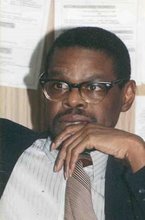
Enough is Enough Demonstration Outside Home of BET Executive
Saturday, October 13, 2007


Friday, October 12, 2007
Jena Vendetta
When the Jena 6 defendants went to court on yesterday (Thursday), expecting a “routine hearing” related to a schoolyard fight that has drawn international attention, presiding Judge J. P. Mauffrey remanded 17-year old Mychal Bell into custody, supposedly on the grounds that the fight violated his probation on previous juvenile convictions.
What part of world opinion don’t these inbred retards of Louisiana understand?
First, it was three nooses dangled over a segregated schoolyard tree after black students had requested to sit under its shade during lunchtime like the white students. When black students protested, District Attorney Reed Walters came in and made his infamous threat directed at the black students- how that he can wipe out their lives with “the stroke of a pen”.
There are the nooses on one hand and the law on the other. (Talk about being caught between a rock and a hard place). How can this not be interpreted as suppression of a people by use of fear and intimidation? (Fear of the lynch rope and Intimidation by the law). What choice does these black children have, except to "accept it" or fight against it?
Some people want us to fast-forward our minds to December 4, 2006, without taking into account the chain-reaction of events leading up to the schoolyard fight.
They called the nooses “a prank”. How did they know the purpose of the nooses and the intent of the heart of the noose-hangers? (Am I missing a secret conversation somewhere?) How are African-Americans supposed to automatically know that the nooses were only a prank, in a state with the highest number of recorded lynching, deep in the middle of KKK country, where (heretofore) no outside media dared to venture? (If a black person screamed in Jena, no one would hear it, because the traditional press doesn’t carry small town stories like this).
What the nooses could not do legally, rest assured that DA Reed Walters can do with just the stroke of his pen- lynch by law.
Stacking the jury with all-white citizens, including friends of the so-called victim, is ho-hum business as usual to Jena, but it is an aberration of justice in the eyes of the world. (A recent DA manual on how to exclude minorities from jury panel created some local controversy in my hometown). Nevertheless, this follows a southern tradition: Accuse a black man of anything and you can get a conviction, the odds being better with an all-white jury. And, if a man is falsely accused and convicted, who will hear him scream, anyway? (The Innocence Project has exonerated some 208 people who have been wrongly convicted. It is no wonder district attorneys oppose the establishment of Innocence Commissions to investigate claims of wrongful convictions).
Jena: A Rule by Terroristic Fear and Intimidation
When some 50,000 people heard the cry of the Jena 6 teenagers, they descended on the small backwoods town of 3,000. To avoid the protesting crowd and the media spectacle, the whole town closed its doors on the September 20 march.
The case of Mychal Bell was overturned by the appeals court and returned to be heard in juvenile court. The case was an international embarrassment. President George Bush spoke out about the injustice- likewise presidential candidates Senators Barack Obama and Hillary Clinton. Louisiana Governor Kathleen Blanco “urged” the citizens of Jena to come together and resolve their race problem.
With one hand, they give. With the other, they take away.
In his lamentations about how his town as been mischaracterized, Jena Mayor Murphy McMillan, bemoans the continued protest. He speaks about how hospitable the people of Jena were to allow the protesters to come into his community (not to mention, everybody closed shop and went fishing). On the other hand, DA Reed Walters goes on public record to make a statement from God. Had not Jesus Christ intervened, he asserts, the protesters would have destroyed the town. (This reminds me of assertions during slavery- how God protected the minority white people against the red savages and rebellious black slaves.) How did God do it? Through “divine intervention”, says Walters. In the past, God always protected his “blessed people” from the cursed race of people, by putting his hands on them and keep them “in their place”.
It is no surprise that the popularity of this myth continues in the South, which only emboldens the Jena absurdities.
Do not connect the dots.
If the DA can prove, beyond a reasonable doubt, that the act of assault happened in a vacuum- disconnected from surrounding circumstance-the daily taunting of by white students, and all the previous assaults upon black students- then there is no such thing in nature as cause and effect. Things just happen out of a spiritual nowhere, and one day, out of the sky-blue, here comes the assailant Mychal Bell with some crazy obsessed notion to hurt somebody (and it’s important that the DA points out that that somebody is white, not just a high school teenager like his counterpart). It was an “assault” upon a “white person”, the most heinous crime imaginable because it defies the social (divine) order.
What part of world opinion don’t these inbred retards of Louisiana understand?
First, it was three nooses dangled over a segregated schoolyard tree after black students had requested to sit under its shade during lunchtime like the white students. When black students protested, District Attorney Reed Walters came in and made his infamous threat directed at the black students- how that he can wipe out their lives with “the stroke of a pen”.
There are the nooses on one hand and the law on the other. (Talk about being caught between a rock and a hard place). How can this not be interpreted as suppression of a people by use of fear and intimidation? (Fear of the lynch rope and Intimidation by the law). What choice does these black children have, except to "accept it" or fight against it?
Some people want us to fast-forward our minds to December 4, 2006, without taking into account the chain-reaction of events leading up to the schoolyard fight.
They called the nooses “a prank”. How did they know the purpose of the nooses and the intent of the heart of the noose-hangers? (Am I missing a secret conversation somewhere?) How are African-Americans supposed to automatically know that the nooses were only a prank, in a state with the highest number of recorded lynching, deep in the middle of KKK country, where (heretofore) no outside media dared to venture? (If a black person screamed in Jena, no one would hear it, because the traditional press doesn’t carry small town stories like this).
What the nooses could not do legally, rest assured that DA Reed Walters can do with just the stroke of his pen- lynch by law.
Stacking the jury with all-white citizens, including friends of the so-called victim, is ho-hum business as usual to Jena, but it is an aberration of justice in the eyes of the world. (A recent DA manual on how to exclude minorities from jury panel created some local controversy in my hometown). Nevertheless, this follows a southern tradition: Accuse a black man of anything and you can get a conviction, the odds being better with an all-white jury. And, if a man is falsely accused and convicted, who will hear him scream, anyway? (The Innocence Project has exonerated some 208 people who have been wrongly convicted. It is no wonder district attorneys oppose the establishment of Innocence Commissions to investigate claims of wrongful convictions).
Jena: A Rule by Terroristic Fear and Intimidation
When some 50,000 people heard the cry of the Jena 6 teenagers, they descended on the small backwoods town of 3,000. To avoid the protesting crowd and the media spectacle, the whole town closed its doors on the September 20 march.
The case of Mychal Bell was overturned by the appeals court and returned to be heard in juvenile court. The case was an international embarrassment. President George Bush spoke out about the injustice- likewise presidential candidates Senators Barack Obama and Hillary Clinton. Louisiana Governor Kathleen Blanco “urged” the citizens of Jena to come together and resolve their race problem.
With one hand, they give. With the other, they take away.
In his lamentations about how his town as been mischaracterized, Jena Mayor Murphy McMillan, bemoans the continued protest. He speaks about how hospitable the people of Jena were to allow the protesters to come into his community (not to mention, everybody closed shop and went fishing). On the other hand, DA Reed Walters goes on public record to make a statement from God. Had not Jesus Christ intervened, he asserts, the protesters would have destroyed the town. (This reminds me of assertions during slavery- how God protected the minority white people against the red savages and rebellious black slaves.) How did God do it? Through “divine intervention”, says Walters. In the past, God always protected his “blessed people” from the cursed race of people, by putting his hands on them and keep them “in their place”.
It is no surprise that the popularity of this myth continues in the South, which only emboldens the Jena absurdities.
Do not connect the dots.
If the DA can prove, beyond a reasonable doubt, that the act of assault happened in a vacuum- disconnected from surrounding circumstance-the daily taunting of by white students, and all the previous assaults upon black students- then there is no such thing in nature as cause and effect. Things just happen out of a spiritual nowhere, and one day, out of the sky-blue, here comes the assailant Mychal Bell with some crazy obsessed notion to hurt somebody (and it’s important that the DA points out that that somebody is white, not just a high school teenager like his counterpart). It was an “assault” upon a “white person”, the most heinous crime imaginable because it defies the social (divine) order.
Thursday, October 11, 2007
NATIONAL MARCH AGAINST HATE CRIMES
For Immediate Release
October 7, 2007
NATIONAL MARCH AGAINST HATE CRIMES:
MEGAN WILLIAMS: KIDNAP, TORTURE AND RAPE VICTIM IS FOCUS OF NATIONAL CALL TO ACTION
When: Saturday November 3, 2007 12:00 noon
Location: Charleston, West Virginia. Beginning in front of West Virginia State University and Marching to the West Virginia State Capitol in Charleston.
March Purpose: To bring national and statewide support to Charleston resident Megan Williams, the Williams Family and victims of other hate crimes nationwide. The Jena 6 case, the rise in the hanging of nooses and other current acts of injustices and intimidation against Blacks/African Americans will all be highlighted at this National March against Hate Crimes. Families and victims of hate crimes that are occurring throughout the nation will attend. Black Lawyers For Justice, the Williams Family and organizers are demanding that Federal Hate Crimes charges be brought in the instant case. They are also demanding Congressional hearings on hate crimes against Black residents as well a wide range of actions to combat the growing attacks on Blacks in America.
Who are the Organizers? The primary march organizers are Black Lawyers For Justice (BLFJ) and the Support Committee For Megan Williams. This march will be endorsed by at least 100 Black organizations, student groups, clergy and leaders of every stripe. An initial endorsement list will be produced on 10-15-07.
Contact: Black Lawyers For Justice (BLFJ) / Malik Shabazz, Esq.
Attorney/ advocate for Megan Williams and the Williams Family
Ph: NATIONAL (202) 397-3577 local (304) 657-1493
E-mail: shabazzlaw@aol.com
Website: Blacklawyersforjustice.org
WHY A MARCH TO SUPPORT MEGAN WILLIAMS AND OPPOSE HATE CRIMES?
On November 3, 2007 a historic National March will take place in Charleston, West Virginia. This call to action is to support young Megan Williams, who is the victim of one of the worst hate crimes in United States history. The March is also called to address an unacceptable rise in hate crimes and incidents of injustices currently perpetrated against Blacks or African Americans. On September 12, 2007, and in subsequent preliminary hearings, it was revealed that Megan Williams, a twenty year old Black Woman, was lured into a nearby Logan county trailer house of hatred. Young Megan, who also has special disability needs, was repeatedly raped, choked, stabbed, forced to eat dog and rat feces as her six white tormentors berated her calling her “nigger” incessantly. According to evidence gathered, Megan was sodomized with a stick and a noose was tied around her neck for lengthy periods during this week long ordeal that is verified by several of co-defendants signed confessions. This is an this ugly and outrageous ordeal. Prosecutors said. “Every time they stabbed her, they called her ‘nigger.” Carmen Williams, the mother, told The Charleston Gazette. “She wakes up in the middle of the night screaming, ‘Mommy.’ What’s really, really bad is, we don’t know everything, and they did to her. She is crying all the time.” No doubt, had she not been rescued they were going to kill her and throw her in a nearby lake.
Arrested are: Frankie Brewster, 49, and her son Bobby Brewster, 24., Karen Burton, 46; her daughter Alisha, 23; Danny Combs, 20, and George Messer, 27 –six whites from nearby Logan County, West Virginia. The suspects took turns beating, stabbing, choking and sexually abusing Williams, while consistently threatening her with death, according to criminal complaints. A rope was placed around Williams’ neck, her hair was ripped out and she was made to eat dog and rat feces, drink from a toilet and lick up blood, the complaint charges. At one point, she was sexually assaulted while scalding water and melting hot wax from a candle was poured on her body. At another point she was forced to lick the toes of the sadistic defendants. She was stabbed in the leg at least four times and both of her ankles were cut by a female suspect who allegedly taunted her, saying, “This one is for Kunta Kinte, and that’s what we do to niggers around here.”
“The Megan Williams case is beyond a doubt, one of the worst hate crimes in U.S. History. The Megan Williams case is even worse than the case of the Jena 6”…said Attorney Malik Shabazz Esq., Megan Williams Family Attorney and Spokesman for Black Lawyers For Justice, speaking at the October 3rd preliminary hearing in Logan County, West VA.
Shabazz also said, “The number of outright hate crimes and injustice cases against Blacks is rising so rapidly it’s hard for our office to keep track of. We are calling for every concerned person in our community to respond to this national crisis with vigor and due diligence. The November 3rd March in Charleston is a big step in the direction of organizing to challenge the tide of attacks occurring against Blacks”.
HATE CRIMES DOCUMENTED
In addition to the Megan Williams case, criminal acts of hatred and intimidation using hanging nooses have sprung up all over the nation. The hanging noose, central to the Jena case, is used by racists as an actionable threat to the safety and well being of Blacks, who have suffered innumerable historical injustices via hanging ropes and lynchings. On Sept 7th, a three foot noose was found hung at the University of Maryland, College Park, roiling the campus. On October 4th, the Pittsburgh Tribune Review reported that police were investigating several cases in which nooses were left at workplaces to intimidate black employees in the Pittsburgh area. The Tribune reported, “a supervisor at the Verizon Wireless Business Services Center in Marshall found a black doll with a noose around its neck and racial slurs directed at it.” Several similar hate crime incidents have been reported in the Pittsburgh area in the last month. In Long Island, New York last month, police found a noose hanging in the locker room. Many believed it was hung by a police officer and was in response to the newly elected Black police chief. Last month, in North Carolina, nooses were found hung at a public school. On October 3rd in Washington D.C., white students and historical Galluadet University for the deaf, reportedly held a Black student hostage for over an hour and repeatedly wrote “KKK” all over his body with markers. All over the U.S., Police assaulting and killing unarmed Black victims is on the rise again.
A FOLLOW UP TO JENA
The November 3rd National March against Hate Crimes is also an effort to end the continued persecution of the Jena 6. Mychal Bell and the Jena 6 are still facing jail after responding to racist persecution at the High school in Jena, Louisiana. Also the addresses and phone numbers of the Jena 6 Families were posted on Neo-Nazi/Klan websites, subsequently, white supremacists have committed acts of aggression near their homes and BLFJ has copies of letters from various Ku Klux Klan organizations directly threatening the Jena 6 families. Members of the Jena 6 are endorsing and are expected at this march.
Over 100 organizations, student groups, youth organizations, clergy, rappers, and leaders are set to endorse the November 3rd March (a list will be released on 10/15/07) Like in Jena, organizers going to get busses, travel the highway and organize to support Megan Williams and organize against these attacks.
SCHEDULE OF EVENTS
Friday November 2nd 7:00 pm: A pre march remembrance/ prayer vigil will take place at the Logan County trailer home where Megan Williams was kidnapped and tortured
Saturday November 3rd 12:00 noon: National March against Hate Crimes, Charleston, West VA. March will begin in front of West Virginia State University.
Saturday November 3rd 5:00 pm: Fundraiser for Megan Williams and Town Hall Meeting on Race Relations to take place at Rehoboth Cathedral of Christ in Charleston, West Virginia- Bishop James Carter III is the host pastor.
To Endorse This March Or For Updates And Further Details, Visit The Website: Www.Blacklawyersforjustice.Org Or Call (202) 397 -4577 The Email Is Shabazzlaw@aol.Com
October 7, 2007
NATIONAL MARCH AGAINST HATE CRIMES:
MEGAN WILLIAMS: KIDNAP, TORTURE AND RAPE VICTIM IS FOCUS OF NATIONAL CALL TO ACTION
When: Saturday November 3, 2007 12:00 noon
Location: Charleston, West Virginia. Beginning in front of West Virginia State University and Marching to the West Virginia State Capitol in Charleston.
March Purpose: To bring national and statewide support to Charleston resident Megan Williams, the Williams Family and victims of other hate crimes nationwide. The Jena 6 case, the rise in the hanging of nooses and other current acts of injustices and intimidation against Blacks/African Americans will all be highlighted at this National March against Hate Crimes. Families and victims of hate crimes that are occurring throughout the nation will attend. Black Lawyers For Justice, the Williams Family and organizers are demanding that Federal Hate Crimes charges be brought in the instant case. They are also demanding Congressional hearings on hate crimes against Black residents as well a wide range of actions to combat the growing attacks on Blacks in America.
Who are the Organizers? The primary march organizers are Black Lawyers For Justice (BLFJ) and the Support Committee For Megan Williams. This march will be endorsed by at least 100 Black organizations, student groups, clergy and leaders of every stripe. An initial endorsement list will be produced on 10-15-07.
Contact: Black Lawyers For Justice (BLFJ) / Malik Shabazz, Esq.
Attorney/ advocate for Megan Williams and the Williams Family
Ph: NATIONAL (202) 397-3577 local (304) 657-1493
E-mail: shabazzlaw@aol.com
Website: Blacklawyersforjustice.org
WHY A MARCH TO SUPPORT MEGAN WILLIAMS AND OPPOSE HATE CRIMES?
On November 3, 2007 a historic National March will take place in Charleston, West Virginia. This call to action is to support young Megan Williams, who is the victim of one of the worst hate crimes in United States history. The March is also called to address an unacceptable rise in hate crimes and incidents of injustices currently perpetrated against Blacks or African Americans. On September 12, 2007, and in subsequent preliminary hearings, it was revealed that Megan Williams, a twenty year old Black Woman, was lured into a nearby Logan county trailer house of hatred. Young Megan, who also has special disability needs, was repeatedly raped, choked, stabbed, forced to eat dog and rat feces as her six white tormentors berated her calling her “nigger” incessantly. According to evidence gathered, Megan was sodomized with a stick and a noose was tied around her neck for lengthy periods during this week long ordeal that is verified by several of co-defendants signed confessions. This is an this ugly and outrageous ordeal. Prosecutors said. “Every time they stabbed her, they called her ‘nigger.” Carmen Williams, the mother, told The Charleston Gazette. “She wakes up in the middle of the night screaming, ‘Mommy.’ What’s really, really bad is, we don’t know everything, and they did to her. She is crying all the time.” No doubt, had she not been rescued they were going to kill her and throw her in a nearby lake.
Arrested are: Frankie Brewster, 49, and her son Bobby Brewster, 24., Karen Burton, 46; her daughter Alisha, 23; Danny Combs, 20, and George Messer, 27 –six whites from nearby Logan County, West Virginia. The suspects took turns beating, stabbing, choking and sexually abusing Williams, while consistently threatening her with death, according to criminal complaints. A rope was placed around Williams’ neck, her hair was ripped out and she was made to eat dog and rat feces, drink from a toilet and lick up blood, the complaint charges. At one point, she was sexually assaulted while scalding water and melting hot wax from a candle was poured on her body. At another point she was forced to lick the toes of the sadistic defendants. She was stabbed in the leg at least four times and both of her ankles were cut by a female suspect who allegedly taunted her, saying, “This one is for Kunta Kinte, and that’s what we do to niggers around here.”
“The Megan Williams case is beyond a doubt, one of the worst hate crimes in U.S. History. The Megan Williams case is even worse than the case of the Jena 6”…said Attorney Malik Shabazz Esq., Megan Williams Family Attorney and Spokesman for Black Lawyers For Justice, speaking at the October 3rd preliminary hearing in Logan County, West VA.
Shabazz also said, “The number of outright hate crimes and injustice cases against Blacks is rising so rapidly it’s hard for our office to keep track of. We are calling for every concerned person in our community to respond to this national crisis with vigor and due diligence. The November 3rd March in Charleston is a big step in the direction of organizing to challenge the tide of attacks occurring against Blacks”.
HATE CRIMES DOCUMENTED
In addition to the Megan Williams case, criminal acts of hatred and intimidation using hanging nooses have sprung up all over the nation. The hanging noose, central to the Jena case, is used by racists as an actionable threat to the safety and well being of Blacks, who have suffered innumerable historical injustices via hanging ropes and lynchings. On Sept 7th, a three foot noose was found hung at the University of Maryland, College Park, roiling the campus. On October 4th, the Pittsburgh Tribune Review reported that police were investigating several cases in which nooses were left at workplaces to intimidate black employees in the Pittsburgh area. The Tribune reported, “a supervisor at the Verizon Wireless Business Services Center in Marshall found a black doll with a noose around its neck and racial slurs directed at it.” Several similar hate crime incidents have been reported in the Pittsburgh area in the last month. In Long Island, New York last month, police found a noose hanging in the locker room. Many believed it was hung by a police officer and was in response to the newly elected Black police chief. Last month, in North Carolina, nooses were found hung at a public school. On October 3rd in Washington D.C., white students and historical Galluadet University for the deaf, reportedly held a Black student hostage for over an hour and repeatedly wrote “KKK” all over his body with markers. All over the U.S., Police assaulting and killing unarmed Black victims is on the rise again.
A FOLLOW UP TO JENA
The November 3rd National March against Hate Crimes is also an effort to end the continued persecution of the Jena 6. Mychal Bell and the Jena 6 are still facing jail after responding to racist persecution at the High school in Jena, Louisiana. Also the addresses and phone numbers of the Jena 6 Families were posted on Neo-Nazi/Klan websites, subsequently, white supremacists have committed acts of aggression near their homes and BLFJ has copies of letters from various Ku Klux Klan organizations directly threatening the Jena 6 families. Members of the Jena 6 are endorsing and are expected at this march.
Over 100 organizations, student groups, youth organizations, clergy, rappers, and leaders are set to endorse the November 3rd March (a list will be released on 10/15/07) Like in Jena, organizers going to get busses, travel the highway and organize to support Megan Williams and organize against these attacks.
SCHEDULE OF EVENTS
Friday November 2nd 7:00 pm: A pre march remembrance/ prayer vigil will take place at the Logan County trailer home where Megan Williams was kidnapped and tortured
Saturday November 3rd 12:00 noon: National March against Hate Crimes, Charleston, West VA. March will begin in front of West Virginia State University.
Saturday November 3rd 5:00 pm: Fundraiser for Megan Williams and Town Hall Meeting on Race Relations to take place at Rehoboth Cathedral of Christ in Charleston, West Virginia- Bishop James Carter III is the host pastor.
To Endorse This March Or For Updates And Further Details, Visit The Website: Www.Blacklawyersforjustice.Org Or Call (202) 397 -4577 The Email Is Shabazzlaw@aol.Com
Tuesday, October 9, 2007
Jena 6 Backlashers
Jonny Cochran of the Newport News writes: “I think the Jena 6 in Jena, La., greatly overreacted at the sight of nooses hanging from a tree next to their school… I don't know what those who put them up meant them to symbolize. But even if that was their way of expressing that they didn't want black students to hang out under that tree, they weren't justified in beating a classmate.” (“Jena 6 Overreacted”, October 8, 2007)
Now here is a pundit who admits not knowing what the noose-hangers meant “to symbolize”. Nevertheless, he proceeds to give his expert opinion on why he thinks “the Jena 6 in Jena, La., greatly overreacted at the sight of nooses hanging from a tree next to their school”.
On the other hand.
“I do not want to diminish the impression that the hanging of the nooses has had on good people,” Jena Mayor Murphy R. McMillin wrote. “I do recognize that what happened is insulting and hurtful… To put the incident in Jena in the same league as those who were murdered in the 1960s cheapens their sacrifice and insults their memory.”
Commentary
It is one thing to claim that all this stuff is a product of my imagination, but what about this counter-argument of an “overactive imagination” and an “over-reactive response”? Other than “insulting and hurtful”, we would be led to believe the whole Jena 6 case is blown out of proportion.
How can anyone “cheapen” the sacrifice and “insult” the memory of African-Americans who were lynched in the South? Every time I hear about nooses made for lynching black people, I remember the words of Mrs. Mamie Till Bradley: “Look at what they did to my boy”, she cried. Her son was Emmitt Till, a black boy lynched in Money, Mississippi in August 1955.
I was 10-years old and can remember, unto this day, the words of the grieving mother, insisting that the casket be opened at the funeral so she could show the world what race hatred looked like. I saw the horrible picture published in Jet Magazine and never forgot it. Emmitt Louis Till was only 14 years old when he was slain.

This was not just a lynching. Emmitt Till was the most tortured person in human history. Two white men came to the home of Till’s great-uncle in the middle of the night, wanting to talk to the boy about “wolf whistling at a white woman”, which was another ex-post facto Jim Crow Law. They dragged the young man away as he screamed and hollered for his helpless uncle to save him. In a barn, they tortured him all nights, according to the testimony of a passerby who heard Till’s un-muffled screams.
They beat him, gouged out his eye, smashed his head in, draped him in barbwire, dangled him over the Tallahatchie River Bridge, and shot him in the head. When they found him dead with the weight of fan tied around his neck in the river, hamstrung and handcuffed with barbwire, the local newspapers initially reported it as a suicide.
That was the way I remembered it from 1955, although there have been many white revisions of history before and since. Nevertheless, it is still a story some people do no want school children to hear. They would rather they hear a whitewashed version of the Civil Right Movement. As a result, our children are totally ignorant of these happenings, although this is where the movement began to stir, when the white defendants were acquitted and later confessed to a Look Magazine writer.
This made us sick for a whole generation, which generation still lives today, not to mention how James Byrd was dragged behind a pickup truck in Jasper, Texas in 1998. The blood of the dismembered body parts is still soaked into the back roads of this small East Texas town.
I can still hear the screaming in my ear, at night, in my dreams, and whenever I hear men like Jena Mayor McMillin and District Attorney Reed Walters trying to minimize the terrorism black people feel at the sight of a lynch noose. The graves of lynch victims are screaming- screaming not to be forgotten- screaming for justice. For too long, their stories have been silenced.
And when he had opened the fifth seal, I saw under the altar the souls of them that were slain for the word of God, and for the testimony which they held: And they cried with a loud voice, saying, How long, O Lord, holy and true, dost thou not judge and avenge our blood on them that dwell on the earth? (Revelation 6:9-10)
From the collection of Milford F. Plaines’ African American Holocaust.
Now here is a pundit who admits not knowing what the noose-hangers meant “to symbolize”. Nevertheless, he proceeds to give his expert opinion on why he thinks “the Jena 6 in Jena, La., greatly overreacted at the sight of nooses hanging from a tree next to their school”.
On the other hand.
“I do not want to diminish the impression that the hanging of the nooses has had on good people,” Jena Mayor Murphy R. McMillin wrote. “I do recognize that what happened is insulting and hurtful… To put the incident in Jena in the same league as those who were murdered in the 1960s cheapens their sacrifice and insults their memory.”
Commentary
It is one thing to claim that all this stuff is a product of my imagination, but what about this counter-argument of an “overactive imagination” and an “over-reactive response”? Other than “insulting and hurtful”, we would be led to believe the whole Jena 6 case is blown out of proportion.
How can anyone “cheapen” the sacrifice and “insult” the memory of African-Americans who were lynched in the South? Every time I hear about nooses made for lynching black people, I remember the words of Mrs. Mamie Till Bradley: “Look at what they did to my boy”, she cried. Her son was Emmitt Till, a black boy lynched in Money, Mississippi in August 1955.
I was 10-years old and can remember, unto this day, the words of the grieving mother, insisting that the casket be opened at the funeral so she could show the world what race hatred looked like. I saw the horrible picture published in Jet Magazine and never forgot it. Emmitt Louis Till was only 14 years old when he was slain.

This was not just a lynching. Emmitt Till was the most tortured person in human history. Two white men came to the home of Till’s great-uncle in the middle of the night, wanting to talk to the boy about “wolf whistling at a white woman”, which was another ex-post facto Jim Crow Law. They dragged the young man away as he screamed and hollered for his helpless uncle to save him. In a barn, they tortured him all nights, according to the testimony of a passerby who heard Till’s un-muffled screams.
They beat him, gouged out his eye, smashed his head in, draped him in barbwire, dangled him over the Tallahatchie River Bridge, and shot him in the head. When they found him dead with the weight of fan tied around his neck in the river, hamstrung and handcuffed with barbwire, the local newspapers initially reported it as a suicide.
That was the way I remembered it from 1955, although there have been many white revisions of history before and since. Nevertheless, it is still a story some people do no want school children to hear. They would rather they hear a whitewashed version of the Civil Right Movement. As a result, our children are totally ignorant of these happenings, although this is where the movement began to stir, when the white defendants were acquitted and later confessed to a Look Magazine writer.
This made us sick for a whole generation, which generation still lives today, not to mention how James Byrd was dragged behind a pickup truck in Jasper, Texas in 1998. The blood of the dismembered body parts is still soaked into the back roads of this small East Texas town.
I can still hear the screaming in my ear, at night, in my dreams, and whenever I hear men like Jena Mayor McMillin and District Attorney Reed Walters trying to minimize the terrorism black people feel at the sight of a lynch noose. The graves of lynch victims are screaming- screaming not to be forgotten- screaming for justice. For too long, their stories have been silenced.
And when he had opened the fifth seal, I saw under the altar the souls of them that were slain for the word of God, and for the testimony which they held: And they cried with a loud voice, saying, How long, O Lord, holy and true, dost thou not judge and avenge our blood on them that dwell on the earth? (Revelation 6:9-10)
From the collection of Milford F. Plaines’ African American Holocaust.
Friday, October 5, 2007
Joint Congressional Hearing on Mass Incarceration in US
Summaries and Excerpts by Eddie Griffin
Report Date: Friday, October 05, 2007
PURPOSE: Joint Economic Committee to Examine Economic Costs of Surge in U.S. Prison Population and Possible Solutions
October 04, 2007
Washington, DC – Senator Jim Webb conducted a Joint Economic Committee (JEC) hearing to explore the steep increase in the U.S. prison population and the economic and social costs of mass incarceration.
HAT TIP TO GRITSFORBREAKFAST
Mass Incarceration: At What Cost?
Doc Berman of Sentencing Law & Policy reports on the October 4, 2007 Joint Economic Committee (JEC) hearing: "Mass Incarceration in the United States: At What Cost?".
GRITS writes: It appears as though Senator Jim Webb put this program together; his webpage now has interesting links to "Facts about the United States prison system" (posted below) and "Floor Charts and Graphs" that spotlight, inter alia, that the "composition of prison admissions has ... shifted toward less serious offenses, characterized by parole violations and drug offenses."
FACTS ABOUT THE PRISON SYSTEM IN THE UNITED STATES
October 2007
RATIONALE FOR HEARING
The hearing entitled “Mass Incarceration in the United States: At What Cost?” will host a number of experts in the field to examine the reasons behind this growth in the prison population, whether it correlates with decreases in crime, the economic costs of maintaining the prison system, and the long-term labor market and social costs of mass incarceration.
KEY POINTS
• The United States has the highest reported incarceration rate in the world. While the United States currently incarcerates 750 inmates per 100,000 persons, the world average rate is 166 per 100,000 persons. Russia, the country with the second highest incarceration rate, imprisons 624 per 100,000 persons. Compared to its democratic, advanced market economy counterparts, the United States has more people in prison by several orders of magnitude. Although crime rates have decreased since 1990, the rate of imprisonment has continued to increase.
• Growth in the prison population is due to changing policy, not increased crime. Many criminal justice experts have found that the increase in the incarceration rate is the product of changes in penal policy and practice, not changes in crime rates. Changes in sentencing, both in terms of time served and the range of offenses meriting incarceration, underlie the growth in the prison population.
• Changes in drug policy have had the single greatest impact on criminal justice policy. The Anti-Drug Abuse Act of 1986 created mandatory minimum sentences for possession of specific amounts of cocaine. The Act instituted a 100-to-1 differential in the treatment of powder and crack cocaine, treating possession of 5 grams of crack cocaine the same as possession of 500 grams of powder cocaine. Crack cocaine is typically consumed by the poor, while powder cocaine, a significantly more expensive drug, is consumed by wealthier users. Mandatory minimum sentences for low-level crack-cocaine users are comparable (and harsher in certain cases) to sentences for major drug dealers.
• The composition of prison admissions has also shifted toward less serious offenses, characterized by parole violations and drug offenses. In 2005, four out of five drug arrests were for possession and one out of five were for sales. The crime history for three-quarters of drug offenders in state prisons involved non-violent or drug offenses.
• The prison system has a disproportionate impact on minority communities. African Americans, who make-up 12.4 percent of the population, represent more than half of all prison inmates, compared to one-third twenty years ago. Although African Americans constitute 14 percent of regular drug users, they are 37 percent of those arrested for drug offenses, and 56 percent of persons in state prisons for drug crimes. African Americans serve nearly as much time in federal prisons for drug offenses as whites do for violent crimes.
• The U.S. prison system has enormous economic costs associated with prison construction and operation, productivity losses, and wage effects. In 2006, states spent an estimated $2 billion on prison construction, three times the amount they were spending fifteen years earlier. The combined expenditures of local governments, state governments, and the federal government for law enforcement and corrections total over $200 billion annually. In addition to these costs, the incarceration rate has significant costs associated with the productivity of both prisoners and ex-offenders. The economic output of prisoners is mostly lost to society while they are imprisoned. Negative productivity effects continue after release. This wage penalty grows with time, as previous imprisonment can reduce the wage growth of young men by some 30 percent.
• Prisons are housing many of the nation’s mentally ill. Prisons are absorbing the cost of housing the nation’s mentally ill. The number of mentally ill in prison is nearly five times the number in inpatient mental hospitals. Large numbers of mentally ill inmates, as well as inmates with HIV, tuberculosis, and hepatitis also raise serious questions regarding the costs and distribution of health care resources.
• The United States faces enormous problems of offender reentry and recidivism. The number of ex-offenders reentering their communities has increased fourfold in the past two decades. On average, however, two out of every three released prisoners will be rearrested and one in two will return to prison within three years of release.
STATEMENTS & GRAPHICS
Senator Webb's Opening Statement
Congresswoman Maloney's Opening Statement
Congressman Robert Scott's Statement
Dr. Glenn Loury, Economics and Social Sciences Professor, Brown University
Dr. Bruce Western, Director Inequality and Social Policy Program, Harvard University
Alphonso Albert, Executive Director, Second Chances
Michael Jacobson, Executive Director, Vera Institute for Justice
Pat Nolan, Vice President, Prison Fellowship, Reston, Virginia
The Incarceration Rate Has Continued to Rise Despite Falling Crime Rates
Institutionalization Rates Have Skyrocketed for Black Men
The Incarceration Rate for Black Males Remains Much Higher than Other Democgraphic Groups
The U.S. Incarceration Rate is the Highest in the World
Chart Submitted by Glenn Loury: Incarceration Rates by Neighborhood in New York City from 1985-1996
Chart Submitted by Glenn Loury: Marijuana Arrests in New York City from 1977-2006
Chart Submitted by Glenn Loury: Marijuana Arrests in New York City by Race from 1986-2006
Chart Submitted by Bruce Western: Black Male High School Drop-Outs Have Much Greater Risk of Ending Up in Prison than Other Demographics
Table Submitted by Bruce Western: Black Males are More Likely to be Incarcerated than to be Married
Table Submitted by Bruce Western: Pay and Employment Among Ex-Prisoners
Report Date: Friday, October 05, 2007
PURPOSE: Joint Economic Committee to Examine Economic Costs of Surge in U.S. Prison Population and Possible Solutions
October 04, 2007
Washington, DC – Senator Jim Webb conducted a Joint Economic Committee (JEC) hearing to explore the steep increase in the U.S. prison population and the economic and social costs of mass incarceration.
HAT TIP TO GRITSFORBREAKFAST
Mass Incarceration: At What Cost?
Doc Berman of Sentencing Law & Policy reports on the October 4, 2007 Joint Economic Committee (JEC) hearing: "Mass Incarceration in the United States: At What Cost?".
GRITS writes: It appears as though Senator Jim Webb put this program together; his webpage now has interesting links to "Facts about the United States prison system" (posted below) and "Floor Charts and Graphs" that spotlight, inter alia, that the "composition of prison admissions has ... shifted toward less serious offenses, characterized by parole violations and drug offenses."
FACTS ABOUT THE PRISON SYSTEM IN THE UNITED STATES
October 2007
RATIONALE FOR HEARING
The hearing entitled “Mass Incarceration in the United States: At What Cost?” will host a number of experts in the field to examine the reasons behind this growth in the prison population, whether it correlates with decreases in crime, the economic costs of maintaining the prison system, and the long-term labor market and social costs of mass incarceration.
KEY POINTS
• The United States has the highest reported incarceration rate in the world. While the United States currently incarcerates 750 inmates per 100,000 persons, the world average rate is 166 per 100,000 persons. Russia, the country with the second highest incarceration rate, imprisons 624 per 100,000 persons. Compared to its democratic, advanced market economy counterparts, the United States has more people in prison by several orders of magnitude. Although crime rates have decreased since 1990, the rate of imprisonment has continued to increase.
• Growth in the prison population is due to changing policy, not increased crime. Many criminal justice experts have found that the increase in the incarceration rate is the product of changes in penal policy and practice, not changes in crime rates. Changes in sentencing, both in terms of time served and the range of offenses meriting incarceration, underlie the growth in the prison population.
• Changes in drug policy have had the single greatest impact on criminal justice policy. The Anti-Drug Abuse Act of 1986 created mandatory minimum sentences for possession of specific amounts of cocaine. The Act instituted a 100-to-1 differential in the treatment of powder and crack cocaine, treating possession of 5 grams of crack cocaine the same as possession of 500 grams of powder cocaine. Crack cocaine is typically consumed by the poor, while powder cocaine, a significantly more expensive drug, is consumed by wealthier users. Mandatory minimum sentences for low-level crack-cocaine users are comparable (and harsher in certain cases) to sentences for major drug dealers.
• The composition of prison admissions has also shifted toward less serious offenses, characterized by parole violations and drug offenses. In 2005, four out of five drug arrests were for possession and one out of five were for sales. The crime history for three-quarters of drug offenders in state prisons involved non-violent or drug offenses.
• The prison system has a disproportionate impact on minority communities. African Americans, who make-up 12.4 percent of the population, represent more than half of all prison inmates, compared to one-third twenty years ago. Although African Americans constitute 14 percent of regular drug users, they are 37 percent of those arrested for drug offenses, and 56 percent of persons in state prisons for drug crimes. African Americans serve nearly as much time in federal prisons for drug offenses as whites do for violent crimes.
• The U.S. prison system has enormous economic costs associated with prison construction and operation, productivity losses, and wage effects. In 2006, states spent an estimated $2 billion on prison construction, three times the amount they were spending fifteen years earlier. The combined expenditures of local governments, state governments, and the federal government for law enforcement and corrections total over $200 billion annually. In addition to these costs, the incarceration rate has significant costs associated with the productivity of both prisoners and ex-offenders. The economic output of prisoners is mostly lost to society while they are imprisoned. Negative productivity effects continue after release. This wage penalty grows with time, as previous imprisonment can reduce the wage growth of young men by some 30 percent.
• Prisons are housing many of the nation’s mentally ill. Prisons are absorbing the cost of housing the nation’s mentally ill. The number of mentally ill in prison is nearly five times the number in inpatient mental hospitals. Large numbers of mentally ill inmates, as well as inmates with HIV, tuberculosis, and hepatitis also raise serious questions regarding the costs and distribution of health care resources.
• The United States faces enormous problems of offender reentry and recidivism. The number of ex-offenders reentering their communities has increased fourfold in the past two decades. On average, however, two out of every three released prisoners will be rearrested and one in two will return to prison within three years of release.
STATEMENTS & GRAPHICS
Senator Webb's Opening Statement
Congresswoman Maloney's Opening Statement
Congressman Robert Scott's Statement
Dr. Glenn Loury, Economics and Social Sciences Professor, Brown University
Dr. Bruce Western, Director Inequality and Social Policy Program, Harvard University
Alphonso Albert, Executive Director, Second Chances
Michael Jacobson, Executive Director, Vera Institute for Justice
Pat Nolan, Vice President, Prison Fellowship, Reston, Virginia
The Incarceration Rate Has Continued to Rise Despite Falling Crime Rates
Institutionalization Rates Have Skyrocketed for Black Men
The Incarceration Rate for Black Males Remains Much Higher than Other Democgraphic Groups
The U.S. Incarceration Rate is the Highest in the World
Chart Submitted by Glenn Loury: Incarceration Rates by Neighborhood in New York City from 1985-1996
Chart Submitted by Glenn Loury: Marijuana Arrests in New York City from 1977-2006
Chart Submitted by Glenn Loury: Marijuana Arrests in New York City by Race from 1986-2006
Chart Submitted by Bruce Western: Black Male High School Drop-Outs Have Much Greater Risk of Ending Up in Prison than Other Demographics
Table Submitted by Bruce Western: Black Males are More Likely to be Incarcerated than to be Married
Table Submitted by Bruce Western: Pay and Employment Among Ex-Prisoners
Thursday, October 4, 2007
White Rats and Black Mice
The Dallas Corruption Scandal
A sweeping City Hall corruption probe that has produced federal charges against a dozen black civic and political leaders is renewing suspicions of racism in a city with a long history of combative minority relations… Sixteen people - 12 of them black - were named in corruption indictments unsealed this week. Most of them were charged in what the FBI said was a kickback and bribery scheme involving the awarding of contracts to white developers to build affordable housing, mostly in black neighborhoods… Among the blacks indicted are a former City Council member, a former city planner, businessmen, state Rep. Terri Hodge of Dallas, and former Mayor Pro Tem Don Hill, who was considered a front-runner for mayor in June but was hurt by the investigation. He was defeated in the first round of elections. Four white developers were also charged. (Source: “Dallas indictment raises race issues”, Star-Telegram, Thursday, October 04, 2007)
Oh horror of horrors! Black officials and white bribers, again I should be shocked.
Normally, I leave Dallas to the crazies, given the city’s recent history in race relations. But before the cow jumps over the moon, I gotta say: “Woo! Wait a minute.” How did this get to be a race-bait investigation and incrimination?
“I refuse to subscribe that this was racially motivated,” said Michael Sorrell, president of the city's historically black Paul Quinn College. “But given all the factors, what is the statistical likelihood of producing that ratio?”
I am not a particular fan of the FBI because of the dark legacy of J. Edgar Hoover. But I must admit the agency has some pretty good bloodhounds, and these guys don’t move in for the kill with this kind of widespread Mafioso roundup unless they smell corruption.
I am the last person qualified to go in and condemn what may very well be “good, legitimate police work”. If I must do time for my own crime, let every lawbreaker’s chips lay upon the pyres of justice. Let the guilty be punished and the innocent go free, no matter the color of their skin.
What befuddles me is not the long list of prominent Dallas blacks now cast under a cloud of criminal suspicion. I have seen this movie before- many, many times- especially in the area of federal housing where there is a high concentration of black professionals. Even the City of Fort Worth has its own housing scandal and rumors of favoritism, sweetheart contracts, and kickbacks. What confounds me is the scenario of white rats and black mice, where the black mice eat the cheese and the white rats turn state evidence. These are the words of a former black outlaw who knows something about the tricks and the traps of the white double-cross. (And, you would think the next black mouse coming along would realize that the green cheese is bait).
I have warned many of my brothers and sisters in offices to beware of the “Dirty Dollar” from bribe artists. Sometimes it’s not always cash, like in the case of the Louisiana congressional representative who stashed $90,000 in his freezer. Sometimes it is as innocuous as the loan of a company car or a rent-free apartment. Looks innocent and legal enough, but if you accept gifts from Greeks, the hook is in the mouth for good. One illegal transaction obligates the benefactor to a lifetime of bribe-taking.
But this is not simply a hook in the Dallas investigation. It’s a net, and a pretty wide dragnet, at that. It looks like 12 maze-bound black mice and 4 dirty white rats. Now who bribed whom, and who is going to be prosecuted, defamed, and sent to prison?
Don’t you know it? Somebody is going to sing like the songbird of Alcatraz, and I bet there will not be but maybe one black snitch among them.
Before we get hyped up on the race thing, we need to follow the bloodhound’s scent. Did someone get entrapped, or was this another infamous “sting operation”? I bet somebody is asking how in the world they got themselves into this trap.
Looking at the illustrious careers of these African-Americans, the last thing they probably expected while on their way to college degrees and high salaried positions was to end up in handcuffs. No, this was more than a fall from power and loss of esteem. It was a disgrace in the eyes of black admirers who looked upon these leaders as “role models”. Graciously, they al made bail arrangements before being arrested, otherwise we would have to endure the shame of their being carted away in handcuffs, like ENRON’s Kenneth Lay and Jeffrey Skilling.
What irk me are the white contractors- kickbacks and bribery- and how unfair it makes the field of business deal-making. While minority businesspeople go to city leaders every day on their hands and knees begging for contracting opportunities, trying to play the game by the rules, there are white businessmen going through the back door and undermining the selection process with gifts, grafts, bribes, and kickbacks.
This is how America does business every day. And, when things go afoul, the bribery rats jump ship, and leave the little black mice to sink or swim. I’ve been there. I’ve been offered money to bribe black elected officials on behalf of white contractors. I’ve been offered money to fabricate financial records in order for a Mexican national to file back taxes and become a US citizen. Criminal solicitation is a crime, but do I report it? No. Why? Because no crime is committed, in my book, until a conspiracy goes into effect, and I know all too well how the devil gets his hands into your pockets… Good Heavens! I’ve lived on both sides of the law and I know how criminal schemers think.
Like the Godfather said about an “offer that cannot be refused”, in the crime world they say that every man has a price. And, they truly believe in finding it if “the mark” holds public office.
Getting out of the trap is another thing, once in. White rats will give up grandma before they do hard time, but black mice will wonder for daze how they got into this maze.
To confound the issue, the newspaper raises the “race issue”- for what? We need to know more about how the trap was fixed and how it was sprung.
A sweeping City Hall corruption probe that has produced federal charges against a dozen black civic and political leaders is renewing suspicions of racism in a city with a long history of combative minority relations… Sixteen people - 12 of them black - were named in corruption indictments unsealed this week. Most of them were charged in what the FBI said was a kickback and bribery scheme involving the awarding of contracts to white developers to build affordable housing, mostly in black neighborhoods… Among the blacks indicted are a former City Council member, a former city planner, businessmen, state Rep. Terri Hodge of Dallas, and former Mayor Pro Tem Don Hill, who was considered a front-runner for mayor in June but was hurt by the investigation. He was defeated in the first round of elections. Four white developers were also charged. (Source: “Dallas indictment raises race issues”, Star-Telegram, Thursday, October 04, 2007)
Oh horror of horrors! Black officials and white bribers, again I should be shocked.
Normally, I leave Dallas to the crazies, given the city’s recent history in race relations. But before the cow jumps over the moon, I gotta say: “Woo! Wait a minute.” How did this get to be a race-bait investigation and incrimination?
“I refuse to subscribe that this was racially motivated,” said Michael Sorrell, president of the city's historically black Paul Quinn College. “But given all the factors, what is the statistical likelihood of producing that ratio?”
I am not a particular fan of the FBI because of the dark legacy of J. Edgar Hoover. But I must admit the agency has some pretty good bloodhounds, and these guys don’t move in for the kill with this kind of widespread Mafioso roundup unless they smell corruption.
I am the last person qualified to go in and condemn what may very well be “good, legitimate police work”. If I must do time for my own crime, let every lawbreaker’s chips lay upon the pyres of justice. Let the guilty be punished and the innocent go free, no matter the color of their skin.
What befuddles me is not the long list of prominent Dallas blacks now cast under a cloud of criminal suspicion. I have seen this movie before- many, many times- especially in the area of federal housing where there is a high concentration of black professionals. Even the City of Fort Worth has its own housing scandal and rumors of favoritism, sweetheart contracts, and kickbacks. What confounds me is the scenario of white rats and black mice, where the black mice eat the cheese and the white rats turn state evidence. These are the words of a former black outlaw who knows something about the tricks and the traps of the white double-cross. (And, you would think the next black mouse coming along would realize that the green cheese is bait).
I have warned many of my brothers and sisters in offices to beware of the “Dirty Dollar” from bribe artists. Sometimes it’s not always cash, like in the case of the Louisiana congressional representative who stashed $90,000 in his freezer. Sometimes it is as innocuous as the loan of a company car or a rent-free apartment. Looks innocent and legal enough, but if you accept gifts from Greeks, the hook is in the mouth for good. One illegal transaction obligates the benefactor to a lifetime of bribe-taking.
But this is not simply a hook in the Dallas investigation. It’s a net, and a pretty wide dragnet, at that. It looks like 12 maze-bound black mice and 4 dirty white rats. Now who bribed whom, and who is going to be prosecuted, defamed, and sent to prison?
Don’t you know it? Somebody is going to sing like the songbird of Alcatraz, and I bet there will not be but maybe one black snitch among them.
Before we get hyped up on the race thing, we need to follow the bloodhound’s scent. Did someone get entrapped, or was this another infamous “sting operation”? I bet somebody is asking how in the world they got themselves into this trap.
Looking at the illustrious careers of these African-Americans, the last thing they probably expected while on their way to college degrees and high salaried positions was to end up in handcuffs. No, this was more than a fall from power and loss of esteem. It was a disgrace in the eyes of black admirers who looked upon these leaders as “role models”. Graciously, they al made bail arrangements before being arrested, otherwise we would have to endure the shame of their being carted away in handcuffs, like ENRON’s Kenneth Lay and Jeffrey Skilling.
What irk me are the white contractors- kickbacks and bribery- and how unfair it makes the field of business deal-making. While minority businesspeople go to city leaders every day on their hands and knees begging for contracting opportunities, trying to play the game by the rules, there are white businessmen going through the back door and undermining the selection process with gifts, grafts, bribes, and kickbacks.
This is how America does business every day. And, when things go afoul, the bribery rats jump ship, and leave the little black mice to sink or swim. I’ve been there. I’ve been offered money to bribe black elected officials on behalf of white contractors. I’ve been offered money to fabricate financial records in order for a Mexican national to file back taxes and become a US citizen. Criminal solicitation is a crime, but do I report it? No. Why? Because no crime is committed, in my book, until a conspiracy goes into effect, and I know all too well how the devil gets his hands into your pockets… Good Heavens! I’ve lived on both sides of the law and I know how criminal schemers think.
Like the Godfather said about an “offer that cannot be refused”, in the crime world they say that every man has a price. And, they truly believe in finding it if “the mark” holds public office.
Getting out of the trap is another thing, once in. White rats will give up grandma before they do hard time, but black mice will wonder for daze how they got into this maze.
To confound the issue, the newspaper raises the “race issue”- for what? We need to know more about how the trap was fixed and how it was sprung.
Wednesday, October 3, 2007
Mass Movement Against Mass Incarceration
Bruce Dixon’s “Jena: Baby Steps Towards a New Mass Movement” in the Black Agenda Report is highly recommended reading for civil rights strategists and “serious policy wonks” (according to Friends for Justice). Dixon writes:
… the Jena case and the mobilization around it clearly shows that the next Black mass movement, when it gets underway, will focus on the policies of racially selective policing, racially selective prosecution, and racially selective mass imprisonment of African Americans…
Dixon refers to the works of sociologist Loïc Wacquant to show the growing trend in penal incarceration, going back to 1975 when the incarcerated population in the United States stood at 380,000 inmates; and how, since then, it has quadrupled to over two million, with a disproportionate number being black.
There are many reasons for the dramatic spike. Some say the population growth coincides with a national movement to “get tough” on crime, which led to harsher penalties for minor drug offenses. TRUE.
But Dixon goes deeper, tracing the “carceral state” back to its beginning and the evolution of those “peculiar institutions” that were erected as a means of defining, confining, and controlling African-Americans.
First, there was the institution of chattel slavery, under which blacks had no rights that white people were required to respect- not even the right to life. The movement of the time was the Abolitionist Movement, which first had to establish the fact that people of African descent were, in fact, human, as defined by the Constitution. Once the foundation was established, the movement proceeded on the grounds of humanitarianism, which was a rising ideology of the day.
The movement sputtered after the Civil War, not because abolitionists had achieved their objective of freeing the slave, but because of the unrealistic expectation that blacks would settle elsewhere (Liberia and Sierra Leone). Instead, African-Americans were enfranchised with voting rights and rights to own property.
Second, a new system of laws was established to control the movement and freedom of blacks. Originally known as “black codes”, these laws were codified into what became know as Jim Crow laws. What made this institution so “peculiar” was the fact that the laws needed not be written, but were understood and adhered to by tradition. In essence, Jim Crow laws were made up along the way. Such laws included “reckless eyeballing” (a black man looking lustfully at a white woman) and “insolent stares” (looking a white man in the eye with uppity arrogance). All of these laws were subjectively interpreted to suit the mores of the white dominant population.
Between slavery and Jim Crowism, there was security laws designed specifically to placate white fears. Such laws forbade blacks from congregation in large numbers except in church. Political organizing was illegal. Therefore, organizing of any sort was done primarily in the black church, which became the principal alternative institutions for blacks. White persecution against the black church was usually disguised by alleged rumors of slave revolts and conspiracies to riot. Under these false pretexts, many African-American freedmen were summarily prosecuted, convicted, and lynched- most notably the case of freedman and black businessman Denmark Vesey who, along with most of the free and literate black population of Charleston, South Carolina, were tried, convicted, and hanged as a results of unfounded rumors of a slave revolt.
The third “peculiar” institution, asserted by Dixon, is the ghetto urbanization of blacks after the mass migration of plantation-bound sharecroppers during the post-World War I ear. Segregated housing pattern led to the concentration of pockets of poverty in inner-city urban communities and a Gestapo reign over blacks similar to the Nazi’s policy for containing the Jewish population in Europe.
Finally, Dixon comes full circle in connecting the dots to the “carceral state”, the mass removal of black inner-city youth through the criminal justice system and a mangling of the rule of law. This institution began to rise in opposition to the Civil Rights Movement, when black leaders such as Martin Luther King, Malcolm X, and Elijah Muhammad began to threaten the fabric of white rule and government war policies.
A key component in the rise of the carceral state was the design and use of repressive techniques, including spying, sabotaging, assassinations, and mind control experimentation. The movement toward full enfranchisement of African-Americans was perceived as a threat to social order, and hence viewed by government officials as a terrorist movement.
The media of the day collaborated in exacerbating white fears during the Civil Rights Movement, in the same manner that Senator Joseph McCarthy and J. Edgar Hoover created the Great Red Scare, which led to the wholesale annihilation of civil liberties and rights under the Constitution.
What is missing in the dissertation of Loïc Wacquant and, subsequently, Dixon’s Black Agenda Report, is the financial incentive behind mass incarceration. Society still labors under the illusion the American penology is guided by the Three-R Principal: Restraint, Rehabilitation, and Restitution. Thus, the purpose of incarceration is thought to be summed up this way: Remove the lawbreaker from society; incarcerate him or her, and exact enough punishment from the wrongdoer to pay for his or her crime.
Previous debates in penology centered on the dilemma between punishment and rehabilitation, but nowhere is the mention of the billions of dollars spent through the Prison-Industrial Complex. When President Dwight D. Einsenhower first made mention the dangers of the Military-Industrial Complex, he exposed the threat of the Industrial Complex guiding US policies in foreign affairs, leading to war. Likewise, today, the Industrial Complex has a guiding hand behind the rate and level of incarceration throughout the United States.
As proof, the Texas Prison System recently terminated the contract of the GEO Group, which advertises itself as a world leader in the delivery of correctional, detention, and residential treatment services to federal, state, and local government agencies around the globe. GEO offers a turnkey approach that includes design, construction, financing, and operations. GEO represents government clients in the United States, Australia, South Africa, and the United Kingdom. This private corporation (NYSE:GEO), not only operates prison facilities around the world, part of its business comes from designing and constructing prison facilities.
In a recent press release after GEO’s contract at the Coke County Juvenile Justice Center facility in Texas was terminated, the company published this information to its shareholders:
…regarding future events and future performance of GEO that involve risks and uncertainties that could materially affect actual results, including statements regarding estimated earnings, revenues and costs and our ability to maintain growth and strengthen contract relationships... Factors that could cause actual results to vary from current expectations… include, but are not limited to: (1) GEO’s ability to successfully pursue further growth and continue to enhance shareholder value; (2) GEO’s ability to access the capital markets in the future on satisfactory terms or at all; (3) risks associated with GEO’s ability to control operating costs associated with contract start-ups; (4) GEO’s ability to timely open facilities as planned, profitably manage such facilities and successfully integrate such facilities into GEO’s operations without substantial costs; (5) GEO’s ability to win management contracts for which it has submitted proposals and to retain existing management contracts; (6) GEO’s ability to obtain future financing on acceptable terms; (7) GEO’s ability to sustain company-wide occupancy rates at its facilities; and (8) other factors contained in GEO’s Securities and Exchange Commission filings, including the forms 10-K, 10-Q and 8-K reports.
GEO has favorable access to capital markets as long as the prison population keeps growing. It can control operating cost by under-paying its prison staff and maintaining a high prisoner-to-guard ratio- which can only be done through brutal suppression. The “ability to timely open facilities” depends on the certainty of more incarceration. But more importantly is “GEO’s ability to sustain company-wide occupancy rates at its facilities”.
Instead of moving toward de-populating prison facilities, here is a company with a vested interest in keep prison populations growing. Its stockholders have a vested interest in keeping the revolving doors on incarceration swinging. If there is a solution to the crime problem, it is not in the best interest of this company.
In a recent position paper date August 9, 2007, entitled “Public School – Criminal Justice Railroad & The Prison – Industrial Complex”, I noted:
A small Texas prison town becomes the center of a world-wide scandal when an investigation revealed that prison officials were sexually abusing children in the custody of their care. The corruption and abuse of powers and sexual enslavement was so widespread Governor Rick Perry had to literally Fire Everybody, from the top of the Texas Youth Commission’s board of directors, executive officers, and much of the rank and file, down the line.
The Legislators also mandate the release of 473 youthful inmates who had been held beyond their punishment sentence- some as sex slaves for a warden and his deputy.
When the Texas Legislature passed the TYC reform package, it called for mass releases from incarceration and closing down some of the juvenile facilities.
The small Texas prison town cried to their legislators about the number of jobs that would be lost. Local merchants would lose the inflow of commercial traffic from urban visitors. The local economy would lose its pro rata share of tax dollars based on population census. Plain and simply, the local citizens in the small prison town needed the prison in order for it to survive. But in order to keep the prison, they need “offenders” to populate them. [Some parts of rural Texas need prisoners like plantations need slaves.]
Architects, engineers, and constructors who design and build prisons oppose any leniency for juvenile offenders. Their desire seems to be in keeping the prison population growing, and to keep building more lucrative prisons.
The district attorneys and their association even challenged some of the 473 inmates to be released. And, some tries to create mass hysteria by prophesying an increase in crime. At issue is Self-Justification.
This is the overwhelming lesson of the Jena 6, Shaquanda Cotton, Genarlow Wilson, and other black youth who find themselves caught up in the criminal justice system. The exaggerated charges are no accident, and district attorneys use all their discretion and power to put black children away for as long as they can. Although these children have not yet reached the age of consent, there are prison planners, constructors, and a waiting rural white labor pool waiting for their mishap with the law. They depend on it. They expect it.
… the Jena case and the mobilization around it clearly shows that the next Black mass movement, when it gets underway, will focus on the policies of racially selective policing, racially selective prosecution, and racially selective mass imprisonment of African Americans…
Dixon refers to the works of sociologist Loïc Wacquant to show the growing trend in penal incarceration, going back to 1975 when the incarcerated population in the United States stood at 380,000 inmates; and how, since then, it has quadrupled to over two million, with a disproportionate number being black.
There are many reasons for the dramatic spike. Some say the population growth coincides with a national movement to “get tough” on crime, which led to harsher penalties for minor drug offenses. TRUE.
But Dixon goes deeper, tracing the “carceral state” back to its beginning and the evolution of those “peculiar institutions” that were erected as a means of defining, confining, and controlling African-Americans.
First, there was the institution of chattel slavery, under which blacks had no rights that white people were required to respect- not even the right to life. The movement of the time was the Abolitionist Movement, which first had to establish the fact that people of African descent were, in fact, human, as defined by the Constitution. Once the foundation was established, the movement proceeded on the grounds of humanitarianism, which was a rising ideology of the day.
The movement sputtered after the Civil War, not because abolitionists had achieved their objective of freeing the slave, but because of the unrealistic expectation that blacks would settle elsewhere (Liberia and Sierra Leone). Instead, African-Americans were enfranchised with voting rights and rights to own property.
Second, a new system of laws was established to control the movement and freedom of blacks. Originally known as “black codes”, these laws were codified into what became know as Jim Crow laws. What made this institution so “peculiar” was the fact that the laws needed not be written, but were understood and adhered to by tradition. In essence, Jim Crow laws were made up along the way. Such laws included “reckless eyeballing” (a black man looking lustfully at a white woman) and “insolent stares” (looking a white man in the eye with uppity arrogance). All of these laws were subjectively interpreted to suit the mores of the white dominant population.
Between slavery and Jim Crowism, there was security laws designed specifically to placate white fears. Such laws forbade blacks from congregation in large numbers except in church. Political organizing was illegal. Therefore, organizing of any sort was done primarily in the black church, which became the principal alternative institutions for blacks. White persecution against the black church was usually disguised by alleged rumors of slave revolts and conspiracies to riot. Under these false pretexts, many African-American freedmen were summarily prosecuted, convicted, and lynched- most notably the case of freedman and black businessman Denmark Vesey who, along with most of the free and literate black population of Charleston, South Carolina, were tried, convicted, and hanged as a results of unfounded rumors of a slave revolt.
The third “peculiar” institution, asserted by Dixon, is the ghetto urbanization of blacks after the mass migration of plantation-bound sharecroppers during the post-World War I ear. Segregated housing pattern led to the concentration of pockets of poverty in inner-city urban communities and a Gestapo reign over blacks similar to the Nazi’s policy for containing the Jewish population in Europe.
Finally, Dixon comes full circle in connecting the dots to the “carceral state”, the mass removal of black inner-city youth through the criminal justice system and a mangling of the rule of law. This institution began to rise in opposition to the Civil Rights Movement, when black leaders such as Martin Luther King, Malcolm X, and Elijah Muhammad began to threaten the fabric of white rule and government war policies.
A key component in the rise of the carceral state was the design and use of repressive techniques, including spying, sabotaging, assassinations, and mind control experimentation. The movement toward full enfranchisement of African-Americans was perceived as a threat to social order, and hence viewed by government officials as a terrorist movement.
The media of the day collaborated in exacerbating white fears during the Civil Rights Movement, in the same manner that Senator Joseph McCarthy and J. Edgar Hoover created the Great Red Scare, which led to the wholesale annihilation of civil liberties and rights under the Constitution.
What is missing in the dissertation of Loïc Wacquant and, subsequently, Dixon’s Black Agenda Report, is the financial incentive behind mass incarceration. Society still labors under the illusion the American penology is guided by the Three-R Principal: Restraint, Rehabilitation, and Restitution. Thus, the purpose of incarceration is thought to be summed up this way: Remove the lawbreaker from society; incarcerate him or her, and exact enough punishment from the wrongdoer to pay for his or her crime.
Previous debates in penology centered on the dilemma between punishment and rehabilitation, but nowhere is the mention of the billions of dollars spent through the Prison-Industrial Complex. When President Dwight D. Einsenhower first made mention the dangers of the Military-Industrial Complex, he exposed the threat of the Industrial Complex guiding US policies in foreign affairs, leading to war. Likewise, today, the Industrial Complex has a guiding hand behind the rate and level of incarceration throughout the United States.
As proof, the Texas Prison System recently terminated the contract of the GEO Group, which advertises itself as a world leader in the delivery of correctional, detention, and residential treatment services to federal, state, and local government agencies around the globe. GEO offers a turnkey approach that includes design, construction, financing, and operations. GEO represents government clients in the United States, Australia, South Africa, and the United Kingdom. This private corporation (NYSE:GEO), not only operates prison facilities around the world, part of its business comes from designing and constructing prison facilities.
In a recent press release after GEO’s contract at the Coke County Juvenile Justice Center facility in Texas was terminated, the company published this information to its shareholders:
…regarding future events and future performance of GEO that involve risks and uncertainties that could materially affect actual results, including statements regarding estimated earnings, revenues and costs and our ability to maintain growth and strengthen contract relationships... Factors that could cause actual results to vary from current expectations… include, but are not limited to: (1) GEO’s ability to successfully pursue further growth and continue to enhance shareholder value; (2) GEO’s ability to access the capital markets in the future on satisfactory terms or at all; (3) risks associated with GEO’s ability to control operating costs associated with contract start-ups; (4) GEO’s ability to timely open facilities as planned, profitably manage such facilities and successfully integrate such facilities into GEO’s operations without substantial costs; (5) GEO’s ability to win management contracts for which it has submitted proposals and to retain existing management contracts; (6) GEO’s ability to obtain future financing on acceptable terms; (7) GEO’s ability to sustain company-wide occupancy rates at its facilities; and (8) other factors contained in GEO’s Securities and Exchange Commission filings, including the forms 10-K, 10-Q and 8-K reports.
GEO has favorable access to capital markets as long as the prison population keeps growing. It can control operating cost by under-paying its prison staff and maintaining a high prisoner-to-guard ratio- which can only be done through brutal suppression. The “ability to timely open facilities” depends on the certainty of more incarceration. But more importantly is “GEO’s ability to sustain company-wide occupancy rates at its facilities”.
Instead of moving toward de-populating prison facilities, here is a company with a vested interest in keep prison populations growing. Its stockholders have a vested interest in keeping the revolving doors on incarceration swinging. If there is a solution to the crime problem, it is not in the best interest of this company.
In a recent position paper date August 9, 2007, entitled “Public School – Criminal Justice Railroad & The Prison – Industrial Complex”, I noted:
A small Texas prison town becomes the center of a world-wide scandal when an investigation revealed that prison officials were sexually abusing children in the custody of their care. The corruption and abuse of powers and sexual enslavement was so widespread Governor Rick Perry had to literally Fire Everybody, from the top of the Texas Youth Commission’s board of directors, executive officers, and much of the rank and file, down the line.
The Legislators also mandate the release of 473 youthful inmates who had been held beyond their punishment sentence- some as sex slaves for a warden and his deputy.
When the Texas Legislature passed the TYC reform package, it called for mass releases from incarceration and closing down some of the juvenile facilities.
The small Texas prison town cried to their legislators about the number of jobs that would be lost. Local merchants would lose the inflow of commercial traffic from urban visitors. The local economy would lose its pro rata share of tax dollars based on population census. Plain and simply, the local citizens in the small prison town needed the prison in order for it to survive. But in order to keep the prison, they need “offenders” to populate them. [Some parts of rural Texas need prisoners like plantations need slaves.]
Architects, engineers, and constructors who design and build prisons oppose any leniency for juvenile offenders. Their desire seems to be in keeping the prison population growing, and to keep building more lucrative prisons.
The district attorneys and their association even challenged some of the 473 inmates to be released. And, some tries to create mass hysteria by prophesying an increase in crime. At issue is Self-Justification.
This is the overwhelming lesson of the Jena 6, Shaquanda Cotton, Genarlow Wilson, and other black youth who find themselves caught up in the criminal justice system. The exaggerated charges are no accident, and district attorneys use all their discretion and power to put black children away for as long as they can. Although these children have not yet reached the age of consent, there are prison planners, constructors, and a waiting rural white labor pool waiting for their mishap with the law. They depend on it. They expect it.
Subscribe to:
Posts (Atom)