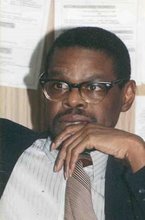
In the beginning, Bernard L. Madoff created wealth out of the sky. Like magic, he commanded the securities market, “Let there be wealth.” And, out of nowhere, came wealth by the billions. But the wealth was not real. So, out of nowhere, the earth opened its mouth and consumed the fathom called wealth. And there, a pyre of dreams burn on the altar.
On Friday morning, December 11, 2008, federal agents descended onto Bernard Madoff’s Manhattan penthouse and arrested him for operating a multi-billion dollar Ponzi scheme.
About 7:30 a.m. this morning, police were called to the Madison Avenue office of Access International. It is reported that 65-year old hedge fund manager Thierry Magon de La Villehuchet had killed himself, being distraught, family members say, over losing the $1.4 billion Luxembourg-based LUXALPHA SICAV-American Selection fund in Bernard L. Madoff Investment Securities.
This is only the beginning.
Tuesday, December 23, 2008


Wednesday, December 17, 2008
The Fifty-Billion Dollar Ponzi Scheme
The assets of Bernard L. Madoff Investment Securities are now frozen. The Wall Street tycoon, himself, once touted as “the best of the best”, was arrested by federal agents and charged with orchestrating a $50-billion Ponzi scheme.
Mr. Madoff was arrested at his Upper East Side apartment in Manhattan last Thursday by F.B.I. agents, after his two sons — both of whom work for the company — reported that he had confessed to them that his money-management business was “basically, a giant Ponzi scheme” and “a big lie.”
Source: http://www.nytimes.com/2008/12/17/business/17madoff.html?em
What is a Ponzi scheme? In the Gangster Underworld, it was called “robbing Peter to pay Paul”.
Wiki: A Ponzi scheme is a fraudulent investment operation that involves paying abnormally high returns to investors out of the money paid in by subsequent investors, rather than from the profit from any real business. It is named after Charles Ponzi. The term "Ponzi scheme" is used primarily in the United States, while other English-speaking countries do not distinguish in colloquial speech between this scheme and other forms of pyramid scheme.
The scheme usually offers abnormally high short-term returns in order to entice new investors. The perpetuation of the high returns that a Ponzi scheme advertises (and pays) requires an ever-increasing flow of money from investors in order to keep the scheme going.
The system is destined to collapse because there are little or no underlying earnings from the money received by the promoter.
TO THE LETTER OF THE SCHEME: The Madoff Touch
When he was arrested last week, Mr. Madoff estimated that investors lost as much as $50 billion in the fraud, according to court filings. Mr. Madoff has said the scam was a Ponzi scheme, a type of fraud in which early investors are paid off with money from later victims, until no more money can be raised and the scheme collapses.
Source: http://www.nytimes.com/2008/12/17/business/17madoff.html?em
THERE IS A DAY OF RECKONING
There is one fact that rings true in all Ponzi schemes, and that is its inevitable collapse. It appears that Master Madoff keep juggling the books, robbing Peter and paying Paul, until there was no more money to pay Paul. Or, maybe it was the crush of a falling stock market and mass exodus of investors that brought Madoff face to face with his own illiquidity. It appears that greed in the excess has been the undoing of many wealthy investors who put all of their trust in the Wall Street guru
[Report from http://www.foxnews.com/story/0,2933,468824,00.html]
From individual investors to small businesses to doctor's cooperatives — and even to the town itself — Fairfield, Conn., gave its money to Bernard Madoff. And now it's left with a pile of old statements telling investors how much money they never really had… Madoff, the former chairman of Nasdaq, was arrested by federal officials last week on charges he orchestrated an elaborate Ponzi scheme, defrauding investors of up to $50 billion and leaving a trail of financial devastation in his wake.
Eddie Griffin Commentary
It was reported that in order to get into Madoff investments ventures, the investor had to open an account, with a minimum amount of a million dollars. Imagine! Fifty-billion dollars vanishes on paper, first; hence, maybe the reason behind why Madoff keep different sets of books. (Was he playing a shell game with the financial records?)
When the name of the game is complexity, then those with the most convincing financial gibberish and jargon can easily con the naive investor, by flirting with their greed instinct, right on the tip of their taste bud. Madoff caught fish from a barrel with old fashion devil bait.
The biggest Wall Street bailout is now beginning to look like the largest heist in American history, even bigger than Madoff’s $50 billion Ponzi scheme. Who can trust Wall Street now?
Mr. Madoff was arrested at his Upper East Side apartment in Manhattan last Thursday by F.B.I. agents, after his two sons — both of whom work for the company — reported that he had confessed to them that his money-management business was “basically, a giant Ponzi scheme” and “a big lie.”
Source: http://www.nytimes.com/2008/12/17/business/17madoff.html?em
What is a Ponzi scheme? In the Gangster Underworld, it was called “robbing Peter to pay Paul”.
Wiki: A Ponzi scheme is a fraudulent investment operation that involves paying abnormally high returns to investors out of the money paid in by subsequent investors, rather than from the profit from any real business. It is named after Charles Ponzi. The term "Ponzi scheme" is used primarily in the United States, while other English-speaking countries do not distinguish in colloquial speech between this scheme and other forms of pyramid scheme.
The scheme usually offers abnormally high short-term returns in order to entice new investors. The perpetuation of the high returns that a Ponzi scheme advertises (and pays) requires an ever-increasing flow of money from investors in order to keep the scheme going.
The system is destined to collapse because there are little or no underlying earnings from the money received by the promoter.
TO THE LETTER OF THE SCHEME: The Madoff Touch
When he was arrested last week, Mr. Madoff estimated that investors lost as much as $50 billion in the fraud, according to court filings. Mr. Madoff has said the scam was a Ponzi scheme, a type of fraud in which early investors are paid off with money from later victims, until no more money can be raised and the scheme collapses.
Source: http://www.nytimes.com/2008/12/17/business/17madoff.html?em
THERE IS A DAY OF RECKONING
There is one fact that rings true in all Ponzi schemes, and that is its inevitable collapse. It appears that Master Madoff keep juggling the books, robbing Peter and paying Paul, until there was no more money to pay Paul. Or, maybe it was the crush of a falling stock market and mass exodus of investors that brought Madoff face to face with his own illiquidity. It appears that greed in the excess has been the undoing of many wealthy investors who put all of their trust in the Wall Street guru
[Report from http://www.foxnews.com/story/0,2933,468824,00.html]
From individual investors to small businesses to doctor's cooperatives — and even to the town itself — Fairfield, Conn., gave its money to Bernard Madoff. And now it's left with a pile of old statements telling investors how much money they never really had… Madoff, the former chairman of Nasdaq, was arrested by federal officials last week on charges he orchestrated an elaborate Ponzi scheme, defrauding investors of up to $50 billion and leaving a trail of financial devastation in his wake.
Eddie Griffin Commentary
It was reported that in order to get into Madoff investments ventures, the investor had to open an account, with a minimum amount of a million dollars. Imagine! Fifty-billion dollars vanishes on paper, first; hence, maybe the reason behind why Madoff keep different sets of books. (Was he playing a shell game with the financial records?)
When the name of the game is complexity, then those with the most convincing financial gibberish and jargon can easily con the naive investor, by flirting with their greed instinct, right on the tip of their taste bud. Madoff caught fish from a barrel with old fashion devil bait.
The biggest Wall Street bailout is now beginning to look like the largest heist in American history, even bigger than Madoff’s $50 billion Ponzi scheme. Who can trust Wall Street now?
Monday, December 15, 2008
About the $700 Billion Emergency Economic Stabilization Funds?
The First Report of the Congressional Oversight Panel for Economic Stabilization December 10, 2008
Congressional Oversight Panel (COP) will release two public reports:
On Jan. 10, it will release a report that examines the administration of the TARP program, including the impact thereof on the economy to date.
On Jan. 20, COP will release a report providing recommendations for reforms to the financial regulatory structure. This report will provide a roadmap for a regulatory system that would revitalize Wall Street, protect consumers, and ensure future stability in our financial markets. Through these reports, the Oversight Panel will reveal the results of its investigations to the American people.
BACKGROUND
In response to the financial crisis, Congress passed the Emergency Economic Stabilization Act of 2008, authorizing the Treasury Department to commit up to $250 billion in taxpayer dollars, to be followed by another $100 billion and another $350 billion if warranted. The statute also created a Congressional Oversight Panel (COP).
The Act’s purposes are to “restore liquidity and stability to the financial system of the United States . . . in a manner that (A) protects home values, college funds, retirement accounts, and life savings; (B) preserves homeownership and promotes jobs and economic growth; (C) promotes overall returns to the taxpayers of the United States; and (D) provides public accountability.” From the passage of the Emergency Economic Stabilization Act of 2008 to the present date, Treasury has used its authority under the Act to provide 87 banks with $165 billion in exchange for preferred stock and warrants. Treasury further used its authority to provide AIG with $40 billion in exchange for preferred stock and warrants, and to provide Citigroup with a further $20 billion in preferred stock and warrants... (excerpted)
OBSERVATION
To restore stability to the financial system, the government must stop tinkering with the market. As any expert will tell you, there are no experts when it comes to the volatile mood swings in market behavior. Ultimately, market behavior is human behavior, insofar as behind every investment decision is a “decider”, fickle human beings.
What is going on, behind the scene, is a bunch of financial gurus trying to figure out something someone can understand: Human Behavior in making investment decision… Call it Paulson’s “Eeny-Meeny-Miny-Moe Dilemma” in Voodoo Trickle Down Economics.
Congressional Oversight Panel (COP) will release two public reports:
On Jan. 10, it will release a report that examines the administration of the TARP program, including the impact thereof on the economy to date.
On Jan. 20, COP will release a report providing recommendations for reforms to the financial regulatory structure. This report will provide a roadmap for a regulatory system that would revitalize Wall Street, protect consumers, and ensure future stability in our financial markets. Through these reports, the Oversight Panel will reveal the results of its investigations to the American people.
BACKGROUND
In response to the financial crisis, Congress passed the Emergency Economic Stabilization Act of 2008, authorizing the Treasury Department to commit up to $250 billion in taxpayer dollars, to be followed by another $100 billion and another $350 billion if warranted. The statute also created a Congressional Oversight Panel (COP).
The Act’s purposes are to “restore liquidity and stability to the financial system of the United States . . . in a manner that (A) protects home values, college funds, retirement accounts, and life savings; (B) preserves homeownership and promotes jobs and economic growth; (C) promotes overall returns to the taxpayers of the United States; and (D) provides public accountability.” From the passage of the Emergency Economic Stabilization Act of 2008 to the present date, Treasury has used its authority under the Act to provide 87 banks with $165 billion in exchange for preferred stock and warrants. Treasury further used its authority to provide AIG with $40 billion in exchange for preferred stock and warrants, and to provide Citigroup with a further $20 billion in preferred stock and warrants... (excerpted)
OBSERVATION
To restore stability to the financial system, the government must stop tinkering with the market. As any expert will tell you, there are no experts when it comes to the volatile mood swings in market behavior. Ultimately, market behavior is human behavior, insofar as behind every investment decision is a “decider”, fickle human beings.
What is going on, behind the scene, is a bunch of financial gurus trying to figure out something someone can understand: Human Behavior in making investment decision… Call it Paulson’s “Eeny-Meeny-Miny-Moe Dilemma” in Voodoo Trickle Down Economics.
Thursday, December 11, 2008
Put Kids First Campaign
Endorsed by Eddie G. Griffin, International Child Rights advocate
On Feb. 4, 2009, adults and youth from throughout the state will be asking elected officials to
Put Kids First in their decision making for Texas.
Please send:
Student Letters to Leaders
by January 30, 2009
Include your school or program address and an optional wallet-sized photograph to:
Put Kids First
c/o Texans Care For Children
814 San Jacinto, Suite 201
Austin, Texas 78701
Students should include in their letters an introduction of who they are (name, grade, etc.), their reason for writing, and what change they think is needed for kids in Texas. You can also have students attach walletsized pictures of themselves to their letter.
Explain that the elected officials will keep the pictures to remember all the youth and children they work for.
The leaders will likely send replies to the address on the letter (e.g., your program’s address). Also, with this address, we will make sure the letters get to one or more of the correct legislators for your district.
Send envelope of letters postmarked by January 30, 2009 to:
Put Kids First, c/o Texans Care For Children, 814 San Jacinto, Suite 201, Austin, Texas 78701
On Feb. 4, 2009, adults and youth from throughout the state will be asking elected officials to
Put Kids First in their decision making for Texas.
Please send:
Student Letters to Leaders
by January 30, 2009
Include your school or program address and an optional wallet-sized photograph to:
Put Kids First
c/o Texans Care For Children
814 San Jacinto, Suite 201
Austin, Texas 78701
Students should include in their letters an introduction of who they are (name, grade, etc.), their reason for writing, and what change they think is needed for kids in Texas. You can also have students attach walletsized pictures of themselves to their letter.
Explain that the elected officials will keep the pictures to remember all the youth and children they work for.
The leaders will likely send replies to the address on the letter (e.g., your program’s address). Also, with this address, we will make sure the letters get to one or more of the correct legislators for your district.
Send envelope of letters postmarked by January 30, 2009 to:
Put Kids First, c/o Texans Care For Children, 814 San Jacinto, Suite 201, Austin, Texas 78701
Thursday, December 4, 2008
HELLO from Death Row
Testimony of the Outlaw Eddie Griffin
TO Mike Ward & Jerry Madden:
Thursday, December 04, 2008
Hello. Let me speak to the Warden. This is Eddie Griffin calling from Death Row.
WHAT?! That doesn’t even sound right, a man using a cell phone calling from death row. But it happens in Texas, obviously more than prison officials realized.
On Wednesday morning, state prison officials unveiled a massive $65.8 million plan to curb an epidemic of smuggled cell phones and other contraband in Texas’ lockups, reports Mike Ward, Austin American-Statesmen.
Hello Mike, Please say again. They are going to spend $65.8 million dollars to patch up a crack in the Texas prison system that’s big enough to drive a Mac Truck trough. Come on!
Hello Jerry, This is Eddie Griffin, the man who first told you to turn over the rock in the Texas Youth Commission’s detention facilities. Didn’t I warn also of the problems of corruption in the adult prison system?
As a graduate of the School of Hard Knocks, with a Ph. D in Survival, I can tell you, first hand, that the taxpayers’ money would be better spent on an ounce of prevention, rather than the $65.8 million pound of cure.
By now you realize the public outrage over TDCJ’s funding request:
Brad Livingston, executive director of the Texas Department of Criminal Justice, said the funding will be sought immediately, through special approval of state leaders, instead of waiting for legislative approval next year.
Livingston would avoid the scrutiny of day.
Tell me: Are any of these the “privatized prisons”, where we have found corruption before.
A Statesman.com writer writes:
This is an internal, employee, management, etc problem, for many, many years, everybody including inmates, knew of these problems, most of the criminals all ready know how to beat the systems before they get there. demote every employee that is in any supervisory position, if they clean up this mess, give them the position back, if not then promote the ones who will be there the rest of there life, waiting for these dead heads to retire. [signed Been There]
As a former prison consultant with some knowledge on this issue, it is doubtful that this expensive plan will accomplish its intended purpose.
The introduction of contraband in prisons is primarily due to the cooperation of the guards, and no amount of hardware is going to remedy it.
I would suggest that considerably more research be done before proposing a costly knee jerk response to the Texas legislature that is doomed to fail in its primary objective: limiting the introduction of contraband into the Texas prison system. [signed Anon]
I work inside the prison. We need help! We need random drug testing, cut sick days in half, termination on the spot (not after 9 disciplinaries), quit recruiting employees at high schools, payphones will help and a few extra dollars in my check, then raise the hiring standards. Not $65million dollar metal detector, I am a tax payer too! That is the goofiest idea our leaders have ever come up with. I think we need to look at replacing our leaders, how many escapes? employee homicide? serious assaults? have we had in the last couple of years. Now we get tough because someone got a call? Austin Drama! [signed By BD]
Testimony of the Outlaw Eddie Griffin
Living in prison is not easy for prison guard or prisoner, but they must contend and suffer with each other’s presence for at least eight hours a day. The prison guard goes back home to wife and children, and the prisoner goes back to naught, but an empty cold bunk bed.
Okay, Johnny Reb, don’t make my day. I’m a lifer, got nothing lose, but my soul, and I’m already in hell. So, don’t make my day, Charlie.
That was my way of getting prison guards off my back.
Hey Charlie, come here a second. I don’t know if you know the rules around here. We, the inmates, outnumber the guards 15-to-1, so don’t get us started. You can come to work, and work a sweet cakewalk 8-hour shift, or your can put in overtime, putting out fires.
Charlie, we got a contest here. Who can take out whom the fastest! Everybody say I am the fastest. You been told!
That was my warning. We were all gladiators, in a fight to the death. Call me more blessed than a cancer survivor.
TO Mike Ward & Jerry Madden:
Thursday, December 04, 2008
Hello. Let me speak to the Warden. This is Eddie Griffin calling from Death Row.
WHAT?! That doesn’t even sound right, a man using a cell phone calling from death row. But it happens in Texas, obviously more than prison officials realized.
On Wednesday morning, state prison officials unveiled a massive $65.8 million plan to curb an epidemic of smuggled cell phones and other contraband in Texas’ lockups, reports Mike Ward, Austin American-Statesmen.
Hello Mike, Please say again. They are going to spend $65.8 million dollars to patch up a crack in the Texas prison system that’s big enough to drive a Mac Truck trough. Come on!
Hello Jerry, This is Eddie Griffin, the man who first told you to turn over the rock in the Texas Youth Commission’s detention facilities. Didn’t I warn also of the problems of corruption in the adult prison system?
As a graduate of the School of Hard Knocks, with a Ph. D in Survival, I can tell you, first hand, that the taxpayers’ money would be better spent on an ounce of prevention, rather than the $65.8 million pound of cure.
By now you realize the public outrage over TDCJ’s funding request:
Brad Livingston, executive director of the Texas Department of Criminal Justice, said the funding will be sought immediately, through special approval of state leaders, instead of waiting for legislative approval next year.
Livingston would avoid the scrutiny of day.
Tell me: Are any of these the “privatized prisons”, where we have found corruption before.
A Statesman.com writer writes:
This is an internal, employee, management, etc problem, for many, many years, everybody including inmates, knew of these problems, most of the criminals all ready know how to beat the systems before they get there. demote every employee that is in any supervisory position, if they clean up this mess, give them the position back, if not then promote the ones who will be there the rest of there life, waiting for these dead heads to retire. [signed Been There]
As a former prison consultant with some knowledge on this issue, it is doubtful that this expensive plan will accomplish its intended purpose.
The introduction of contraband in prisons is primarily due to the cooperation of the guards, and no amount of hardware is going to remedy it.
I would suggest that considerably more research be done before proposing a costly knee jerk response to the Texas legislature that is doomed to fail in its primary objective: limiting the introduction of contraband into the Texas prison system. [signed Anon]
I work inside the prison. We need help! We need random drug testing, cut sick days in half, termination on the spot (not after 9 disciplinaries), quit recruiting employees at high schools, payphones will help and a few extra dollars in my check, then raise the hiring standards. Not $65million dollar metal detector, I am a tax payer too! That is the goofiest idea our leaders have ever come up with. I think we need to look at replacing our leaders, how many escapes? employee homicide? serious assaults? have we had in the last couple of years. Now we get tough because someone got a call? Austin Drama! [signed By BD]
Testimony of the Outlaw Eddie Griffin
Living in prison is not easy for prison guard or prisoner, but they must contend and suffer with each other’s presence for at least eight hours a day. The prison guard goes back home to wife and children, and the prisoner goes back to naught, but an empty cold bunk bed.
Okay, Johnny Reb, don’t make my day. I’m a lifer, got nothing lose, but my soul, and I’m already in hell. So, don’t make my day, Charlie.
That was my way of getting prison guards off my back.
Hey Charlie, come here a second. I don’t know if you know the rules around here. We, the inmates, outnumber the guards 15-to-1, so don’t get us started. You can come to work, and work a sweet cakewalk 8-hour shift, or your can put in overtime, putting out fires.
Charlie, we got a contest here. Who can take out whom the fastest! Everybody say I am the fastest. You been told!
That was my warning. We were all gladiators, in a fight to the death. Call me more blessed than a cancer survivor.
Tuesday, December 2, 2008
If the Trumpet gives an Uncertain Sound:
Who Shall Prepare Himself for Battle?
A Lesson By Eddie Griffin
Tuesday, December 02, 2008
At 2 minutes 2 seconds into the YouTube video speech on World AIDS Day, President-elect Barack Obama reaches into his memory of scripture from the Bible and pulls out this jewel from Paul, the apostle, to the Corinthians:
If the trumpet does not sound a clear call who will get ready for battle?
The President-to-be accurately quoted 1 Corinthians 14:8 NIV, an excellent scriptures for a rallying call. The KJV version speaks of the trumpet making an "uncertain sound"
Two messages in two days from 1 Corinthians 14- This should inspire a lesson. The message, coming from the Sunday morning's sermon, highlighted the “uncertain sound” in churches and in the world. Barack Obama’s message emphasized was the “certain sound”, the sound that one can be assured of, as in the Word of God, and a sense of certainty and reassurances in Obama's words, promises, and actions.
Liken to a trumpeter, Obama implies that he will send out a “clear call” to the public.
The “uncertain sound” in the KJV signifies a wrong message being sent out. Like the playing of Taps instead of Reveille, an uncertain sound confuses the troops. The opposite is the “certain sound”, and there is nothing more certain to me than the Word of God?
Heaven and earth will pass away. But his Word will last forever.
Of this, I am certain: Nietzsche is dead.
ONCE “the people of the land choose one of their men and make him their watchman”. It was the watchman’s job to Blow the Trumpet at the first sign of danger. If the watchman does his job, “blows the trumpet to warn the people, then if anyone hears the trumpet but does not take warning and the sword comes and takes his life, his blood will be on his own head.” If he had taken warning, he would have saved himself.
But if the watchman sees the sword coming and does not blow the trumpet to warn the people and the sword comes and takes the life of one of them, that man will be taken away because of his sin, but God will hold the watchman accountable for his blood.
This is the scenario given in Ezekiel 33:1-20.
The elected watchman who refuses to blow the trumpet is only confounded by the watchman who blows the trumpet and makes an uncertain sound. Shall God hold the blood of lost souls upon the heads of the watchmen who led them away with strange “uncertain” sounds?
This quarter I will devote my Wednesday Night Bible Class to the study of The Trumpet: God’s Word.
A Lesson By Eddie Griffin
Tuesday, December 02, 2008
At 2 minutes 2 seconds into the YouTube video speech on World AIDS Day, President-elect Barack Obama reaches into his memory of scripture from the Bible and pulls out this jewel from Paul, the apostle, to the Corinthians:
If the trumpet does not sound a clear call who will get ready for battle?
The President-to-be accurately quoted 1 Corinthians 14:8 NIV, an excellent scriptures for a rallying call. The KJV version speaks of the trumpet making an "uncertain sound"
Two messages in two days from 1 Corinthians 14- This should inspire a lesson. The message, coming from the Sunday morning's sermon, highlighted the “uncertain sound” in churches and in the world. Barack Obama’s message emphasized was the “certain sound”, the sound that one can be assured of, as in the Word of God, and a sense of certainty and reassurances in Obama's words, promises, and actions.
Liken to a trumpeter, Obama implies that he will send out a “clear call” to the public.
The “uncertain sound” in the KJV signifies a wrong message being sent out. Like the playing of Taps instead of Reveille, an uncertain sound confuses the troops. The opposite is the “certain sound”, and there is nothing more certain to me than the Word of God?
Heaven and earth will pass away. But his Word will last forever.
Of this, I am certain: Nietzsche is dead.
ONCE “the people of the land choose one of their men and make him their watchman”. It was the watchman’s job to Blow the Trumpet at the first sign of danger. If the watchman does his job, “blows the trumpet to warn the people, then if anyone hears the trumpet but does not take warning and the sword comes and takes his life, his blood will be on his own head.” If he had taken warning, he would have saved himself.
But if the watchman sees the sword coming and does not blow the trumpet to warn the people and the sword comes and takes the life of one of them, that man will be taken away because of his sin, but God will hold the watchman accountable for his blood.
This is the scenario given in Ezekiel 33:1-20.
The elected watchman who refuses to blow the trumpet is only confounded by the watchman who blows the trumpet and makes an uncertain sound. Shall God hold the blood of lost souls upon the heads of the watchmen who led them away with strange “uncertain” sounds?
This quarter I will devote my Wednesday Night Bible Class to the study of The Trumpet: God’s Word.
Monday, December 1, 2008
AIDS and the At-Risk Male Prison Population
By Eddie Griffin
Monday, December 01, 2008
WORLD AIDS Day 2008
The United Nations has designated today as World AIDS Day to spread international awareness to the global deadly pandemic of the acquired immune deficiency syndrome (AIDS).
AIDS is now a pandemic of epic proportion. In 2007, an estimated 33.2 million people lived with the disease worldwide, and it killed an estimated 2.1 million people, including 330,000 children.
People with AIDS often have systemic symptoms of infection like fevers, night sweats, swollen glands, chills, weakness, and weight loss. These symptoms and infections result from damages caused to the immune system cause by caused by the human immunodeficiency virus (HIV).
Some estimate that 25% of sub-Sahara Africa is infected with the disease. Indeed, this is where much of the world focus has been trained. By closer to home, nearly 25% of the US prison population is infected.
Based upon findings by Dr. David Wessner, Department of Biology at Davidson College, Ali Cundari reports:
U.S. prison populations are at a record high today, with barely enough room to house incarcerated individuals. Due to the close proximity and high-risk behaviors of inmates, as well as a lack of intervention from authorities, the transmission of HIV in prisons is a major problem today. A combination of both pre-existing and new infections plague prison populations, making them one of UNAIDS’ four major at-risk groups for HIV/AIDS.
In 2005, 1.8% of all state inmates and 1.0% of all federal prison inmates in the U.S. were believed to be HIV positive, leading to a total of 22,480 infected individuals behind bars. These percentages are disproportionate to the rest of the general population, making HIV/AIDS about four times as common among inmates than the population at large. Around 25% of all HIV infected people have spent time in a correctional facility.
In a research report sponsored by the National Commission on Correctional Health Care (NCCHC), the National Institute of Justice, and the Centers for Disease Control and Prevention (CDC), and submitted to Congress in 2002, the Bureau of Justice Statistics of the US Department of Justice presented this data:
On June 30, 1997, more than 6,300 state/federal prison inmates and more than 2800 jail inmates had AIDS… Also, there were more than 2,600 state/federal prison releasees and more than 36 000 jail releasees with AIDS in 1997. Thus, almost 16% of the estimated total of 247,000 persons living with AIDS in the United States in 1997 passed through a correctional facility that year.
After applying our point prevalence range of 1.45% to 2.03%, there were between 17,000 and 25,000 state/federal prison inmates and between 8,000 and 11,000 city/county jail inmates with HIV infection (non-AIDS)… Given the same prevalence range, between 112,000 and 157,000 people with HIV infection (non-AIDS) were released from US prisons and jails in 1997. This estimate suggests that between 22% and 31% of the approximately 503,000 people living with HIV infection (non-AIDS) in the United States in 1997 passed through a correctional facility that year.
Doctors and researchers are not ignorant of the magnitude of the AIDS epidemic in the US prison system. Rather, it is the inmate population that is ignorance.
Dubbed the “first conference of its kind”, The Texas Department of Criminal Justice (TDCJ) brought together some 128 inmates from 16 state prison units to the Darrington Prison Unit in 2002 to distribute information about AIDS and other infectious diseases, with hopes that peer education would cause to the information to spread among the 143,000 inmate population, according to the U.S. Centers for Disease Control and Prevention.
Ignorance about AIDS is widespread among the prison population, the inmates said.
Although the state of Texas now provides HIV testing for incoming and outgoing prisoners, such tests are voluntary and there is still widespread ignorance among inmates about the disease. A Texas State Epidemiologic Profile, 2005 reports that the incidence of HIV is about 7 times higher in the Texas criminal justice system than it is in the general population, and that the state releases a little more than 100 HIV-positive prisoners each month.
The Bureau of Justice Statistics reported that there were 847 AIDS cases and 2,450 HIV in Texas of June 30, 1999. By 2002, TDCJ had released 575 inmates who had tested positive for HIV/AIDS. And, with the high rate of recidivism, TDCJ now finds itself importing almost as many HIV-positive convicts as it releases.
Eddie Griffin Commentary
There are many ways HIV/AIDS can be transmitted among prisoners, such as with sharing dirty needles for injecting illicit drugs, or sharing razors and toothbrushes, or tattooing and body piercing with crude homemade germ-catching devices. But the most common mode of transmission is through consensual and non-consensual sex between inmates. Because of fear and shame associated with same sex practices behind bars, gang rapes, and a foreboding convict code of Omerta, most prisoners will avoid voluntary HIV testing. This gives penal authorities reason to believe the HIV/AIDS pandemic is more widespread in prison that reported.
Prior to the mid-1970s, the acquired immune deficiency syndrome was largely unheard of in the prison environment. Officially, the disease was not discovered until the early 1980s, though there was an earlier newspaper account about the disease in a New York newspaper. The diseased crept into the system and contaminated a large part of the prison population before the U.S. Centers for Disease Control and Prevention and United Nations recognized that the incarcerated were more at risk than the general population, and that the disease would be carried back out into the free world, only to contaminate others.
We find the same level of ignorance among sexually active teenagers. There is a common disbelief that casual sex (or rape) can lead to such a terrible fatal disease. The magnitude of the pandemic is incomprehensible, and the suffering from it inconceivable.
The general approach to a prevention campaign has been through mass public awareness campaign and advocating safe sex practices.
I teach abstinence as the most effective means of prevention, because there is no safe sex, insofar as there is no sin-free sex except by marriage. And, in that case, there are some preventative steps to take before walking down the aisle.
As for how to teach inmates the same lesson of abstention, HIV/AIDS education should focus on what happens to the human body as it degenerates. Some inmates may be suffering the symptoms and yet passing it on without knowledge.
If there is a cruel death in nature, it would be to die with AIDS. The onset of the disease comes with fever and chills, fatigue, nausea, vomiting, diarrhea, weakness, swollen glands, tumors, pneumonia, tuberculosis, and dementia. The progression of the disease follows bad-to-worse before death.
With competent information about the disease, an at-risk prison population is face with a choice in their behavior and the consequences. This is the same way we should present information about the disease to at-risk teens, and the public in general. The format is simple: (1) This is the disease AIDS; (2) This is what it does; (3) This is how it is contracted; (4) These are the preventions; and (5) These are the options short of a cure.
Subscribe to:
Comments (Atom)