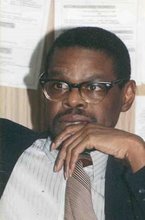
A Case of Lost Self-Esteem & Isolation
By Eddie Griffin
Thursday, July 17, 2008
From Canada, Laina writes:
Hey Eddie;
*** We have to acknowledge that mental illness does exist within our communities and publicize places where people can either seek treatment - whether it be via black psychologists, therapists or group settings… perhaps then we can come up with solutions to solve the problems.
A couple of years ago I was working on an article for the Toronto Star and was looking to interview a black psychiatrist. I couldn't find one… I was surprised that there were not more therapists of colour available - and sure it might not mean much what ethnicity your therapist is - but I think that it might be a hindrance for some people who do not want to talk to a white therapist. I know that I don't want to!
If that means encouraging black youth to get into psychiatry or psychology, or start discussion / therapy groups, that would be great. I want to start a group for trans-cultural adoptees such as myself, who feel that they are suffering from self-esteem issues and / or isolation. It might be a small, insignificant thing for some people, but it would be a start in the right direction.
Cheers, Laina / Writing is Fighting
Eddie Griffin response:
Mental Illness is the most dominate problem in the African-American community, not that Anglo-Americans are exempt. The problem is how we define “Mental Illness”.
Let’s look at four components of the above letter in context with the problem.
First is the observation of “mental illness” in the community. This raises the question: Mental Illness from what vantage point?
This reminds me of the story of man trying to commit his crazy uncle to the mental ward. When they arrived at the hospital, the crazy uncle flipped the script, accusing the sane nephew of being the “crazy one”, which the young man vigorously denied. The psychologist, not being able to distinguish who was which, wounded up confining the sane nephew and allowing the crazy uncle to go free.
I say that to say this: A white psychologist cannot diagnosis a black man. In fact, the mass of whites do not understand blacks, because blacks do not fit neatly into the paradigm.
For years, I have disputed with psychologists about their evaluation methodology.
I neither endorse nor subscribe to conventional psychology. Therefore, I can understand why Laina does not want to talk to a white therapist. In fact, I never understood how one person could psycho-evaluate what goes on in another person’s head.
Subjecting oneself to a psychotherapist, in my view, is like putting oneself into the hands of a hypnotist.
Second, Laina further writes: I was surprised that there were not more therapists of colour available. There are black psychologists that “get it”, but most do not.
Psychology is culturally based. That takes into account the uniqueness of the individual, the subject’s ethnicity and regional background.
I remember once contending against an MIT doctor that it was not possible to conceive what goes on inside the mind of a black man, especially a Texas outlaw. In a match of wits, where the stakes were high, the doctor lost. Conventional psychology does not fit black people.
Third, Laina suggests that more black youth pursue a study in psychology.
The field of psychology is still ill-defined. Looking at the dismal state of mass psychosis today, we can demonstrate no improvement in the socialization process, using the current “melting pot” curriculum, and an estranged cultural paradigm. People are acculturated differently.
Now there is new generational psychosis cropping up, unique to the younger generation. (Whacked, I called it). But there are lingering old maladies, such as drugs and alcoholism and the associated neurological damages prevalent in our culture. Although the brain may have the capability of repairing damaged neurological networks, once connectors are severed by substance abuse, the individual is never quite the same again.
It makes it no better that we are a heavily medicated society, not because of our psycho-physiological needs, as much as it is for the profit of pharmaceutical companies. Again, foreign chemical substances alter the function of the brain. Any person on drugs, legal or illegal, cannot think and function at full capacity. They call it a trade-off, robbing the mind to keep the body healthy.
Then there is the gene pool that produces various birth-related deformities that rob some of babies of their cognitive and intellectual abilities by the time they are born.
Of course, there are those who are shaped by environmental factors, including those heavily influenced of television-watching. These are people who mentally map their environment by the distortion and misinformation they see on television. These people, though normal in all other capacities, are customarily “blindsided” because of their idealized view of the world.
The susceptibility of being “blindsided” is demonstrated when the driver of one car runs into another. “It was an accident, because I did not see you,” is the usual explanation. But how could it be possible not to see something right before a person’s eyes? The only explanation is the some people put on mental blinders. They put their minds on autopilot based assumption, in order to let their minds rest and “not have to think”. Then, Oops! An accident happens that they never saw coming. So, it characterizes their permanent mental state.
Fourth, Laina writes: I want to start a group for trans-cultural adoptees such as myself, who feel that they are suffering from self-esteem issues and / or isolation.
Half of the solution is self-diagnosis. There other half is therapy. Assuming that nobody is 100% sane, we all, therefore, are undergoing some form of therapy, which I typically call the “socialization process”, learning how to live with self and those around you, and building healthy relationships.
What are self-esteem issues? It is how we perceive ourselves through our own eyes. It remembers of a story in the bible about a people who were “grasshoppers in their own eyes”. Therefore, they feared to take on the challenge of conquering the land. So, they wondered around in the wilderness for 40 years.
Take a look at the last 40 years of your life. Have you been wondering in the wilderness, with low self-esteem, a sense of hopelessness and helplessness?
Are you alone in the world, isolated and alienated… alienated from others… alienated from self?
If there is a new psychology curriculum, the scope should cover the subject: Alienation & Self-Alienation.
FOOTNOTE
The suggestion of a starting a group for trans-cultural adoptees is a good idea. Laina must break out of the isolated shell. To be useful and hence more valuable, she must engage the world in a direct way.
From personal experience, Eddie Griffin engages the world by preaching the gospel. But the gospel seems not to be everybody’s cup of tea.
Thursday, July 17, 2008


Wednesday, July 16, 2008
Cartoon World & Barack Obama
HAT TIP to Anderson @ Large
It takes intellectual savvy to listen to Barack Obama’s words and discover his wisdom in responding to the New Yorker cover. Anderson @ Large has ears to hear and eyes to see.
New Yorker Magazine Runs for Cover
The July 21 cover of the New Yorker perpetuates racial stereotypes. In the name of satire, the "Politics of Fear" cartoon plays into the smear that Barack Obama is not patriotic. The depiction of Michelle Obama as an AK-47-toting revolutionary in combat boots evokes the "Angry Black Woman."
In a transparent attempt to cover its rear, the New Yorker has compiled a gallery of past political covers. But without context, the current satirical cover merely fuels "a lot of distortions, lies and misconceptions about the Obamas."
[Excerpted]
For his part, Obama is downplaying the kerfuffle. He told CNN's Larry King:
Well, I know it was the New Yorker's attempt at satire. I don't think they were entirely successful with it. But you know what? It's a cartoon, Larry, and that's why we've got the First Amendment.
And I think the American people are probably spending a little more time worrying about what's happening with the banking system and the housing market, and what's happening in Iraq and Afghanistan, than a cartoon.
So I haven't spent a lot of time thinking about it.
King asked, "Did it personally sting you?"
Obama said:
I've seen and heard worse. I do think that, you know, in attempting to satirize something, they probably fueled some misconceptions about me instead. But, you know, that was their editorial judgment.
Ultimately it’s a cartoon. It’s not where the American people are spending a lot of their time thinking about."
OK, end of story
[Read Essays by Eddie Griffin referencing “Cartoon World”]
It takes intellectual savvy to listen to Barack Obama’s words and discover his wisdom in responding to the New Yorker cover. Anderson @ Large has ears to hear and eyes to see.
New Yorker Magazine Runs for Cover
The July 21 cover of the New Yorker perpetuates racial stereotypes. In the name of satire, the "Politics of Fear" cartoon plays into the smear that Barack Obama is not patriotic. The depiction of Michelle Obama as an AK-47-toting revolutionary in combat boots evokes the "Angry Black Woman."
In a transparent attempt to cover its rear, the New Yorker has compiled a gallery of past political covers. But without context, the current satirical cover merely fuels "a lot of distortions, lies and misconceptions about the Obamas."
[Excerpted]
For his part, Obama is downplaying the kerfuffle. He told CNN's Larry King:
Well, I know it was the New Yorker's attempt at satire. I don't think they were entirely successful with it. But you know what? It's a cartoon, Larry, and that's why we've got the First Amendment.
And I think the American people are probably spending a little more time worrying about what's happening with the banking system and the housing market, and what's happening in Iraq and Afghanistan, than a cartoon.
So I haven't spent a lot of time thinking about it.
King asked, "Did it personally sting you?"
Obama said:
I've seen and heard worse. I do think that, you know, in attempting to satirize something, they probably fueled some misconceptions about me instead. But, you know, that was their editorial judgment.
Ultimately it’s a cartoon. It’s not where the American people are spending a lot of their time thinking about."
OK, end of story
[Read Essays by Eddie Griffin referencing “Cartoon World”]
Tuesday, July 15, 2008
Justice Department Review of TASER-related Deaths
SUNDAY, JULY 13, 2008
Justice Department Review of TASER-related Deaths
[Excerpts by Eddie Griffin]
Amnesty International USA (AIUSA) applauds the U.S. Department of Justice for its decision to review the deaths of up to 180 people who died after law enforcement officials shot them with TASERs.
According to news reports, the Justice Department review will initially focus on 30 deaths, including one from two decades ago. The review, which could take up to two years, will enlist the help of the National Association of Medical Examiners, the American College of Pathologists, the International Association of Chiefs of Police and the Centers for Disease Control and Prevention.
Amnesty International (AI) has identified more than 150 TASER-related deaths in the United States since June 2001.
TASERs are powerful electro-shock weapons… designed to incapacitate by conducting 50,000 volts of electricity into an individual's body. The electrical pulses induce skeletal muscle spasms that immobilize and incapacitate the individual, causing him to fall to the ground.
Compare an electric chair execution. Notice the amount of voltage administered
From Eddie Griffin’s Taser Files
Zap! Over 270 people wiped out, electrocuted by tasers. And now introducing the more formidable laser guided taser cannon, the TASER X26.
The Taser, produced by Taser International, Inc. (Nasdaq:TASR)
When Valreca Redden, an expectant mother, was tased by a Trotwood police officer, the pain reverberated around the world and the debate reignited.
As the Gwinnett County sheriff deputies administer 50,000 volt shocks into his body, they repeatedly demand that he “stop resisting”. (How can a man with 50,000 volts of electricity passing through his body keep still, let alone an epileptic? The electric chair only used 20,000 volts.)
Justice Department Review of TASER-related Deaths
[Excerpts by Eddie Griffin]
Amnesty International USA (AIUSA) applauds the U.S. Department of Justice for its decision to review the deaths of up to 180 people who died after law enforcement officials shot them with TASERs.
According to news reports, the Justice Department review will initially focus on 30 deaths, including one from two decades ago. The review, which could take up to two years, will enlist the help of the National Association of Medical Examiners, the American College of Pathologists, the International Association of Chiefs of Police and the Centers for Disease Control and Prevention.
Amnesty International (AI) has identified more than 150 TASER-related deaths in the United States since June 2001.
TASERs are powerful electro-shock weapons… designed to incapacitate by conducting 50,000 volts of electricity into an individual's body. The electrical pulses induce skeletal muscle spasms that immobilize and incapacitate the individual, causing him to fall to the ground.
Compare an electric chair execution. Notice the amount of voltage administered
From Eddie Griffin’s Taser Files
Zap! Over 270 people wiped out, electrocuted by tasers. And now introducing the more formidable laser guided taser cannon, the TASER X26.
The Taser, produced by Taser International, Inc. (Nasdaq:TASR)
When Valreca Redden, an expectant mother, was tased by a Trotwood police officer, the pain reverberated around the world and the debate reignited.
As the Gwinnett County sheriff deputies administer 50,000 volt shocks into his body, they repeatedly demand that he “stop resisting”. (How can a man with 50,000 volts of electricity passing through his body keep still, let alone an epileptic? The electric chair only used 20,000 volts.)
Prelude to Memoirs of Eddie Griffin
EAST TEXAS ROOTS
Marshall, Texas became known as the Athens of Texas, in reference to the ancient Greek city state. The city was founded in 1841 during the Republic of Texas era (1836 to 1845), with a land grant from Peter Whetstone and Isaac Van Zandt.
The city's growing importance was confirmed when Marshall was linked by a telegraph line to New Orleans, becoming the first city in Texas to have a telegraph service. It was also the first city in Texas to use electricity.
By 1860 the city was the fourth largest city in Texas and the richest county with more slaves than any other in the state. It became the political and production center of the Confederacy during the Civil War.
The county had more slaves than any other in the state, making it a hotbed of anti-Union sentiment.
K. M. Van Zandt writes that in 1859, “Agitators for the North came to incite the Negro slaves to rebellion”. In 1861, a military company was organized and known as “Bass’s Gray”. K. M. Van Zandt served in this unit as 2nd Lt.
FOOTNOTE: “Fear of Northern agitation and Negro insurrections was widespread throughout the South. During this period, home guards and vigilance committees were formed by man communities and all Northerners were suspect.
At Fort Worth, two men, Burley and Crawford, were hanged; and the popular editor of the Fort Worth Whig Chief, A. B. Norton, was forced to discontinue publication of the paper and fled the country.”
[Source: Force Without Fanfare: Autobiography of K. M. Van Zandt]
By 1862, fear and panic spread throughout northern and eastern Texas and culminated in the: Great Hanging at Gainesville, 1862.
Marshall, Texas became known as the Athens of Texas, in reference to the ancient Greek city state. The city was founded in 1841 during the Republic of Texas era (1836 to 1845), with a land grant from Peter Whetstone and Isaac Van Zandt.
The city's growing importance was confirmed when Marshall was linked by a telegraph line to New Orleans, becoming the first city in Texas to have a telegraph service. It was also the first city in Texas to use electricity.
By 1860 the city was the fourth largest city in Texas and the richest county with more slaves than any other in the state. It became the political and production center of the Confederacy during the Civil War.
The county had more slaves than any other in the state, making it a hotbed of anti-Union sentiment.
K. M. Van Zandt writes that in 1859, “Agitators for the North came to incite the Negro slaves to rebellion”. In 1861, a military company was organized and known as “Bass’s Gray”. K. M. Van Zandt served in this unit as 2nd Lt.
FOOTNOTE: “Fear of Northern agitation and Negro insurrections was widespread throughout the South. During this period, home guards and vigilance committees were formed by man communities and all Northerners were suspect.
At Fort Worth, two men, Burley and Crawford, were hanged; and the popular editor of the Fort Worth Whig Chief, A. B. Norton, was forced to discontinue publication of the paper and fled the country.”
[Source: Force Without Fanfare: Autobiography of K. M. Van Zandt]
By 1862, fear and panic spread throughout northern and eastern Texas and culminated in the: Great Hanging at Gainesville, 1862.
Monday, July 14, 2008
Graveyard Stories
By Eddie Griffin
Monday, July 14, 2008
Marshall, Texas
Marshall, founded in 1841, was the county seat of Harrison County. It was political and production center of the Confederacy during the Civil War, and was a major railroad center of the T&P Railroad from the late 19th century until the mid-20th century.
The Republic of Texas decided to choose the site of land granted by Peter Whetstone and Isaac Van Zandt.
The establishment of several "colleges"— schools offering little more than secondary education—earned Marshall the nickname the Athens of Texas, in reference to the ancient Greek city state. The city's growing importance was confirmed when Marshall was linked by a telegraph line to New Orleans, becoming the first city in Texas to have a telegraph service.
By 1860 the city was the fourth largest city in Texas and the richest, The county had more slaves than any other in the state, making it a hotbed of anti-Union sentiment. When Gov. Sam Houston refused to take an oath of allegiance to the Confederacy, Marshall's Edward Clark was sworn in as governor. Marshall would also produce Texas's third Confederate governor, Pendleton Murrah. Marshall became a major Confederate city; producing gunpowder and other supplies for the Confederate Army.
The city also became the capital of Missouri's Confederate government-in-exile. political and production center of the Confederacy during the Civil War, and was a major railroad center of the T&P Railroad from the late 19th century until the mid-20th century. It was nicknamed the City of Seven Flags, in allegiance to the flag of Missouri, although only six flags had flown over the rest of the state. She became known as the Athens of Texas.
Marshall became the seat of civil authority and headquarters of the Trans-Mississippi Postal Department after the fall of Vicksburg. The city may have been the intended target of a failed Union advance that was rebuffed at Mansfield, Louisiana.
Marshall was occupied by Union forces on June 17, 1865. During Reconstruction the city was home to an office of the Freedmen's Bureau and was the base for Union troops. In 1873 The Methodist Episcopal Church founded Wiley College to educate free men. African-Americans came to the city seeking opportunities and protection until 1878, when the Citizens Party, led by former Confederate General Walter P. Lane and his brother George, took control of the city and county governments and ran Unionists, Republicans and many African-Americans out of town.
The Citizens Party, led by former Confederate General Walter P. Lane and his brother George, took control of the city and county governments and ran Unionists, Republicans and many African-Americans out of town. The Lanes ultimately declared Marshall and Harrison County "redeemed" from Union and African-American control. Despite this the African-American community would continue to progress with the establishment of Bishop College in 1881 and the certification of Wiley by the Freedman's Aid Society in 1882.
The city's large African American population and the presence of black institutions of higher learning made Marshall a center of the civil rights movement in the South.
City of Marshall offered to donate land north of the downtown to the Texas and Pacific Railway if the company would move to Marshall. T&P President Jay Gould accepted and located the T&P's workshops and general offices for Texas in Marshall.
The city benefited immediately from a population explosion. By 1880 the city was one of the South's largest cotton markets. The city's new prosperity became apparent with the opening of J. Weisman and Co., the first department store in Texas, and with the installation of a single lightbulb in the Texas and Pacific Depot, Marshall became the first city in Texas to have electricity.
Despite the prosperity of the railroad era, poverty continued to be a problem in the city among all races, but tensions between whites and African-Americans continued to worsen as segregation crystallized in the city. The rural areas of Harrison County saw greater interaction between white people and African-Americans. There, whites and blacks being neighbors was commonplace. Even though the areas surrounding Marshall were somewhat integrated, racism was still apparent in everyday life. The fact that several plantation owners divided up sizable tracts of land and gave them to their former slaves may also have contributed to these tensions.
October 1903 and August 1917 at least twelve people were lynched in the Marshall-Longview area, including these:
Hensley Johnson lynched Carthage Texas April 26 1903
Walker Davis lynched Marshall Texas October 1 1903
Albert Fields lynched Longview Texas April 9 1908
"Mose" Creole lynched Marshall Texas April 30 1909
"Pie" Hill lynched Marshall Texas April 30 1909
James Hodges lynched Marshall Texas April 27 1909
Anderson lynched Marshall Texas February 25 1913
Charles Jones lynched Marshall Texas August 22 1917
[Eddie Griffin family’s roots are deep in East Texas: from Marshall, Texas to Longview, Texas]
REF. “Force without Fanfare” by K. M. Van Zandt
Monday, July 14, 2008
Marshall, Texas
Marshall, founded in 1841, was the county seat of Harrison County. It was political and production center of the Confederacy during the Civil War, and was a major railroad center of the T&P Railroad from the late 19th century until the mid-20th century.
The Republic of Texas decided to choose the site of land granted by Peter Whetstone and Isaac Van Zandt.
The establishment of several "colleges"— schools offering little more than secondary education—earned Marshall the nickname the Athens of Texas, in reference to the ancient Greek city state. The city's growing importance was confirmed when Marshall was linked by a telegraph line to New Orleans, becoming the first city in Texas to have a telegraph service.
By 1860 the city was the fourth largest city in Texas and the richest, The county had more slaves than any other in the state, making it a hotbed of anti-Union sentiment. When Gov. Sam Houston refused to take an oath of allegiance to the Confederacy, Marshall's Edward Clark was sworn in as governor. Marshall would also produce Texas's third Confederate governor, Pendleton Murrah. Marshall became a major Confederate city; producing gunpowder and other supplies for the Confederate Army.
The city also became the capital of Missouri's Confederate government-in-exile. political and production center of the Confederacy during the Civil War, and was a major railroad center of the T&P Railroad from the late 19th century until the mid-20th century. It was nicknamed the City of Seven Flags, in allegiance to the flag of Missouri, although only six flags had flown over the rest of the state. She became known as the Athens of Texas.
Marshall became the seat of civil authority and headquarters of the Trans-Mississippi Postal Department after the fall of Vicksburg. The city may have been the intended target of a failed Union advance that was rebuffed at Mansfield, Louisiana.
Marshall was occupied by Union forces on June 17, 1865. During Reconstruction the city was home to an office of the Freedmen's Bureau and was the base for Union troops. In 1873 The Methodist Episcopal Church founded Wiley College to educate free men. African-Americans came to the city seeking opportunities and protection until 1878, when the Citizens Party, led by former Confederate General Walter P. Lane and his brother George, took control of the city and county governments and ran Unionists, Republicans and many African-Americans out of town.
The Citizens Party, led by former Confederate General Walter P. Lane and his brother George, took control of the city and county governments and ran Unionists, Republicans and many African-Americans out of town. The Lanes ultimately declared Marshall and Harrison County "redeemed" from Union and African-American control. Despite this the African-American community would continue to progress with the establishment of Bishop College in 1881 and the certification of Wiley by the Freedman's Aid Society in 1882.
The city's large African American population and the presence of black institutions of higher learning made Marshall a center of the civil rights movement in the South.
City of Marshall offered to donate land north of the downtown to the Texas and Pacific Railway if the company would move to Marshall. T&P President Jay Gould accepted and located the T&P's workshops and general offices for Texas in Marshall.
The city benefited immediately from a population explosion. By 1880 the city was one of the South's largest cotton markets. The city's new prosperity became apparent with the opening of J. Weisman and Co., the first department store in Texas, and with the installation of a single lightbulb in the Texas and Pacific Depot, Marshall became the first city in Texas to have electricity.
Despite the prosperity of the railroad era, poverty continued to be a problem in the city among all races, but tensions between whites and African-Americans continued to worsen as segregation crystallized in the city. The rural areas of Harrison County saw greater interaction between white people and African-Americans. There, whites and blacks being neighbors was commonplace. Even though the areas surrounding Marshall were somewhat integrated, racism was still apparent in everyday life. The fact that several plantation owners divided up sizable tracts of land and gave them to their former slaves may also have contributed to these tensions.
October 1903 and August 1917 at least twelve people were lynched in the Marshall-Longview area, including these:
Hensley Johnson lynched Carthage Texas April 26 1903
Walker Davis lynched Marshall Texas October 1 1903
Albert Fields lynched Longview Texas April 9 1908
"Mose" Creole lynched Marshall Texas April 30 1909
"Pie" Hill lynched Marshall Texas April 30 1909
James Hodges lynched Marshall Texas April 27 1909
Anderson lynched Marshall Texas February 25 1913
Charles Jones lynched Marshall Texas August 22 1917
[Eddie Griffin family’s roots are deep in East Texas: from Marshall, Texas to Longview, Texas]
REF. “Force without Fanfare” by K. M. Van Zandt
Thursday, July 10, 2008
Stroll Through Hell's Half Acre with Bat Masterson
By Eddie Griffin
EDITOR NOTE:
Recently, I decided to return to writing my memoirs, more excited now than ever before. Since being released from prison in 1984, I have gone about researching my experiences. For 12 years, I had little contact with the outside world. I remember stories. That’s all.
It never occurred to me that I might be making history until after Tom Kellam, archivist for the Fort Worth Public Library, recognized the newspaper account of the 1972 bank robbery. I was an outlaw, in the tradition of the Old Wild West, in a city where the West began.
The other day I visited the Sid Richardson Museum and had a lovely chat with the historian. When she heard my story, she immediately knew who I was. The museum guard looked at me strangely. But the historian was pleased to meet me. We chatted about old times.
The museum is named after the legendary Texas oilman Sid W. Richardson (1891-1959). Museum has been one of Historic Sundance Square’s top attractions, drawing more than 50,000 visitors a year from all over the world.
The center of our conversation evolved around the old Wild West cowboys and outlaws that came to Fort Worth and enjoy the sinful pleasure of downtown Hell’s Half Acre. The Museum sits in the center of what remains of Hell’s Half Acre, where I grew up.
The lower end of Hell’s Half Acre was gone. I remember seeing President John F. Kennedy come to the Texas Hotel, on the night of November 21, 1963. I was there when they turned the yellow lights on, to outline the city from the sky. We wanted John Kennedy to see our little city from Air Force One.
The old Western Union building still stood but the company has followed the decline of the railroad. Telegraph and railroad lines come to Fort Worth at the same time in 1876. That’s when Hell’s Half Acre opened its mouth.
Cowboy’s coming in off the dusty Chisholm Trail, the lit up red light district is the first thing that greets them, Hell’s Half Acre, Queen of the Prairie.
Here there was an aggregation of one and two story saloons, dance halls, and bawdy houses, interspersed with empty lots and a sprinkling of legitimate businesses. Only those looking for trouble or excitement ventured into the Acre…the usual activities of the Acre, which included brawling, gambling, cockfighting, and horse racing, were not confined to indoors but spilled out into the streets and back alleys.
But there were few classic gun fights as that between “Long-Haired” Jim Courtright and Luke Short, February 8, 1887.
From “Luke Short – Dandy Gunfighter” by W. R. (Bat) Masterson, 1906
The spring of 1881 found Luke Short in Tombstone , Arizona, dealing faro in a house managed by Wyatt Earp.
One morning I went into the Oriental gambling house, where Luke was working, just in time to keep him from killing a gambler named Charlie Storms. There was scarcely any difference between this case and the one with the bad man in Leadville a couple of years previous. Charlie Storms was one of the best-known gamblers in the entire West and had, on several occasions, successfully defended himself in pistol fights with Western "gunfighters."
Charlie Storms and I were very close friends, -- as much so as Short and I were -- and for that reason I did not care to see him get into what I knew would be a very serious difficulty. Storms did not know Short and, like the bad man in Leadville, had sized him up as an insignificant-looking fellow, whom he could slap in the face without expecting a return. Both men were about to pull their pistols when I jumped between them and grabbed Storms, at the same time requesting Luke not to shoot, -- a request I knew he would respect if it was possible without endangering his own life too much. I had no trouble in getting Storms out of the house, as he knew me to be his friend. When Storms and I reached the street I advised him to go to his room and take a sleep, for I then learned for the first time that he had been up all night, and had been quarreling with other persons.
He asked me to accompany him to his room, which I did, and after seeing him safely in his apartments, where I supposed he could go to bed, I returned to where Short was. I was just explaining to Luke that Storms was a very decent sort of man when, lo and behold! there he stood before us. Without saying a word, he took hold of Luke's arm and pulled him off the sidewalk, where he had been standing, at the same time pulling his pistol, a Colt's cut-off, 45 caliber, single action; but like the Leadvillian, he was too slow, although he succeeded in getting his pistol out. Luke stuck the muzzle of his own pistol against Storms' heart and pulled the trigger. The bullet tore the heart asunder, and as he was falling, Luke shot him again. Storms was dead when he hit the ground. Luke was given a preliminary hearing before a magistrate and exonerated.
TWO YEARS LATER
In the spring of 1883 Luke formed a partnership with Harris and Beeson of Dodge City, and operated the Long Branch Saloon, the biggest and best paying gambling house in Dodge at the time. The mayor of Dodge, whose name was Webster, was also running a gambling house and saloon next door to that operated by Short. At this time Dodge City was the shipping point for the Texas cattle driven every summer from the great cattle ranges of western Texas to the northern markets.
A fortune was to be made every season by the gambling house that could control this trade and, as Short was from Texas and had once been a cowboy himself. The mayor and his colleagues to Short to the train station and gave him of choice of which direction out of Dodge, East or West. Luke Short took the East-bound to Kansas City.
Lining Up for a Big Fight
I was in Denver at the time, and he wired me to come to Kansas City at once, which I did. We talked the matter over when we met, and concluded to go up to Topeka and place the matter before the Governor. The next day we did so. The Governor denounced the conduct of the Dodge City authorities, but said that he could do nothing, as the local authorities at Dodge had informed him that they were amply able to preserve the peace and did not desire state interference. We stated to the Governor that we believed we were able to rehabilitate ourselves in Dodge, but did not care to run afoul state authorities, in case we concluded to do so. The Governor told us to go ahead and re-establish ourselves, if we could; that he would keep off, and wished us luck. Immediately I started for Silverton, Colorado, where Wyatt Earp was located at the time, and enlisted him in our cause. Luke went to Caldwell, Kansas, where he had a couple of staunch friends, who were willing to take the bit in their mouths and go to the front and fight his battles whenever called upon.
Wyatt was selected to land in Dodge first. With him, but unknown to the Dodge authorities, were several desperate men. Several more dropped into town unobserved by the enemy. It finally became whispered about that Wyatt Earp had a strong force of desperate men already domiciled in town in the interest of Luke Short. The mayor called a hasty meeting of his friends, and after they had all assembled in the council chamber of the city hall, informed them solemnly of what he had heard about the Earp invasion. Anyone who was present at that meeting could easily have seen that anything but a fight was what the mayor and his friends were looking for, now that such a thing was not altogether improbable. Someone present suggested that Wyatt be invited to attend the meeting and state, if he would, his position in the matter. The suggestion met with the instant approval of all present, and the mayor proceeded to forthwith appoint a committee to call upon Earp and inform him of its action. Wyatt was soon found, and told of the wishes of the assembled patriots.
"Mr. Mayor, and gentlemen of the meeting," said Wyatt; "I guess the report is true. I came here some days ago," said he; "and, thinking that perhaps something might happen where I would need assistance, brought along some other gentlemen who signified a willingness to join in whatever festivities might arise."
"Moreover," continued Wyatt, "Luke and Bat will each arrive at noon tomorrow, and on their arrival we expect to open up hostilities."
"Now, look here, Wyatt," said the mayor, "you have no better friends anywhere than we are, and we don't want any more fighting in this town. There has already been enough shooting and killing in Dodge to do for a while. Now, why can't this thing be fixed up before it goes any farther?"
"It can," said Wyatt, "if you are willing to allow Luke to return and conduct his business unmolested as heretofore.”
"I am perfectly willing to agree to that," said Webster. "And so are we," sung out the meeting in a chorus.
"All right, gentlemen," replied the phlegmatic Mr. Earp, "there shall be no conflict. I will proceed to inform both Mr. Short and Mr. Masterson of your decision in the case, and I will guarantee that if you keep your part of the agreement there shall be no bloodshed.
Luke, soon after his restoration to Dodge, concluded to settle up his affairs and move to Texas. He somehow could not bring himself to like those with whom he had so recently been on the outs, and that fall, sold out all his interests in Kansas to his partners, and went to Texas .
The fall of 1884 found him the proprietor of the White Elephant gambling house in Fort Worth. The White Elephant was one of the largest and costliest establishments of its kind in the entire Southwest at the time. As a matter of course, he made plenty of money but it required a lot of money to keep him going, for he was one of the best-hearted men who ever lived. He could not say no to anyone, and, as might be expected, was continually being imposed upon by professional "cadgers," who make it a point to borrow all they can and never pay back anything. While he made fortunes in his gambling establishments, he died a comparatively poor man. He perhaps owed less and had more money due him when he died than any gambler who ever lived.
In the spring of 1887 I visited Short in Fort Worth, and learned soon after my arrival that he was having some trouble which was likely to end seriously with a notorious local character by the name of Jim Courtright. It appears that this fellow Courtright, who had killed a couple of men in Fort Worth, also a couple more in New Mexico , and was therefore dreaded by almost the entire community, asked Short to install him as a special officer in the White Elephant. Luke, who had been a substantial friend of Courtright's during his trouble at Fort Worth, told him he could not think of such a thing.
"Why, Jim," said Luke, "I would rather pay you a good salary to stay away from my house entirely."
"You know," continued Luke, "that the people about here are all afraid of you, and your presence in my house as an officer would ruin my business."
Courtright, who was a sullen, ignorant bully, with no sense of right or wrong, could not see it as Luke did. He could not understand that it was a pure matter of business and would be much better for Short to hire him to stay away from the house altogether than to have him coming around it. At any rate, Courtright got huffy at Luke and threatened to have him indicted and his place closed up. Courtright could not get it through his head how it was that Luke had dared to turn him down. He knew that he had everybody else in town "buffaloed" and could see no reason why Luke should be different from the others.
Luke and I were sitting together in the billiard room of the "White Elephant" one evening, discussing the trouble he was having with Courtright and the effect it was likely to have on his business.
Just then, one of Luke's business associates, by the name of Jake Johnson, came to where we were sitting and informed Luke that Courtright was in the outer lobby and would like to have a talk with him.
"Tell him to come in," said Short.
"I did invite him in," replied Johnson, "but he refused and said I was to tell you to come out."
"Very well," said Luke, "I will see what he has to say; and immediately got up and accompanied Johnson to where Courtright was waiting.
It did not take Luke very long after meeting Courtright to discover that the latter's mission was anything but one of peace. He brought along no olive branch, but instead a brace of pistols, conspicuously displayed. It was not a parley that he came for, but fight, and his demeanor indicated a desire that hostilities open up forthwith.
No time was wasted in the exchange of words once the men faced each other. Both drew their pistols at the same time, but, as usual, Short's spoke first and a bullet from a Colt's 45-calibre pistol went crashing through Courtright's body. The shock caused him to reel backward; then he got another and still another, and by the time his lifeless form had reached the floor, Luke had succeeded in shooting him five times.
Luke was arrested on the spot by a deputy sheriff, and taken to the county jail, where he remained during the night. The next day he was taken before a justice of the peace. Who held him for the grand jury in a nominal bond. This ended the case. as the grand jury refused to indict on the evidence, holding that it was a case of justifiable homicide.
This ended Luke Short's shooting scrapes with the exception of a little gun dispute three years later at Fort Worth which had no fatal results.
This ended Luke Short's shooting scrapes with the exception of a little gun dispute three years later at Fort Worth which had no fatal results.
I took occasion at the opening of this story to state that when Luke reached the age of young manhood he was totally lacking in education. It is now but proper for me to say that at the time of his death, twenty years later. he was an exceptionally well-read man. He could write an excellent letter; always used good English when talking and could quote Shakespeare, Byron, Goldsmith and Longfellow better and more accurately than most scholars.
To the burning of the midnight oil was due the transformation. It transformed him from a white Indian when I first found him, to a diffident, courteous gentleman, who was, at his death about twelve years ago, one of the best known and most popular sporting men in this country.
Written by Bat Masterson, 1907
Though most of us know that W.B. "Bat" Masterson was famous as a gunfighter and friend of such characters as Wyatt Earp, Doc Holliday, and Luke Short, many may not know that he was also a writer. After his many escapades in the American West, he accepted a post of U.S. Marshal in New York state. However, by 1891 he was working as a sports editor for a New York City newspaper. In 1907 and 1908 he wrote a series of articles for the short-lived Boston magazine, Human Life. This tale of Luke Short, was just one of several of those articles. Masterson died in 1921 of a heart attack.
EDITOR NOTE:
Recently, I decided to return to writing my memoirs, more excited now than ever before. Since being released from prison in 1984, I have gone about researching my experiences. For 12 years, I had little contact with the outside world. I remember stories. That’s all.
It never occurred to me that I might be making history until after Tom Kellam, archivist for the Fort Worth Public Library, recognized the newspaper account of the 1972 bank robbery. I was an outlaw, in the tradition of the Old Wild West, in a city where the West began.
The other day I visited the Sid Richardson Museum and had a lovely chat with the historian. When she heard my story, she immediately knew who I was. The museum guard looked at me strangely. But the historian was pleased to meet me. We chatted about old times.
The museum is named after the legendary Texas oilman Sid W. Richardson (1891-1959). Museum has been one of Historic Sundance Square’s top attractions, drawing more than 50,000 visitors a year from all over the world.
The center of our conversation evolved around the old Wild West cowboys and outlaws that came to Fort Worth and enjoy the sinful pleasure of downtown Hell’s Half Acre. The Museum sits in the center of what remains of Hell’s Half Acre, where I grew up.
The lower end of Hell’s Half Acre was gone. I remember seeing President John F. Kennedy come to the Texas Hotel, on the night of November 21, 1963. I was there when they turned the yellow lights on, to outline the city from the sky. We wanted John Kennedy to see our little city from Air Force One.
The old Western Union building still stood but the company has followed the decline of the railroad. Telegraph and railroad lines come to Fort Worth at the same time in 1876. That’s when Hell’s Half Acre opened its mouth.
Cowboy’s coming in off the dusty Chisholm Trail, the lit up red light district is the first thing that greets them, Hell’s Half Acre, Queen of the Prairie.
Here there was an aggregation of one and two story saloons, dance halls, and bawdy houses, interspersed with empty lots and a sprinkling of legitimate businesses. Only those looking for trouble or excitement ventured into the Acre…the usual activities of the Acre, which included brawling, gambling, cockfighting, and horse racing, were not confined to indoors but spilled out into the streets and back alleys.
But there were few classic gun fights as that between “Long-Haired” Jim Courtright and Luke Short, February 8, 1887.
From “Luke Short – Dandy Gunfighter” by W. R. (Bat) Masterson, 1906
The spring of 1881 found Luke Short in Tombstone , Arizona, dealing faro in a house managed by Wyatt Earp.
One morning I went into the Oriental gambling house, where Luke was working, just in time to keep him from killing a gambler named Charlie Storms. There was scarcely any difference between this case and the one with the bad man in Leadville a couple of years previous. Charlie Storms was one of the best-known gamblers in the entire West and had, on several occasions, successfully defended himself in pistol fights with Western "gunfighters."
Charlie Storms and I were very close friends, -- as much so as Short and I were -- and for that reason I did not care to see him get into what I knew would be a very serious difficulty. Storms did not know Short and, like the bad man in Leadville, had sized him up as an insignificant-looking fellow, whom he could slap in the face without expecting a return. Both men were about to pull their pistols when I jumped between them and grabbed Storms, at the same time requesting Luke not to shoot, -- a request I knew he would respect if it was possible without endangering his own life too much. I had no trouble in getting Storms out of the house, as he knew me to be his friend. When Storms and I reached the street I advised him to go to his room and take a sleep, for I then learned for the first time that he had been up all night, and had been quarreling with other persons.
He asked me to accompany him to his room, which I did, and after seeing him safely in his apartments, where I supposed he could go to bed, I returned to where Short was. I was just explaining to Luke that Storms was a very decent sort of man when, lo and behold! there he stood before us. Without saying a word, he took hold of Luke's arm and pulled him off the sidewalk, where he had been standing, at the same time pulling his pistol, a Colt's cut-off, 45 caliber, single action; but like the Leadvillian, he was too slow, although he succeeded in getting his pistol out. Luke stuck the muzzle of his own pistol against Storms' heart and pulled the trigger. The bullet tore the heart asunder, and as he was falling, Luke shot him again. Storms was dead when he hit the ground. Luke was given a preliminary hearing before a magistrate and exonerated.
TWO YEARS LATER
In the spring of 1883 Luke formed a partnership with Harris and Beeson of Dodge City, and operated the Long Branch Saloon, the biggest and best paying gambling house in Dodge at the time. The mayor of Dodge, whose name was Webster, was also running a gambling house and saloon next door to that operated by Short. At this time Dodge City was the shipping point for the Texas cattle driven every summer from the great cattle ranges of western Texas to the northern markets.
A fortune was to be made every season by the gambling house that could control this trade and, as Short was from Texas and had once been a cowboy himself. The mayor and his colleagues to Short to the train station and gave him of choice of which direction out of Dodge, East or West. Luke Short took the East-bound to Kansas City.
Lining Up for a Big Fight
I was in Denver at the time, and he wired me to come to Kansas City at once, which I did. We talked the matter over when we met, and concluded to go up to Topeka and place the matter before the Governor. The next day we did so. The Governor denounced the conduct of the Dodge City authorities, but said that he could do nothing, as the local authorities at Dodge had informed him that they were amply able to preserve the peace and did not desire state interference. We stated to the Governor that we believed we were able to rehabilitate ourselves in Dodge, but did not care to run afoul state authorities, in case we concluded to do so. The Governor told us to go ahead and re-establish ourselves, if we could; that he would keep off, and wished us luck. Immediately I started for Silverton, Colorado, where Wyatt Earp was located at the time, and enlisted him in our cause. Luke went to Caldwell, Kansas, where he had a couple of staunch friends, who were willing to take the bit in their mouths and go to the front and fight his battles whenever called upon.
Wyatt was selected to land in Dodge first. With him, but unknown to the Dodge authorities, were several desperate men. Several more dropped into town unobserved by the enemy. It finally became whispered about that Wyatt Earp had a strong force of desperate men already domiciled in town in the interest of Luke Short. The mayor called a hasty meeting of his friends, and after they had all assembled in the council chamber of the city hall, informed them solemnly of what he had heard about the Earp invasion. Anyone who was present at that meeting could easily have seen that anything but a fight was what the mayor and his friends were looking for, now that such a thing was not altogether improbable. Someone present suggested that Wyatt be invited to attend the meeting and state, if he would, his position in the matter. The suggestion met with the instant approval of all present, and the mayor proceeded to forthwith appoint a committee to call upon Earp and inform him of its action. Wyatt was soon found, and told of the wishes of the assembled patriots.
"Mr. Mayor, and gentlemen of the meeting," said Wyatt; "I guess the report is true. I came here some days ago," said he; "and, thinking that perhaps something might happen where I would need assistance, brought along some other gentlemen who signified a willingness to join in whatever festivities might arise."
"Moreover," continued Wyatt, "Luke and Bat will each arrive at noon tomorrow, and on their arrival we expect to open up hostilities."
"Now, look here, Wyatt," said the mayor, "you have no better friends anywhere than we are, and we don't want any more fighting in this town. There has already been enough shooting and killing in Dodge to do for a while. Now, why can't this thing be fixed up before it goes any farther?"
"It can," said Wyatt, "if you are willing to allow Luke to return and conduct his business unmolested as heretofore.”
"I am perfectly willing to agree to that," said Webster. "And so are we," sung out the meeting in a chorus.
"All right, gentlemen," replied the phlegmatic Mr. Earp, "there shall be no conflict. I will proceed to inform both Mr. Short and Mr. Masterson of your decision in the case, and I will guarantee that if you keep your part of the agreement there shall be no bloodshed.
Luke, soon after his restoration to Dodge, concluded to settle up his affairs and move to Texas. He somehow could not bring himself to like those with whom he had so recently been on the outs, and that fall, sold out all his interests in Kansas to his partners, and went to Texas .
The fall of 1884 found him the proprietor of the White Elephant gambling house in Fort Worth. The White Elephant was one of the largest and costliest establishments of its kind in the entire Southwest at the time. As a matter of course, he made plenty of money but it required a lot of money to keep him going, for he was one of the best-hearted men who ever lived. He could not say no to anyone, and, as might be expected, was continually being imposed upon by professional "cadgers," who make it a point to borrow all they can and never pay back anything. While he made fortunes in his gambling establishments, he died a comparatively poor man. He perhaps owed less and had more money due him when he died than any gambler who ever lived.
In the spring of 1887 I visited Short in Fort Worth, and learned soon after my arrival that he was having some trouble which was likely to end seriously with a notorious local character by the name of Jim Courtright. It appears that this fellow Courtright, who had killed a couple of men in Fort Worth, also a couple more in New Mexico , and was therefore dreaded by almost the entire community, asked Short to install him as a special officer in the White Elephant. Luke, who had been a substantial friend of Courtright's during his trouble at Fort Worth, told him he could not think of such a thing.
"Why, Jim," said Luke, "I would rather pay you a good salary to stay away from my house entirely."
"You know," continued Luke, "that the people about here are all afraid of you, and your presence in my house as an officer would ruin my business."
Courtright, who was a sullen, ignorant bully, with no sense of right or wrong, could not see it as Luke did. He could not understand that it was a pure matter of business and would be much better for Short to hire him to stay away from the house altogether than to have him coming around it. At any rate, Courtright got huffy at Luke and threatened to have him indicted and his place closed up. Courtright could not get it through his head how it was that Luke had dared to turn him down. He knew that he had everybody else in town "buffaloed" and could see no reason why Luke should be different from the others.
Luke and I were sitting together in the billiard room of the "White Elephant" one evening, discussing the trouble he was having with Courtright and the effect it was likely to have on his business.
Just then, one of Luke's business associates, by the name of Jake Johnson, came to where we were sitting and informed Luke that Courtright was in the outer lobby and would like to have a talk with him.
"Tell him to come in," said Short.
"I did invite him in," replied Johnson, "but he refused and said I was to tell you to come out."
"Very well," said Luke, "I will see what he has to say; and immediately got up and accompanied Johnson to where Courtright was waiting.
It did not take Luke very long after meeting Courtright to discover that the latter's mission was anything but one of peace. He brought along no olive branch, but instead a brace of pistols, conspicuously displayed. It was not a parley that he came for, but fight, and his demeanor indicated a desire that hostilities open up forthwith.
No time was wasted in the exchange of words once the men faced each other. Both drew their pistols at the same time, but, as usual, Short's spoke first and a bullet from a Colt's 45-calibre pistol went crashing through Courtright's body. The shock caused him to reel backward; then he got another and still another, and by the time his lifeless form had reached the floor, Luke had succeeded in shooting him five times.
Luke was arrested on the spot by a deputy sheriff, and taken to the county jail, where he remained during the night. The next day he was taken before a justice of the peace. Who held him for the grand jury in a nominal bond. This ended the case. as the grand jury refused to indict on the evidence, holding that it was a case of justifiable homicide.
This ended Luke Short's shooting scrapes with the exception of a little gun dispute three years later at Fort Worth which had no fatal results.
This ended Luke Short's shooting scrapes with the exception of a little gun dispute three years later at Fort Worth which had no fatal results.
I took occasion at the opening of this story to state that when Luke reached the age of young manhood he was totally lacking in education. It is now but proper for me to say that at the time of his death, twenty years later. he was an exceptionally well-read man. He could write an excellent letter; always used good English when talking and could quote Shakespeare, Byron, Goldsmith and Longfellow better and more accurately than most scholars.
To the burning of the midnight oil was due the transformation. It transformed him from a white Indian when I first found him, to a diffident, courteous gentleman, who was, at his death about twelve years ago, one of the best known and most popular sporting men in this country.
Written by Bat Masterson, 1907
Though most of us know that W.B. "Bat" Masterson was famous as a gunfighter and friend of such characters as Wyatt Earp, Doc Holliday, and Luke Short, many may not know that he was also a writer. After his many escapades in the American West, he accepted a post of U.S. Marshal in New York state. However, by 1891 he was working as a sports editor for a New York City newspaper. In 1907 and 1908 he wrote a series of articles for the short-lived Boston magazine, Human Life. This tale of Luke Short, was just one of several of those articles. Masterson died in 1921 of a heart attack.
Wednesday, July 9, 2008
Stroll through Hell’s Half Acre with an Outlaw
As told by Eddie Griffin
Wednesday, July 09, 2008
I took a stroll yesterday through downtown Fort Worth, fascinated by the rich history of what remains of Hell’s Half Acre, the remnant the Old Wild West.
In the 1880s, Fort Worth was the “queen city of the prairies”, and attracted the likes Luke Short, and his buddies, Bat Masterson, Wyatt Earp, “Doc” Holidays, and quick-draw, “Longhair Jim” Courtright.
John Swartz reputedly snapped the infamous 1901 picture of Butch Cassidy and the Sundance Kid and the "Wild Bunch", living it up in Hell’s Half Acre, right in the middle of now downtown Fort Worth, where fortunes were won and lost overnight, where they burned hundred dollar bills to light a cigar, and rubbed the golden godless for luck in the lobby of the El Paso Hotel.

Photo taken at 705 ½ Main St.
Standing left to right: William Carver, Harvey Logan
Seated left to right: Harry Longbaugh (Sundance Kid), Ben Kilpatrick, Robert Leroy Parker (Butch Cassidy)
The photographer was so proud of this group photo that he place a copy in the downstairs window where it was spotted by a passing Wells Fargo agent who recognized Harvey Logan. (The Wells Fargo office was at 817 Main Street.) Pinkerton agents and lawmen descended on downtown Ft. Worth, and the Cassidy gang fled in all directions.
On February 20, 1901, Butch, Sundance and Etta Place boarded a ship in New York, bound for South America. By May 15, 1901, the first wanted posters of the gang bearing the photo likenesses taken at 705 Main Street rolled off the presses.
What were they doing in Fort Worth?
By 1871, Burk Burnett made his first cattle drive from North Texas along the Chisholm Trail to Kansas in 1866. By 1871, Burnett began to build the 6666 Ranch. While drilling for water, he struck oil. The streets of Fort Worth were gushing in oil.
As the importance of Fort Worth as a crossroads and cowtown grew, so did Hell's Half Acre. It was originally limited to the lower end of Rusk Street (renamed Commerce Street in 1917) but spread out in all directions until by 1881 the Fort Worth Democrat was complaining that it covered 2½ acres… These boundaries, which were never formally recognized, represented the maximum area covered by the Acre, around 1900. Occasionally, the Acre was also referred to as "the bloody Third Ward" after it was designated one of the city's three political wards in 1876.
Long before the Acre reached its maximum boundaries, local citizens had become alarmed at the level of crime and violence in their city. In 1876 Timothy Isaiah (Longhair Jim) Courtright was elected City Marshal with a mandate to tame the Acre's wilder activities. Courtright had served as an army scout and acquired the name Longhair, after the style in which scouts often wore their hair. He always wore two six-shooters, butts forward, and drew from the right hip with the right hand.
Courtright cracked down on violence and general rowdiness by sometimes putting as many as 30 people in jail on a Saturday night, but allowed the gamblers to operate unmolested. After receiving information that train and stagecoach robbers, such as the Sam Bass gang, were using the Acre as a hideout, local authorities intensified law-enforcement efforts. Yet certain businessmen placed a newspaper advertisement arguing that such legal restrictions in Hell's Half Acre would curtail the legitimate business activities there.
Despite this tolerance from business, however, the cowboys began to stay away, and the businesses began to suffer. City officials muted their stand against vice. Courtright lost support of the Fort Worth Democrat and consequently lost when he ran for reelection in 1879.
Courtright was hired temporarily as deputy marshall during the Great Southwest Strike of 1886. In March, master workman Martin Irons of the Knights District Assembly 101 called a strike against Gould's Texas and Pacific Railway after the firing of a foreman in Marshall. The conflict rapidly spread to the other roads in the Southwest. Violence soon erupted after workers impeded railroad operation by uncoupling cars and seizing switch junctures. Gould hired scabs (strikebreakers) and Pinkerton detectives, and requested military assistance from state governors; Governor John Ireland sent both state militia and Texas Rangers to Buttermilk Switch in Fort Worth.
Against the wishes of striking railroaders, Courtright attempted to move the trains and, when two killings occurred, was blamed for siding with the railroads.
The Outlaws Come to Town
In February 1881 Bat Masterson accompanied Wyatt Earp and Luke Short to Tombstone, Arizona, where he assisted Earp at the gaming tables of the Oriental Saloon. He served for a time as a deputy sheriff in Las Animas, Colorado, and in 1883 was instrumental in persuading the governor of Colorado to prevent the extradition of Doc Holliday to Arizona. Masterson made his first try at the newspaper business in 1885, but his paper, the Vox Populi, ceased publication after a single issue. In 1886, in a surprising move, he briefly became a prohibitionist and closed the Dodge City saloons after being appointed a special officer. His conversion was short-lived, however. By 1887 he was working with Luke Short at the White Elephant Saloon in Fort Worth, Texas.
Luke Short was still living in Tombstone in 1881 when he was involved in a famous gunfight with a gunfighter named Charlie Storms, outside the Oriental Saloon. Storms and Short had been involved in a verbal argument earlier, which was defused by Bat Masterson, who was friends with both Short and Storms. Storms then met them on the street, jerked Short by the arm off the boardwalk, then went for his own gun. Short was the faster, killing Storms with one shot to the chest before his enemy could use his pistol. The fight was at such close quarters that Short's muzzle flash set Storms shirt on fire… point-blank range with .45 caliber derringer up the sleeve. Short was arrested for the shooting, and given a hearing, at which time the shooting was ruled to have been self defense.
In 1883 Short settled in Dodge City, Kansas, where he purchased a half interest in the now famous Long Branch Saloon, partnered with friend W.H. Harris. This put him at odds with the mayor of Dodge and his allies, who made attempts to run him out of town as an "undesirable". In what became known as the Dodge City War, Luke's friends rallied a formidable force of gunfighters to support him, including Bat Masterson, Wyatt Earp, Doc Holliday, and Charlie Bassett. Faced with the threat of force, Short's opponents allowed him to return without a shot being fired. Later that year he sold his interest and moved to Fort Worth, Texas.
Throughout the 1880s and 1890s the Acre continued to attract gunmen, highway robbers, card sharps, con men, and shady ladies, who preyed on out-of-town and local sportsmen.
On a cold night, February 8, 1887, Courtright called Short out of the White Elephant Saloon. Courtright reportedly had been drinking, some words were passed, and the two men walked down the street about one block. There, facing one another, Courtright said something in reference to Short's gun, apparently to give the impression that the inevitable gunfight was in the line of duty. Short stated he was not armed, although he was. Short then indicated that Courtright could check for himself, and walking toward Courtright, he opened his vest. When he did so, Courtright said loudly "Don't you pull a gun on me.", and quickly drew his pistol.
However, Courtright's pistol hung on his watch-chain for a brief second, at which time Short pulled his pistol and fired one shot. The bullet tore off Courtright's right thumb, rendering him incapable of firing his single-action revolver. As he tried to switch the pistol to his left hand, Short fired at least four more times, killing him.
The gunfight became a well known event due to the notoriety of both men. Courtright was given a grand funeral with hundreds in attendance, as despite his corruption, he had lowered Fort Worth's murder rate by more than half during his time as town marshal. No blame was held toward Short however, and although he was brought to trial for the shooting, it was ruled justified self defense.
A major reform campaign in the late 1880s was brought on by Mayor Boiles and County Attorney R. L. Carlock after two events. In the first of these, on February 8, 1887, Luke Short and Jim Courtright had a shootout on Main Street that left Courtright dead and Short the "King of Fort Worth Gamblers." A few weeks later a poor prostitute known only by the name of Sally was found murdered and nailed to an outhouse door in the Acre. These two events, combined with the first prohibition campaign in Texas, helped to shut down the Acre's worst excesses in 1889.
More than any other factor, urban growth began to improve the image of the Acre, as new businesses and homes moved into the south end of town. Another change was the influx of black residents. Excluded from the business end of town and the nicer residential areas, Fort Worth's black citizens, who numbered some 7,000 out of a total population of 50,000 around 1900, settled into the south end of town.
Between 1868 and 1900, forty-three African Americans served in the state legislature, and they helped to move the state toward democracy. Such black Reconstruction leaders as George T. Ruby and Norris Wright Cuney became important members of the Republican party and, along with other blacks, dominated state Republican politics through the turn of the twentieth century. During the course of the Reconstruction period, many African Americans moved from the state's rural areas to cities such as Dallas, Austin, Houston, and San Antonio. On the outskirts of these cities they established "freedmantowns," which became the distinct black neighborhoods that still exist today.
LILY-WHITE MOVEMENT
The "lily-white" movement began within the Republican partyqv after the Civil War. From the first days of Reconstruction, a fight developed not only in Texas but across the South between white and black factions for control of the newly formed party. As white GOP leaders sought "respectability" among Southern voters and a conviction grew that continued "black and tan" involvement thwarted expansion of the party, the lily-white Republicans began an organized effort to drive blacks from positions of party leadership. Though Texas blacks appealed to Northern party managers to halt the movement, lily-whiteism flourished because Republican presidents after 1865 wanted approval from the Southern white masses. The term lily-white apparently originated at the 1888 Republican state convention in Fort Worth, when a group of whites attempted to expel a number of black and tan delegates. Norris Wright Cuney, the black Texas leader who controlled the state party from 1883 until his death in 1896, promptly labeled the insurgents "lily-whites," and the term was soon applied to similar groups throughout the South.
Actually, an organized lily-white movement had begun in Texas during the 1870s, when the party was dominated by former governor Edmund J. Davis. But once Cuney gained the national committeemanship in 1884 upon the death of Davis, the lily-whites started a concerted drive for mastery. Though Cuney was reappointed to the national committee at the 1892 Republican national convention, the black-white struggle in Texas resulted in a fractured party and the first GOP state convention without a black and tan delegation in attendance. The 1892 election proved a turning point for both GOP factions as Cuney aligned the black and tans behind George Clark, a conservative Democrat, in his fight with James S. Hogg, and the lily-whites nominated Andrew Jackson Houston for the governorship. Houston, son of Sam Houston and a future United States senator, received only 1,322 votes in the November election, while Cuney suffered a dual setback: not only did Clark go down in defeat, but the Democrat Grover Cleveland won the presidency, so that Cuney lost all federal patronage.
Southern GOP leaders, black and white, relied upon the dispensation of federal jobs to maintain their state organizations; and when Cuney lost out under Cleveland, the door was opened for a lily-white takeover. Though Cuney was replaced as national committeeman as well as state chairman during the 1896 campaign, other black and tan leaders emerged to lead the state party. Edward H. R. Green (son of multimillionaire Hetty H. R. Green), who arrived in Texas to oversee his mother's railroad empire, captured the party after Cuney's downfall by forming a political alliance with William M. (Gooseneck Bill) McDonald, a black banker from Fort Worth. The Green-McDonald partnership, however, was unable to stem the lily-white insurgents, and after Green's withdrawal as state chairman in 1902, Cecil A. Lyon, a white businessman from Sherman, took control.
William “Gooseneck” McDonald, black millionaire and political powerhouse
William Madison (Gooseneck Bill) McDonald, politician, fraternal leader, and businessman, was born on June 22, 1866, at College Mound, Texas. His father had been a slave, his mother a free woman. He attended Roger Williams University in Nashville, Tennessee, with the aid of Z. T. Adams and other white friends.
McDonald became prominent in Texas Republican politics in 1892, when he was elected to the party's state executive committee. For more than thirty years he remained a notable figure of the party and attended many Republican national conventions.
After the death of Norris Wright Cuney in 1897, McDonald became leader of the Texas Republicans. In 1896 he formed a political partnership with Edward Howland Robinson Green, who became active in Texas Republican politics as a member of the "Black and Tan" faction. Although the two men remained together for many years and survived numerous political battles, control of the party was wrested from them in 1900 by the "Lily Whites."
In 1912, as a result of the "Bull Moose" upheaval, McDonald and the Black and Tans temporarily regained control of the party.
He moved to Fort Worth and, with the support of black lodges, founded the Fraternal Bank and Trust Company, which quickly became the chief depository of funds for the state's black Masonic lodges.
Reflections
The first black millionaire lived in our neighborhood in Southeast Fort Worth. I remembered the man, but knew nothing of his great political legacy. He fought the “lilly-white” movement in the Republican Party, until he flip to Democrat later in life.
But there is a strange insertion in his memoirs, about his friend in the Black and Tan wing of the party, Ned Green, son of the richest woman in the world. Gooseneck McDonald attended the funeral of Hetty Green, a guest of his friend Ned.
They called Hetty Green, a witch, because of the way she dressed, her frugal lifestyle, and body odor. But she was the richest woman in the world. So, they called her the Witch of Wall Street. She horded money and invested in Civil War bonds, known as “greenbacks”, which became the legal tender.
Hetty Green sent her son to Texas where she had bought an old half-completed Confederate Railroad line, out of Kaufman, Texas. Here is where Gooseneck McDonald was born and raised.
Ned was known for his lavish lifestyle in Texas. Now that he was independent of his mother, he had access to large sums of cash that he spent on the good life.
O how I remember the beautiful silver car streaming down the track. I believed we called it the Silverliner.
In Chicago Ned Green had met Mabel Harlow, a prostitute who was his first sexual experience. He moved Mabel to Texas and set himself up in hotel suites where she supplied the girls and Ned supplied the customers, the rooms, and the champagne.
His friend, Gooseneck McDonald, began buying up land in the Third Ward District of Fort Worth, and laying trolley tracks, which was the railroad’s wave of the future.
Ned Green became his mother’s son, a master at protecting her assets. Recognizing this and now in her mid-sixties, Hetty brought him back to New York to oversee her financial affairs. She tolerated his extravagant lifestyle, which included a large suite at the Waldorf-Astoria (the original, built by the Astors, which stood at 34th Street and Fifth Avenue). Later Ned moved to two townhouses on West 91st Street and Central Park, where he and Mabel lived quietly and discreetly.
After his mother’s death, Ned would marry Mabel (with a pre-nup giving her $1500 a month for life). He spent his multimillion dollar annual income on luxurious estates in Florida, New York, and Massachusetts, and kept a coterie of “protégées” or “private secretaries” – pretty young teen-age girls who were given $100,000 trust funds and schooled to attend Wellesley (while visiting Ned and Mabel on weekends at the big house overlooking the water in Dartmouth, Massachusetts).
[Inquiries in the writing, please contact Eddie Griffin at evansavenue76104@yahoo.com]
Wednesday, July 09, 2008
I took a stroll yesterday through downtown Fort Worth, fascinated by the rich history of what remains of Hell’s Half Acre, the remnant the Old Wild West.
In the 1880s, Fort Worth was the “queen city of the prairies”, and attracted the likes Luke Short, and his buddies, Bat Masterson, Wyatt Earp, “Doc” Holidays, and quick-draw, “Longhair Jim” Courtright.
John Swartz reputedly snapped the infamous 1901 picture of Butch Cassidy and the Sundance Kid and the "Wild Bunch", living it up in Hell’s Half Acre, right in the middle of now downtown Fort Worth, where fortunes were won and lost overnight, where they burned hundred dollar bills to light a cigar, and rubbed the golden godless for luck in the lobby of the El Paso Hotel.

Photo taken at 705 ½ Main St.
Standing left to right: William Carver, Harvey Logan
Seated left to right: Harry Longbaugh (Sundance Kid), Ben Kilpatrick, Robert Leroy Parker (Butch Cassidy)
The photographer was so proud of this group photo that he place a copy in the downstairs window where it was spotted by a passing Wells Fargo agent who recognized Harvey Logan. (The Wells Fargo office was at 817 Main Street.) Pinkerton agents and lawmen descended on downtown Ft. Worth, and the Cassidy gang fled in all directions.
On February 20, 1901, Butch, Sundance and Etta Place boarded a ship in New York, bound for South America. By May 15, 1901, the first wanted posters of the gang bearing the photo likenesses taken at 705 Main Street rolled off the presses.
What were they doing in Fort Worth?
By 1871, Burk Burnett made his first cattle drive from North Texas along the Chisholm Trail to Kansas in 1866. By 1871, Burnett began to build the 6666 Ranch. While drilling for water, he struck oil. The streets of Fort Worth were gushing in oil.
As the importance of Fort Worth as a crossroads and cowtown grew, so did Hell's Half Acre. It was originally limited to the lower end of Rusk Street (renamed Commerce Street in 1917) but spread out in all directions until by 1881 the Fort Worth Democrat was complaining that it covered 2½ acres… These boundaries, which were never formally recognized, represented the maximum area covered by the Acre, around 1900. Occasionally, the Acre was also referred to as "the bloody Third Ward" after it was designated one of the city's three political wards in 1876.
Long before the Acre reached its maximum boundaries, local citizens had become alarmed at the level of crime and violence in their city. In 1876 Timothy Isaiah (Longhair Jim) Courtright was elected City Marshal with a mandate to tame the Acre's wilder activities. Courtright had served as an army scout and acquired the name Longhair, after the style in which scouts often wore their hair. He always wore two six-shooters, butts forward, and drew from the right hip with the right hand.
Courtright cracked down on violence and general rowdiness by sometimes putting as many as 30 people in jail on a Saturday night, but allowed the gamblers to operate unmolested. After receiving information that train and stagecoach robbers, such as the Sam Bass gang, were using the Acre as a hideout, local authorities intensified law-enforcement efforts. Yet certain businessmen placed a newspaper advertisement arguing that such legal restrictions in Hell's Half Acre would curtail the legitimate business activities there.
Despite this tolerance from business, however, the cowboys began to stay away, and the businesses began to suffer. City officials muted their stand against vice. Courtright lost support of the Fort Worth Democrat and consequently lost when he ran for reelection in 1879.
Courtright was hired temporarily as deputy marshall during the Great Southwest Strike of 1886. In March, master workman Martin Irons of the Knights District Assembly 101 called a strike against Gould's Texas and Pacific Railway after the firing of a foreman in Marshall. The conflict rapidly spread to the other roads in the Southwest. Violence soon erupted after workers impeded railroad operation by uncoupling cars and seizing switch junctures. Gould hired scabs (strikebreakers) and Pinkerton detectives, and requested military assistance from state governors; Governor John Ireland sent both state militia and Texas Rangers to Buttermilk Switch in Fort Worth.
Against the wishes of striking railroaders, Courtright attempted to move the trains and, when two killings occurred, was blamed for siding with the railroads.
The Outlaws Come to Town
In February 1881 Bat Masterson accompanied Wyatt Earp and Luke Short to Tombstone, Arizona, where he assisted Earp at the gaming tables of the Oriental Saloon. He served for a time as a deputy sheriff in Las Animas, Colorado, and in 1883 was instrumental in persuading the governor of Colorado to prevent the extradition of Doc Holliday to Arizona. Masterson made his first try at the newspaper business in 1885, but his paper, the Vox Populi, ceased publication after a single issue. In 1886, in a surprising move, he briefly became a prohibitionist and closed the Dodge City saloons after being appointed a special officer. His conversion was short-lived, however. By 1887 he was working with Luke Short at the White Elephant Saloon in Fort Worth, Texas.
Luke Short was still living in Tombstone in 1881 when he was involved in a famous gunfight with a gunfighter named Charlie Storms, outside the Oriental Saloon. Storms and Short had been involved in a verbal argument earlier, which was defused by Bat Masterson, who was friends with both Short and Storms. Storms then met them on the street, jerked Short by the arm off the boardwalk, then went for his own gun. Short was the faster, killing Storms with one shot to the chest before his enemy could use his pistol. The fight was at such close quarters that Short's muzzle flash set Storms shirt on fire… point-blank range with .45 caliber derringer up the sleeve. Short was arrested for the shooting, and given a hearing, at which time the shooting was ruled to have been self defense.
In 1883 Short settled in Dodge City, Kansas, where he purchased a half interest in the now famous Long Branch Saloon, partnered with friend W.H. Harris. This put him at odds with the mayor of Dodge and his allies, who made attempts to run him out of town as an "undesirable". In what became known as the Dodge City War, Luke's friends rallied a formidable force of gunfighters to support him, including Bat Masterson, Wyatt Earp, Doc Holliday, and Charlie Bassett. Faced with the threat of force, Short's opponents allowed him to return without a shot being fired. Later that year he sold his interest and moved to Fort Worth, Texas.
Throughout the 1880s and 1890s the Acre continued to attract gunmen, highway robbers, card sharps, con men, and shady ladies, who preyed on out-of-town and local sportsmen.
On a cold night, February 8, 1887, Courtright called Short out of the White Elephant Saloon. Courtright reportedly had been drinking, some words were passed, and the two men walked down the street about one block. There, facing one another, Courtright said something in reference to Short's gun, apparently to give the impression that the inevitable gunfight was in the line of duty. Short stated he was not armed, although he was. Short then indicated that Courtright could check for himself, and walking toward Courtright, he opened his vest. When he did so, Courtright said loudly "Don't you pull a gun on me.", and quickly drew his pistol.
However, Courtright's pistol hung on his watch-chain for a brief second, at which time Short pulled his pistol and fired one shot. The bullet tore off Courtright's right thumb, rendering him incapable of firing his single-action revolver. As he tried to switch the pistol to his left hand, Short fired at least four more times, killing him.
The gunfight became a well known event due to the notoriety of both men. Courtright was given a grand funeral with hundreds in attendance, as despite his corruption, he had lowered Fort Worth's murder rate by more than half during his time as town marshal. No blame was held toward Short however, and although he was brought to trial for the shooting, it was ruled justified self defense.
A major reform campaign in the late 1880s was brought on by Mayor Boiles and County Attorney R. L. Carlock after two events. In the first of these, on February 8, 1887, Luke Short and Jim Courtright had a shootout on Main Street that left Courtright dead and Short the "King of Fort Worth Gamblers." A few weeks later a poor prostitute known only by the name of Sally was found murdered and nailed to an outhouse door in the Acre. These two events, combined with the first prohibition campaign in Texas, helped to shut down the Acre's worst excesses in 1889.
More than any other factor, urban growth began to improve the image of the Acre, as new businesses and homes moved into the south end of town. Another change was the influx of black residents. Excluded from the business end of town and the nicer residential areas, Fort Worth's black citizens, who numbered some 7,000 out of a total population of 50,000 around 1900, settled into the south end of town.
Between 1868 and 1900, forty-three African Americans served in the state legislature, and they helped to move the state toward democracy. Such black Reconstruction leaders as George T. Ruby and Norris Wright Cuney became important members of the Republican party and, along with other blacks, dominated state Republican politics through the turn of the twentieth century. During the course of the Reconstruction period, many African Americans moved from the state's rural areas to cities such as Dallas, Austin, Houston, and San Antonio. On the outskirts of these cities they established "freedmantowns," which became the distinct black neighborhoods that still exist today.
LILY-WHITE MOVEMENT
The "lily-white" movement began within the Republican partyqv after the Civil War. From the first days of Reconstruction, a fight developed not only in Texas but across the South between white and black factions for control of the newly formed party. As white GOP leaders sought "respectability" among Southern voters and a conviction grew that continued "black and tan" involvement thwarted expansion of the party, the lily-white Republicans began an organized effort to drive blacks from positions of party leadership. Though Texas blacks appealed to Northern party managers to halt the movement, lily-whiteism flourished because Republican presidents after 1865 wanted approval from the Southern white masses. The term lily-white apparently originated at the 1888 Republican state convention in Fort Worth, when a group of whites attempted to expel a number of black and tan delegates. Norris Wright Cuney, the black Texas leader who controlled the state party from 1883 until his death in 1896, promptly labeled the insurgents "lily-whites," and the term was soon applied to similar groups throughout the South.
Actually, an organized lily-white movement had begun in Texas during the 1870s, when the party was dominated by former governor Edmund J. Davis. But once Cuney gained the national committeemanship in 1884 upon the death of Davis, the lily-whites started a concerted drive for mastery. Though Cuney was reappointed to the national committee at the 1892 Republican national convention, the black-white struggle in Texas resulted in a fractured party and the first GOP state convention without a black and tan delegation in attendance. The 1892 election proved a turning point for both GOP factions as Cuney aligned the black and tans behind George Clark, a conservative Democrat, in his fight with James S. Hogg, and the lily-whites nominated Andrew Jackson Houston for the governorship. Houston, son of Sam Houston and a future United States senator, received only 1,322 votes in the November election, while Cuney suffered a dual setback: not only did Clark go down in defeat, but the Democrat Grover Cleveland won the presidency, so that Cuney lost all federal patronage.
Southern GOP leaders, black and white, relied upon the dispensation of federal jobs to maintain their state organizations; and when Cuney lost out under Cleveland, the door was opened for a lily-white takeover. Though Cuney was replaced as national committeeman as well as state chairman during the 1896 campaign, other black and tan leaders emerged to lead the state party. Edward H. R. Green (son of multimillionaire Hetty H. R. Green), who arrived in Texas to oversee his mother's railroad empire, captured the party after Cuney's downfall by forming a political alliance with William M. (Gooseneck Bill) McDonald, a black banker from Fort Worth. The Green-McDonald partnership, however, was unable to stem the lily-white insurgents, and after Green's withdrawal as state chairman in 1902, Cecil A. Lyon, a white businessman from Sherman, took control.
William “Gooseneck” McDonald, black millionaire and political powerhouse
William Madison (Gooseneck Bill) McDonald, politician, fraternal leader, and businessman, was born on June 22, 1866, at College Mound, Texas. His father had been a slave, his mother a free woman. He attended Roger Williams University in Nashville, Tennessee, with the aid of Z. T. Adams and other white friends.
McDonald became prominent in Texas Republican politics in 1892, when he was elected to the party's state executive committee. For more than thirty years he remained a notable figure of the party and attended many Republican national conventions.
After the death of Norris Wright Cuney in 1897, McDonald became leader of the Texas Republicans. In 1896 he formed a political partnership with Edward Howland Robinson Green, who became active in Texas Republican politics as a member of the "Black and Tan" faction. Although the two men remained together for many years and survived numerous political battles, control of the party was wrested from them in 1900 by the "Lily Whites."
In 1912, as a result of the "Bull Moose" upheaval, McDonald and the Black and Tans temporarily regained control of the party.
He moved to Fort Worth and, with the support of black lodges, founded the Fraternal Bank and Trust Company, which quickly became the chief depository of funds for the state's black Masonic lodges.
Reflections
The first black millionaire lived in our neighborhood in Southeast Fort Worth. I remembered the man, but knew nothing of his great political legacy. He fought the “lilly-white” movement in the Republican Party, until he flip to Democrat later in life.
But there is a strange insertion in his memoirs, about his friend in the Black and Tan wing of the party, Ned Green, son of the richest woman in the world. Gooseneck McDonald attended the funeral of Hetty Green, a guest of his friend Ned.
They called Hetty Green, a witch, because of the way she dressed, her frugal lifestyle, and body odor. But she was the richest woman in the world. So, they called her the Witch of Wall Street. She horded money and invested in Civil War bonds, known as “greenbacks”, which became the legal tender.
Hetty Green sent her son to Texas where she had bought an old half-completed Confederate Railroad line, out of Kaufman, Texas. Here is where Gooseneck McDonald was born and raised.
Ned was known for his lavish lifestyle in Texas. Now that he was independent of his mother, he had access to large sums of cash that he spent on the good life.
O how I remember the beautiful silver car streaming down the track. I believed we called it the Silverliner.
In Chicago Ned Green had met Mabel Harlow, a prostitute who was his first sexual experience. He moved Mabel to Texas and set himself up in hotel suites where she supplied the girls and Ned supplied the customers, the rooms, and the champagne.
His friend, Gooseneck McDonald, began buying up land in the Third Ward District of Fort Worth, and laying trolley tracks, which was the railroad’s wave of the future.
Ned Green became his mother’s son, a master at protecting her assets. Recognizing this and now in her mid-sixties, Hetty brought him back to New York to oversee her financial affairs. She tolerated his extravagant lifestyle, which included a large suite at the Waldorf-Astoria (the original, built by the Astors, which stood at 34th Street and Fifth Avenue). Later Ned moved to two townhouses on West 91st Street and Central Park, where he and Mabel lived quietly and discreetly.
After his mother’s death, Ned would marry Mabel (with a pre-nup giving her $1500 a month for life). He spent his multimillion dollar annual income on luxurious estates in Florida, New York, and Massachusetts, and kept a coterie of “protégées” or “private secretaries” – pretty young teen-age girls who were given $100,000 trust funds and schooled to attend Wellesley (while visiting Ned and Mabel on weekends at the big house overlooking the water in Dartmouth, Massachusetts).
[Inquiries in the writing, please contact Eddie Griffin at evansavenue76104@yahoo.com]
Subscribe to:
Posts (Atom)