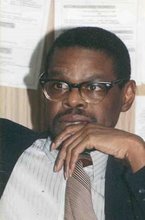
The 1960s and 1970s were confused times. Martin Luther King, Jr. and the civil rights movement were contemporary to Malcolm X and the nation of Islam, also contemporary with the rising black militancy that led to Black Nationalism and the Black Panther Party. Add to the crazy mix, the Ku Klux Klan and David Duke, and J. Edgar Hoover and a Gestapo FBI regime. Then of course, there were black gangsters like Frank Lucas and the Italian Mafia. All of these human forces were contemporaries, stirred together in the same pot, during the same era.
It was a time when many officers in law enforcement were compromised through shakedown bribes, gifts and grafts, or blackmailed through sex. The mob captured many officers on candid camera and showed it back to them at the police station. That was how the mob married the law. While in the meantime, J. Edgar Hoover used his FBI forces to play the largest human chess game in the world.
Maybe this side-story of David Duke will add a piece to the puzzle.
In the mid-1960s, there were rumors of drugs being smuggled back into US black communities via CIA cargo planes (Air America) from Southeast Asia. At the time, David Duke worked for Air America in Laos during the Vietnam War.
Duke was the All-American boy who went on to become the leader of the Ku Klux Klan and eventually elected to the Louisiana state legislature. Looking at his resume, it would have been impossible for this future Klan leader and the CIA not to know about the Ike Atkinson – Frank Lucas drug shipment pipeline. As the movie “American Gangster” clearly points out, there were high up military officers on the drug trafficking payroll.
Not to suggest that Mr. Duke was one of those on the take, but it has always been known that the Ku Klux Klan advocated black self-destruction and Nazi doctors were in search of the “magic bullet” to destroy the race of dark-skinned people. These two hate groups would have condoned widespread drug use among blacks.
Black Panther think tanks charged the US government with foreknowledge of the drug epidemic. In fact, we had planned to charge the United States once again with Genocide. We had planned to resurrect and revise the original charge “We Charge Genocide: The Crime of Government Against the Negro People” submitted to the United Nation in 1951 by actor Paul Robeson, except this time it would included the charge of complicity in the drug trade to destroy black people.
We knew for a fact that the CIA was involved and, through them came undercover FBI agents working both sides of the fence. They were not supposed to kill, but they murdered like gangsters, or witnessed the hits go down. One such agent infiltrated the KKK and had to witness a lynching, not being able to do anything about it. The excuse for Hoover not intervening to protect southern blacks was this: “The investigation is ongoing”, as it is today, in too many cases.
Also, two FBI agents were at the Audubon Ballroom when Malcolm X was assassinated on February 21, 1965. They were there only to nab the shooters, but not to protect Malcolm.
FOOTNOTES: From 1898 through to 1910, Bayer (the aspirin company) openly marketed heroin as a painkiller, knowing its addictive powers. Needless to say, the story of drugs is too long, winding, and more complex than to two black drug kingpins.
The UN Convention on the Prevention and Punishment of the Crime of Genocide, adopted Dec. 9, 1948, flowed from the determination of the world community that never again would fascism be allowed to plunge humanity into holocaust and world war….The U.S. did not ratify the Genocide Convention until Sen. William Proxmire (D-Wisc.) finally pushed it through the U.S. Senate in 1987.
Friday, November 30, 2007


Wednesday, November 28, 2007
Now Showing: The American Gangsters Release "Gangland"
RATED: Wow!
Without commercial interruption or commentary, I proudly present the masterpiece of the truth behind “American Gangster”, done by none other than Frank Lucas and Nicky Barnes themselves in collaboration.
Without commercial interruption or commentary, I proudly present the masterpiece of the truth behind “American Gangster”, done by none other than Frank Lucas and Nicky Barnes themselves in collaboration.
Predatory Lending by Trickery and Minority Proxy Silenced
Congress is very slow in stemming the bleeding of the poor homeowners who are victims of predatory lending practices- (usury by trickery). The working class can purchase a home for little or nothing, and enticed to purchase over their financial heads, which has lead us to the record number of foreclosures and a collapse in the housing market.
Needless to say that the rich keeps getting richer and the poor keeps getting poorer. But the cumulative effect has broken the elasticity in the economy where rich and poor were shades of the same rainbow, there is now an absolute dichotomy between the haves and have nots as stark as night is to day, black is to white.
Like kingdoms of the past, they build mansions and fortresses and dig moats and put up high walls around themselves. They bought up all the property and forced the people into serfdom, employment by contracted service. They live in a gilded world, as the prophet Isaiah describes as “them that join house to house, that lay field to field, till there be no place, that they may be placed alone in the midst of the earth”. Call it the isle of the supper rich.
How did they get rich? They devour poor widow houses, through predatory lending.
And, what of these corporations to do such practices, the financial institutions now going in and foreclosing?
Capital has no conscious, and neither does its board of directors. But people still have a conscious. Shareholders have a conscious. But if the SEC goes in and cuts off its voice through proxy, Capital will continue eating up the working poor.
Needless to say that the rich keeps getting richer and the poor keeps getting poorer. But the cumulative effect has broken the elasticity in the economy where rich and poor were shades of the same rainbow, there is now an absolute dichotomy between the haves and have nots as stark as night is to day, black is to white.
Like kingdoms of the past, they build mansions and fortresses and dig moats and put up high walls around themselves. They bought up all the property and forced the people into serfdom, employment by contracted service. They live in a gilded world, as the prophet Isaiah describes as “them that join house to house, that lay field to field, till there be no place, that they may be placed alone in the midst of the earth”. Call it the isle of the supper rich.
How did they get rich? They devour poor widow houses, through predatory lending.
And, what of these corporations to do such practices, the financial institutions now going in and foreclosing?
Capital has no conscious, and neither does its board of directors. But people still have a conscious. Shareholders have a conscious. But if the SEC goes in and cuts off its voice through proxy, Capital will continue eating up the working poor.
Monday, November 26, 2007
At-Risk Children: A National Imperative
It is imperative that I give more attention to children at-risk because of (1) a lack of understanding, (2) lack of direction, and (3) lack of competent leadership in solving their problems. By “at-risk”, I mean children in danger of falling through the cracks in the system.
Personally, I have undertaken several new responsibilities related to children and character-building. I have started teaching bible class for male high school children this quarter. I volunteered to join the Fort Worth ISD Communication Action Teams (CATs) and help to develop an effective school dropout prevention strategy. In addition, I continue my work serving on Congressman Michael C. Burgess Economic Summit Workforce-of-the-Future subcommittee, which looks at improving the workforce skills of the future generation and the vital role played by our educational systems.
All of these roles are directed at reaching young people and putting them on a productive course in life and society.
I also look at children at risk who fall through the system by examining factors related to the lives of juvenile delinquents caught up in the criminal justice system and to help the reintegrated back into society through Tarrant County Commissioner Roy Brooks Reentry Council.
I am also take pride in the role of an international child’s rights advocate for the World’s Children’s Prize for the Right of the Child, and frequent advisor to legislators on children rights’ issues.
What draws my immediate attention back to the at-risk population was an editorial (“Mental health: Class Dismissed?”) by Star-Telegram Steve Jacob (25-Nov-07). What concerns me most is this statement:
An estimated 75 percent of children in the Texas juvenile system have behavioral health issues, and 30 percent of those in the juvenile system will end up in the adult system. An increase in the number of U.S. juvenile delinquents has been blamed in part on diagnosed and undiagnosed mental illness. Since 1991, there has been a 33 percent increase of children 7 to 12 years old appearing in juvenile court.
The problem here is not the observation, but the center of thinking of the observer.
First, it would be a leap of faith to assume that the observer is sane and completely neutral. For example, I have seen some of the most insane behavior accepted as normal behavior- a case example would be the way people drive on the highway. Nobody can say that playing arrogant bumper cars on the freeway is sane behavior- zipping in and out of traffic, at high rates of speed, chasing the fastest car on the road, and refusing to show common courtesy by yielding the right of way.
Second, sanity seems to be based on Cartoon World standards. We see a two dimensional world in our mind’s eye- my way or no way- my observation more valid than your observation- Homer Simpson people with Disney World ideations about the meanings of life and socialized behavior.
Why is it that only “75 percent of children in the Texas juvenile system have behavioral health issues”, when it seems that it is more like 199.9%? This is to say that 100% of the juveniles in the system have mental health issues and 99.9% of the rest of the population. In a word, we are all crazy. We notice only the extremes and so jaundice in our perception that we cannot properly diagnose the problem.
Anybody with a life after 9-to-5 has issues. But we are too busy exempting ourselves and stigmatizing others that we foolheartedly charge the “mentally ill” as being the cause of their own mental illness. We tend to forget that childhood is a retarded form of adulthood. This is why a 2-year old feels competent enough to walk across the street.
We tend to forget: When I was a child, I spoke, understood, and thought as a child. But then we never seemed to have put away our own childish things, such as our childish selfish behavior on the road.
Once we began to understand our own mass insanity, we might be able to see clearly enough to recognize children who are at risk and what they are at risk of.
Personally, I have undertaken several new responsibilities related to children and character-building. I have started teaching bible class for male high school children this quarter. I volunteered to join the Fort Worth ISD Communication Action Teams (CATs) and help to develop an effective school dropout prevention strategy. In addition, I continue my work serving on Congressman Michael C. Burgess Economic Summit Workforce-of-the-Future subcommittee, which looks at improving the workforce skills of the future generation and the vital role played by our educational systems.
All of these roles are directed at reaching young people and putting them on a productive course in life and society.
I also look at children at risk who fall through the system by examining factors related to the lives of juvenile delinquents caught up in the criminal justice system and to help the reintegrated back into society through Tarrant County Commissioner Roy Brooks Reentry Council.
I am also take pride in the role of an international child’s rights advocate for the World’s Children’s Prize for the Right of the Child, and frequent advisor to legislators on children rights’ issues.
What draws my immediate attention back to the at-risk population was an editorial (“Mental health: Class Dismissed?”) by Star-Telegram Steve Jacob (25-Nov-07). What concerns me most is this statement:
An estimated 75 percent of children in the Texas juvenile system have behavioral health issues, and 30 percent of those in the juvenile system will end up in the adult system. An increase in the number of U.S. juvenile delinquents has been blamed in part on diagnosed and undiagnosed mental illness. Since 1991, there has been a 33 percent increase of children 7 to 12 years old appearing in juvenile court.
The problem here is not the observation, but the center of thinking of the observer.
First, it would be a leap of faith to assume that the observer is sane and completely neutral. For example, I have seen some of the most insane behavior accepted as normal behavior- a case example would be the way people drive on the highway. Nobody can say that playing arrogant bumper cars on the freeway is sane behavior- zipping in and out of traffic, at high rates of speed, chasing the fastest car on the road, and refusing to show common courtesy by yielding the right of way.
Second, sanity seems to be based on Cartoon World standards. We see a two dimensional world in our mind’s eye- my way or no way- my observation more valid than your observation- Homer Simpson people with Disney World ideations about the meanings of life and socialized behavior.
Why is it that only “75 percent of children in the Texas juvenile system have behavioral health issues”, when it seems that it is more like 199.9%? This is to say that 100% of the juveniles in the system have mental health issues and 99.9% of the rest of the population. In a word, we are all crazy. We notice only the extremes and so jaundice in our perception that we cannot properly diagnose the problem.
Anybody with a life after 9-to-5 has issues. But we are too busy exempting ourselves and stigmatizing others that we foolheartedly charge the “mentally ill” as being the cause of their own mental illness. We tend to forget that childhood is a retarded form of adulthood. This is why a 2-year old feels competent enough to walk across the street.
We tend to forget: When I was a child, I spoke, understood, and thought as a child. But then we never seemed to have put away our own childish things, such as our childish selfish behavior on the road.
Once we began to understand our own mass insanity, we might be able to see clearly enough to recognize children who are at risk and what they are at risk of.
Wednesday, November 21, 2007
Don’t Let Your Babies Go To Prison
In Memory of Dickey
A renowned political science professor at the University of Texas at Arlington invited me to speak to his class. The occasion took me back in my memories to the 1960s at the height of the Civil Rights Movement and the era of student protest. I briefly traced my path from the Student Non-Violent Coordinating Committee to the Black Panthers, and my days as an outlaw.
Dr. Allen Saxe, teaching a course in Contemporary Studies, asked me to compare the movement then with the Jena 6 movement today. But then came the question about my years in prison, Saxe asked: How did you guys survive in prison?
This is not a question to ask unless you are prepared for the answer. I could have easily said, “By the grace of God” and then launch into a sermon. But that would be void of details of what prison life was really like. So my answer was this: “We trained to survive.”
Somehow the picture is still not clear by what I mean when I say “we trained”. In an environment of the survival of the fittest, it is the best trained that are the fittest to survive. That I made it home all the way back from hell speaks for itself.
I was trained by the toughest, most brutal men on the planet, bar none. Not that I glory in violence except to add the fact that I hated every one of my trainers in prison. They put me through much pain, teaching me how to fend myself in naked, cold, eyeball-to-eyeball combat, hand-to-hand duels to the death.
To learn how to block a knife, one of my trainers would stab me with the back end of a dull spoon, and it hurt like the devil. My rib cage stayed black and blue. So did all the other parts of my body and some bones never repaired straight. Then one day I stopped the spoon. From then on it was relatively easy to fend off the knife, the club, the gun, and any other weapon aimed against me.
As they broke my bones, so I learned how to break bones with the heel of my hand, especially the bones in a man’s face. Thereafter, I never had to carry a weapon, because I could do with my hands what most men could not. I could put a man into a coma for a day, a week, a month, or have him on life support for a year. This was the threat I conveyed to a fellow inmate when a fight presented itself to me.
The men in prison died all around me. At least once a month, somebody was stabbed to death. Not everybody was meant to survive. And, those who died did not know how to survive to the end. It should suffice to say that I survived by the grace of God, because I was not as tough as I thought I was. One mistake put me in the clutches of death. But I escaped with my life. Not so, the fortunes of others. I saw the angel of death carry them off the stage, one by one.
Thinking about Dickey
Dickey has been dead now for over 25 years, but I will never forget him. When the brothers in prison had a memorial service for him at Leavenworth in 1981, we made a vow never to tell how he died. We all admired and respected Dickey as a hero, never a more gallant and brave man in hand-to-hand combat.
He was a jet black man with blue silver hair, shoulder length, like General Custard. He was one of the best martial artists in the joint, and he also never carried a weapon. He also believed in giving a man the first punch before killing him. He would take a knife to the gut just to get a good kill shot to a man’s face. This was how he taught me.
I knew Dickey when his hair was all black. Seeing him again almost 10 years later at Leavenworth, I was amazed that his hair had changed overnight. Bumping into him for the first time in years, I asked, “What happened to your hair, Dickey?”
He gave me a painful expression and answered, “My kids.”
I knew exactly what he meant. He was talking about his Moorish brothers, whom the FBI called the “DC Gang”. Keeping them under control was a burdensome task for Dickey. He was a peacemaker among prisoners. Whenever a fight would break out or a rumored hit, Dickey was always one of the first to go in and try to restore peace, which was not an easy job when men are determined to kill each other.
The warden at Marion once got angry at us over a work stoppage and told us that if he had his way he would give us all knives and let us kill each other off. We didn’t need any more help in doing that. Prison officials were already pitting prisoner against prisoner. And, we decimated our own ranks in senseless murdering rages.
An inmate disrespects another inmate on the basketball court, so “Money” goes, gets a knife, stabs the guy in the stomach, and then drags the knife from one side of his belly to the other. The wounded inmate folds the two parts of his stomach together and calmly walks to the prison infirmary, not leaving even a drop of blood on the gym floor.
This was the first time I became aware of the extraordinary power of the human will. The guy simply willed himself to not bleed. I also saw a man will his heart to stop beating. He was declared dead and then escaped from the morgue.
This was gladiator school where every man tried to exceed human capabilities. My Leavenworth roommate Moe was a 150-pound man who could walk away with 1200 pounds on his shoulder- a weight lifter with extraordinary power.
“Money tried to cut me open like a can of beans,” the inmate whined to me, wanting me to take the hit off him. But I was not altogether sympathetic. He had it coming. He disrespected Money while he was refereeing a basketball game. In prison, one man does not disrespect another man, not even the referee. There are consequences for every word and deed in prison.
Nevertheless, we were surrounded by strong willed and angry men, and death was a sometimes a more pleasant escape hatch. Then there were men like Dickey, hard to kill, with an untimely rendezvous with death.
I knew a man who once laughed about getting stabbed in the back. And, it turned out to be a funny story after all, even to me. The guy had obviously been marked for a penitentiary assassination- one man would bear hug him from the front, while another would stab him in the back.
That was the way the hit went down. But the knife went all the way through the body of the mark and pierced the stomach of the man who was clutching him. The only proof of his wound, in the aftermath, was an bandage wrapped around his midsection, no stitches, no surgery, just a bandage.
Then there was the inmate hit while sitting in a barber’s chair. The assassin walked into the prison barbershop, took a pair of scissors, and stabbed the man in the neck. The blade severed the jugular vein and blood gushed up to the ceiling like a broken water main. How they saved him, I don’t know. They say a doctor pinched the veins and stopped the bleeding. In any case, he too survived.
These were the type of violent events occurring everyday in prison when I went in. It was not a pretty sight. Some of us brothers took it upon ourselves to stop this kind of internal violence. So we put ourselves on the line as peacemakers. Dickey had his hands full with the DC brothers. That’s why his hair turned silver overnight. He had spent too many years disarming combatants, getting stabbed, and taking on two and three inmates at a time.
Now in his old age, he was surrounded by peace, because no one went against his word. But then no one defied him either. At his command was an army of inmates that could rip the guts out of the prison system. And, they did.
Whenever I talked to Dickey in his old age, we talked as if we were looking down at life from the spirit world. There were several of us Old Soldiers that could see violence coming before it came. We were at the nerve center of life and death.
Dickey died, not from combat, but from drugs, but not like you think. He was too smart to use drugs, but he was available as a “mule”, a human transporter. A “mule” in prison is an inmate who goes into the visiting room and swallows balloons of drugs and transports the drugs back into the prison inside his body. He is usually paid in drugs, which he then can sell for commissary and cigarettes, which is the legal tender throughout the prison system.
One night after returning from the visiting room, Dickey had a body full of balloon-filled cocaine pouches. Sometime in the middle of the night, one of the balloons bust. Dickey leaped up from his bunk bed, only to utter, “Uh!” Then he dropped to the floor like a sack of flour- dead- frozen by the cocaine from the inside out.
I could hear his cellmates trying to revive him. “Come on, Dickey. Get up.” Over and over, they begged, “Come on, Dickey. Stand up. Walk.” But it did no good. Dickey was gone.
“Man down!” one shouted. “Man down, I say!”
It was an alert to the guards to send help immediately. But help was a long time in coming. Finally, they opened Dickey’s cell door, and the brothers carried him out stiff.
I watched his body passed before my cell on the second tier. When I saw his lifeless body, I broke down. My knees buckled from under me and I found myself sliding down the bars like melted chocolate. There was no more strength in me. I could not stand, and I could not stop the tears from flowing from my eyes. Dickey was a good soldier.
I was the only “outsider” allowed to join the Moor brothers in the chapel for Dickey’s memorial service. Every man who had sometime to say came forward and told the amazing stories about Dickey and his role as a penitentiary gladiator. He rescued an inmate who was heavily outnumbered, covered in blood, they battled in the duel to the death.
But I personally remembered his painful experience of having to give up one of his own men to the assassins. It was a black-on-black inmate, justifiable revenge killing according to the Law of the Jungle.
But no man cheated death more than Dickey. Nevertheless, in prison, a man can only cheat death so many times.
[This series is devoted to parents who wish to save their children from going down a dead-end road to prison, written by a man who has been “to the end of the line” and back- Eddie Griffin]
A renowned political science professor at the University of Texas at Arlington invited me to speak to his class. The occasion took me back in my memories to the 1960s at the height of the Civil Rights Movement and the era of student protest. I briefly traced my path from the Student Non-Violent Coordinating Committee to the Black Panthers, and my days as an outlaw.
Dr. Allen Saxe, teaching a course in Contemporary Studies, asked me to compare the movement then with the Jena 6 movement today. But then came the question about my years in prison, Saxe asked: How did you guys survive in prison?
This is not a question to ask unless you are prepared for the answer. I could have easily said, “By the grace of God” and then launch into a sermon. But that would be void of details of what prison life was really like. So my answer was this: “We trained to survive.”
Somehow the picture is still not clear by what I mean when I say “we trained”. In an environment of the survival of the fittest, it is the best trained that are the fittest to survive. That I made it home all the way back from hell speaks for itself.
I was trained by the toughest, most brutal men on the planet, bar none. Not that I glory in violence except to add the fact that I hated every one of my trainers in prison. They put me through much pain, teaching me how to fend myself in naked, cold, eyeball-to-eyeball combat, hand-to-hand duels to the death.
To learn how to block a knife, one of my trainers would stab me with the back end of a dull spoon, and it hurt like the devil. My rib cage stayed black and blue. So did all the other parts of my body and some bones never repaired straight. Then one day I stopped the spoon. From then on it was relatively easy to fend off the knife, the club, the gun, and any other weapon aimed against me.
As they broke my bones, so I learned how to break bones with the heel of my hand, especially the bones in a man’s face. Thereafter, I never had to carry a weapon, because I could do with my hands what most men could not. I could put a man into a coma for a day, a week, a month, or have him on life support for a year. This was the threat I conveyed to a fellow inmate when a fight presented itself to me.
The men in prison died all around me. At least once a month, somebody was stabbed to death. Not everybody was meant to survive. And, those who died did not know how to survive to the end. It should suffice to say that I survived by the grace of God, because I was not as tough as I thought I was. One mistake put me in the clutches of death. But I escaped with my life. Not so, the fortunes of others. I saw the angel of death carry them off the stage, one by one.
Thinking about Dickey
Dickey has been dead now for over 25 years, but I will never forget him. When the brothers in prison had a memorial service for him at Leavenworth in 1981, we made a vow never to tell how he died. We all admired and respected Dickey as a hero, never a more gallant and brave man in hand-to-hand combat.
He was a jet black man with blue silver hair, shoulder length, like General Custard. He was one of the best martial artists in the joint, and he also never carried a weapon. He also believed in giving a man the first punch before killing him. He would take a knife to the gut just to get a good kill shot to a man’s face. This was how he taught me.
I knew Dickey when his hair was all black. Seeing him again almost 10 years later at Leavenworth, I was amazed that his hair had changed overnight. Bumping into him for the first time in years, I asked, “What happened to your hair, Dickey?”
He gave me a painful expression and answered, “My kids.”
I knew exactly what he meant. He was talking about his Moorish brothers, whom the FBI called the “DC Gang”. Keeping them under control was a burdensome task for Dickey. He was a peacemaker among prisoners. Whenever a fight would break out or a rumored hit, Dickey was always one of the first to go in and try to restore peace, which was not an easy job when men are determined to kill each other.
The warden at Marion once got angry at us over a work stoppage and told us that if he had his way he would give us all knives and let us kill each other off. We didn’t need any more help in doing that. Prison officials were already pitting prisoner against prisoner. And, we decimated our own ranks in senseless murdering rages.
An inmate disrespects another inmate on the basketball court, so “Money” goes, gets a knife, stabs the guy in the stomach, and then drags the knife from one side of his belly to the other. The wounded inmate folds the two parts of his stomach together and calmly walks to the prison infirmary, not leaving even a drop of blood on the gym floor.
This was the first time I became aware of the extraordinary power of the human will. The guy simply willed himself to not bleed. I also saw a man will his heart to stop beating. He was declared dead and then escaped from the morgue.
This was gladiator school where every man tried to exceed human capabilities. My Leavenworth roommate Moe was a 150-pound man who could walk away with 1200 pounds on his shoulder- a weight lifter with extraordinary power.
“Money tried to cut me open like a can of beans,” the inmate whined to me, wanting me to take the hit off him. But I was not altogether sympathetic. He had it coming. He disrespected Money while he was refereeing a basketball game. In prison, one man does not disrespect another man, not even the referee. There are consequences for every word and deed in prison.
Nevertheless, we were surrounded by strong willed and angry men, and death was a sometimes a more pleasant escape hatch. Then there were men like Dickey, hard to kill, with an untimely rendezvous with death.
I knew a man who once laughed about getting stabbed in the back. And, it turned out to be a funny story after all, even to me. The guy had obviously been marked for a penitentiary assassination- one man would bear hug him from the front, while another would stab him in the back.
That was the way the hit went down. But the knife went all the way through the body of the mark and pierced the stomach of the man who was clutching him. The only proof of his wound, in the aftermath, was an bandage wrapped around his midsection, no stitches, no surgery, just a bandage.
Then there was the inmate hit while sitting in a barber’s chair. The assassin walked into the prison barbershop, took a pair of scissors, and stabbed the man in the neck. The blade severed the jugular vein and blood gushed up to the ceiling like a broken water main. How they saved him, I don’t know. They say a doctor pinched the veins and stopped the bleeding. In any case, he too survived.
These were the type of violent events occurring everyday in prison when I went in. It was not a pretty sight. Some of us brothers took it upon ourselves to stop this kind of internal violence. So we put ourselves on the line as peacemakers. Dickey had his hands full with the DC brothers. That’s why his hair turned silver overnight. He had spent too many years disarming combatants, getting stabbed, and taking on two and three inmates at a time.
Now in his old age, he was surrounded by peace, because no one went against his word. But then no one defied him either. At his command was an army of inmates that could rip the guts out of the prison system. And, they did.
Whenever I talked to Dickey in his old age, we talked as if we were looking down at life from the spirit world. There were several of us Old Soldiers that could see violence coming before it came. We were at the nerve center of life and death.
Dickey died, not from combat, but from drugs, but not like you think. He was too smart to use drugs, but he was available as a “mule”, a human transporter. A “mule” in prison is an inmate who goes into the visiting room and swallows balloons of drugs and transports the drugs back into the prison inside his body. He is usually paid in drugs, which he then can sell for commissary and cigarettes, which is the legal tender throughout the prison system.
One night after returning from the visiting room, Dickey had a body full of balloon-filled cocaine pouches. Sometime in the middle of the night, one of the balloons bust. Dickey leaped up from his bunk bed, only to utter, “Uh!” Then he dropped to the floor like a sack of flour- dead- frozen by the cocaine from the inside out.
I could hear his cellmates trying to revive him. “Come on, Dickey. Get up.” Over and over, they begged, “Come on, Dickey. Stand up. Walk.” But it did no good. Dickey was gone.
“Man down!” one shouted. “Man down, I say!”
It was an alert to the guards to send help immediately. But help was a long time in coming. Finally, they opened Dickey’s cell door, and the brothers carried him out stiff.
I watched his body passed before my cell on the second tier. When I saw his lifeless body, I broke down. My knees buckled from under me and I found myself sliding down the bars like melted chocolate. There was no more strength in me. I could not stand, and I could not stop the tears from flowing from my eyes. Dickey was a good soldier.
I was the only “outsider” allowed to join the Moor brothers in the chapel for Dickey’s memorial service. Every man who had sometime to say came forward and told the amazing stories about Dickey and his role as a penitentiary gladiator. He rescued an inmate who was heavily outnumbered, covered in blood, they battled in the duel to the death.
But I personally remembered his painful experience of having to give up one of his own men to the assassins. It was a black-on-black inmate, justifiable revenge killing according to the Law of the Jungle.
But no man cheated death more than Dickey. Nevertheless, in prison, a man can only cheat death so many times.
[This series is devoted to parents who wish to save their children from going down a dead-end road to prison, written by a man who has been “to the end of the line” and back- Eddie Griffin]
Monday, November 19, 2007
The Devil in O’Reilly’s Details
Commentary By Eddie Griffin
NEW REPORTS CLAIM NEARLY HALF A MILLION DOLLARS DONATED TO JENA SIX IS MISSING
Thursday, November 15, 2007
This Fox News report was the takeoff for Bill O’Reilly’s "The O'Reilly Factor" interview with Howard Witt of the Chicago Tribune and Al Sharpton, leader of the National Action Network.
Devil in the Camp
O’Reilly raises the opening specter that “half a million dollars” had been raised on behalf of the Jena 6 youths charged with assault. Where in the world did that figure come from?
Based on unsubstantiated, uncorroborated, fabricated “news reports”, O’Reilly launches a witch-hunt for lost money that may have never been. In his search, he heightens more public suspicion around funding-raising efforts in the Jena 6 case.
BILL O’REILLY, HOST: (excerpt)… Reverend Al Sharpton and other civil rights leaders rallied to assist the six students. And reports say about $500,000 was raised for their defense… Now there are questions about where that money has gone.
HOWARD WITT, CHICAGO TRIBUNE: (excerpt)… Several weeks, but the controversy really broke into the open last week when Michael Basin, who’s a prominent black talk radio host based here in Dallas, actually went on the air and accused a group called Color of Change of having actually somehow been shady with the money… The irony of that is that Color of Change, which has raised about $212,000 for the Jena Six defendants, they’re the only group in all of this that actually has been completely transparent about how they have distributed the money. And they’ve basically shown how they have paid it all out to the attorneys.
O’REILLY: All right, so the parents themselves are controlling — now we hear that the parents have bought Escalades, big cars, are driving around in them since these funds were established. Is that true?
WITT: No, I — I have no — see no evidence that that’s true. That’s one of the rumors that’s out there. There’s no evidence that that’s the case. The problem is in the absence of any kind of transparency about this money.
O’REILLY: Yes, you don’t know. You don’t know. But you haven’t found out that they did indeed spend money on expensive cars? That you haven’t found out, OK.
Eddie Griffin sez: Notice how O’Reilly tries to discredit Witt’s testimony with an injection: “You don’t know. You don’t know.” Does he (O'Reilly) know or is he making accusatory suggestions?
WITT: No, there’s no evidence that they’ve misused the money, but no one knows for sure because.
O’REILLY: (excerpt)… Reverend Sharpton, now when you have this kind of a flow of funds… there is, you know, the perception that something may be going wrong because a half million dollars is a lot of dough. How do you see it?
Eddie Griffin sez: Hell, how can Al see any picture other than the one already painted for him by O’Reilly? All Al is allowed to see is a suspicious cloud of embezzlement, which he would just as soon completely disassociate himself?
Now considering that Sharpton was one of the loudest voices on the national arena in defense of the Jena 6, just how much did he and his organization National Action Network raise in funds for the cause?
O’Reilly coyly turns Sharpton on the defensive by insinuating (and not saying) that he was part of the controversy. Instead of proudly admitting his fundraising effort, Sharpton washes his hands like this:
AL SHARPTON, REV., CIVIL RIGHTS LEADER: Well, I think, first of all, let’s not confuse many of us that were involved had nothing to do with the fundraising. National Action Network, my group, had nothing to do with any of the funds. And so when we say civil rights leaders protested and put all that in with who’s on the Internet, those are not the same parties.
Eddie Griffin sez: Don’t get Al mixed up with “who’s on the Internet”. He is not a party to the bloggers. He and his group, National Action Network, raised no funds on behalf of the Jena 6. Therefore, his role must have been for pure publicity sake- which some of us recognized from the beginning.
AL SHARPTON: (excerpt)… Secondly, I think that when you talk about the group Color of Change did over $200,000, that’s half of the money that you’re saying was raised. So half of it, you are saying is transparent.
Eddie Griffin sez: Who is saying “that’s half of the money”? If Al realized who was doing the asking, he would have never been caught out in no-man’s land. Did he assume, from O'Reilly's question, that Color of Change had received more than the $200,000 and ridiculed “half of it” (the fictious $500,000) as “transparent”. Is he suggesting that Color of Change was not completely transparent?
Shame on Bill O'Reilly and his “wizardry with words”. Paint a deceptive picture and then have others fill in the blanks to complete the lie.
O’REILLY: Well, it looks funny. And whenever you have cash, you guys know, whenever there’s cash coming in, you got to account for it.
Eddie Griffin sez: Silly rabbits, don’t you know you have to account for the money you know about and the money you don’t know about. Where did it go?
Whether the mystique of money is ever accounted for to the likings of O’Reilly, I highly doubt it. He has shown no compassionate interest in the Jena 6 case.
SHARPTON: Well, let’s raise the question about unequal justice. Let’s raise the question about the cost.
Eddie Griffin sez: Poor Al, he’s already been had, and now he wants to turn the focus back on the real subject of “Unequal Justice”. Too late.
O’REILLY: Well, I think we’ve already done that, reverend. You’ve been on this program and every other program raising the questions.
Eddie Griffin sez: Raising what question? The only questions coming from O’Reilly have been divisive and ill-motivated.
SHARPTON: You’ve been very fair about that, Mr. O’Reilly. But what I’m saying is to raise the question without any substantive charge is really a distraction.
Eddie Griffin sez: This is about as close as it comes to “kissing up”. Now watch how O’Reilly chasten Sharpton.
O’REILLY: No, no, no. That’s where you’re — reverend, now if I’m going to train you in journalism, you got to listen to me now.
Eddie Griffin sez: Train Al Sharpton in journalism? Sounds arrogant, unless you are kissing up, then you get treated any old kind of way and talked down to. Congratulations Al for reaching a new low in leadership.
SHARPTON: My question is if you are showing me journalism, the question is that if you’re already saying there’s no Escalades, there’s no evidence of splurging, then what is the question?
O’REILLY: The question is where’s the other $250,000? And what’s being done with it? Gentlemen.
Eddie Griffin sez: See how easy it is to come full circle? You create this mythical pot of $500,000 and give a public accounting of only half? Where is the other $250,000? From when it was created: With the devil in hell?
NEW REPORTS CLAIM NEARLY HALF A MILLION DOLLARS DONATED TO JENA SIX IS MISSING
Thursday, November 15, 2007
This Fox News report was the takeoff for Bill O’Reilly’s "The O'Reilly Factor" interview with Howard Witt of the Chicago Tribune and Al Sharpton, leader of the National Action Network.
Devil in the Camp
O’Reilly raises the opening specter that “half a million dollars” had been raised on behalf of the Jena 6 youths charged with assault. Where in the world did that figure come from?
Based on unsubstantiated, uncorroborated, fabricated “news reports”, O’Reilly launches a witch-hunt for lost money that may have never been. In his search, he heightens more public suspicion around funding-raising efforts in the Jena 6 case.
BILL O’REILLY, HOST: (excerpt)… Reverend Al Sharpton and other civil rights leaders rallied to assist the six students. And reports say about $500,000 was raised for their defense… Now there are questions about where that money has gone.
HOWARD WITT, CHICAGO TRIBUNE: (excerpt)… Several weeks, but the controversy really broke into the open last week when Michael Basin, who’s a prominent black talk radio host based here in Dallas, actually went on the air and accused a group called Color of Change of having actually somehow been shady with the money… The irony of that is that Color of Change, which has raised about $212,000 for the Jena Six defendants, they’re the only group in all of this that actually has been completely transparent about how they have distributed the money. And they’ve basically shown how they have paid it all out to the attorneys.
O’REILLY: All right, so the parents themselves are controlling — now we hear that the parents have bought Escalades, big cars, are driving around in them since these funds were established. Is that true?
WITT: No, I — I have no — see no evidence that that’s true. That’s one of the rumors that’s out there. There’s no evidence that that’s the case. The problem is in the absence of any kind of transparency about this money.
O’REILLY: Yes, you don’t know. You don’t know. But you haven’t found out that they did indeed spend money on expensive cars? That you haven’t found out, OK.
Eddie Griffin sez: Notice how O’Reilly tries to discredit Witt’s testimony with an injection: “You don’t know. You don’t know.” Does he (O'Reilly) know or is he making accusatory suggestions?
WITT: No, there’s no evidence that they’ve misused the money, but no one knows for sure because.
O’REILLY: (excerpt)… Reverend Sharpton, now when you have this kind of a flow of funds… there is, you know, the perception that something may be going wrong because a half million dollars is a lot of dough. How do you see it?
Eddie Griffin sez: Hell, how can Al see any picture other than the one already painted for him by O’Reilly? All Al is allowed to see is a suspicious cloud of embezzlement, which he would just as soon completely disassociate himself?
Now considering that Sharpton was one of the loudest voices on the national arena in defense of the Jena 6, just how much did he and his organization National Action Network raise in funds for the cause?
O’Reilly coyly turns Sharpton on the defensive by insinuating (and not saying) that he was part of the controversy. Instead of proudly admitting his fundraising effort, Sharpton washes his hands like this:
AL SHARPTON, REV., CIVIL RIGHTS LEADER: Well, I think, first of all, let’s not confuse many of us that were involved had nothing to do with the fundraising. National Action Network, my group, had nothing to do with any of the funds. And so when we say civil rights leaders protested and put all that in with who’s on the Internet, those are not the same parties.
Eddie Griffin sez: Don’t get Al mixed up with “who’s on the Internet”. He is not a party to the bloggers. He and his group, National Action Network, raised no funds on behalf of the Jena 6. Therefore, his role must have been for pure publicity sake- which some of us recognized from the beginning.
AL SHARPTON: (excerpt)… Secondly, I think that when you talk about the group Color of Change did over $200,000, that’s half of the money that you’re saying was raised. So half of it, you are saying is transparent.
Eddie Griffin sez: Who is saying “that’s half of the money”? If Al realized who was doing the asking, he would have never been caught out in no-man’s land. Did he assume, from O'Reilly's question, that Color of Change had received more than the $200,000 and ridiculed “half of it” (the fictious $500,000) as “transparent”. Is he suggesting that Color of Change was not completely transparent?
Shame on Bill O'Reilly and his “wizardry with words”. Paint a deceptive picture and then have others fill in the blanks to complete the lie.
O’REILLY: Well, it looks funny. And whenever you have cash, you guys know, whenever there’s cash coming in, you got to account for it.
Eddie Griffin sez: Silly rabbits, don’t you know you have to account for the money you know about and the money you don’t know about. Where did it go?
Whether the mystique of money is ever accounted for to the likings of O’Reilly, I highly doubt it. He has shown no compassionate interest in the Jena 6 case.
SHARPTON: Well, let’s raise the question about unequal justice. Let’s raise the question about the cost.
Eddie Griffin sez: Poor Al, he’s already been had, and now he wants to turn the focus back on the real subject of “Unequal Justice”. Too late.
O’REILLY: Well, I think we’ve already done that, reverend. You’ve been on this program and every other program raising the questions.
Eddie Griffin sez: Raising what question? The only questions coming from O’Reilly have been divisive and ill-motivated.
SHARPTON: You’ve been very fair about that, Mr. O’Reilly. But what I’m saying is to raise the question without any substantive charge is really a distraction.
Eddie Griffin sez: This is about as close as it comes to “kissing up”. Now watch how O’Reilly chasten Sharpton.
O’REILLY: No, no, no. That’s where you’re — reverend, now if I’m going to train you in journalism, you got to listen to me now.
Eddie Griffin sez: Train Al Sharpton in journalism? Sounds arrogant, unless you are kissing up, then you get treated any old kind of way and talked down to. Congratulations Al for reaching a new low in leadership.
SHARPTON: My question is if you are showing me journalism, the question is that if you’re already saying there’s no Escalades, there’s no evidence of splurging, then what is the question?
O’REILLY: The question is where’s the other $250,000? And what’s being done with it? Gentlemen.
Eddie Griffin sez: See how easy it is to come full circle? You create this mythical pot of $500,000 and give a public accounting of only half? Where is the other $250,000? From when it was created: With the devil in hell?
Friday, November 16, 2007
March Against Hate Crimes Draws Thousands on Washington, DC
CNN reports “Marchers surround Justice Department building” that thousands of demonstrators encircled Justice Department headquarters in the nation's capital on Friday to demand the government crack down harder on hate crimes.
The demonstration was being led by Al Sharpton, Martin Luther King III and members of Sharpton's National Action Network.
“We have so many people we surrounded the Justice Department and two blocks more… This is a real outcry, a real outrage from people around this country,” said Sharpton. “We're here to say the federal government has a responsibility. Since the Justice Department would not come to the people, today we're bringing the people to the Justice Department.”
The Associate Press reports: Organizers said more than 100 busloads of people came for the march, from as far away as Florida, Michigan, and Washington state. The city police department said it does not estimate the size of crowds at marches as a matter of policy.
Mukasey issued a statement saying his agency takes allegations of hate crimes seriously and is working with state and local police, as well as civil rights groups, to "investigate aggressively dozens of noose-hangings and other recent racially and religiously motivated" crimes nationwide… "We hope that all can agree that it is the criminals who commit violent acts of hate who deserve the loudest protest," Mukasey said...
NOW THAT there is a newly installed US Attorney General, we need to let him know our concerns, immediately and often.
The demonstration was being led by Al Sharpton, Martin Luther King III and members of Sharpton's National Action Network.
“We have so many people we surrounded the Justice Department and two blocks more… This is a real outcry, a real outrage from people around this country,” said Sharpton. “We're here to say the federal government has a responsibility. Since the Justice Department would not come to the people, today we're bringing the people to the Justice Department.”
The Associate Press reports: Organizers said more than 100 busloads of people came for the march, from as far away as Florida, Michigan, and Washington state. The city police department said it does not estimate the size of crowds at marches as a matter of policy.
Mukasey issued a statement saying his agency takes allegations of hate crimes seriously and is working with state and local police, as well as civil rights groups, to "investigate aggressively dozens of noose-hangings and other recent racially and religiously motivated" crimes nationwide… "We hope that all can agree that it is the criminals who commit violent acts of hate who deserve the loudest protest," Mukasey said...
NOW THAT there is a newly installed US Attorney General, we need to let him know our concerns, immediately and often.
Subscribe to:
Posts (Atom)